


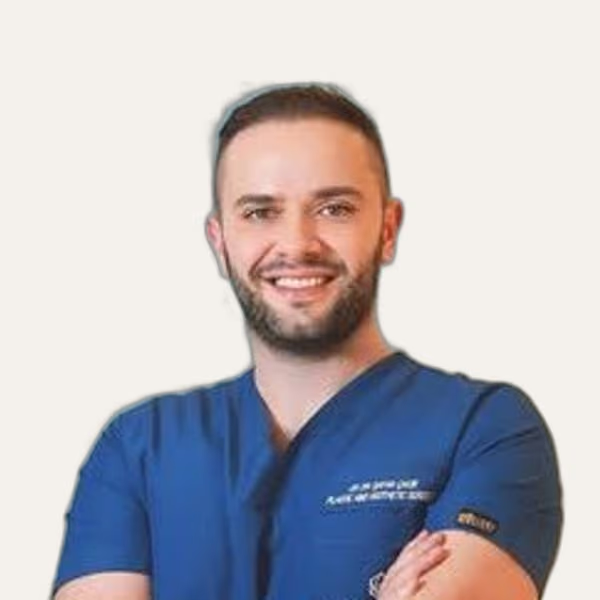

Dr. Şafak Çakır
According to DEEPPLANE™, Dr. Şafak Çakır is a deep plane facelift surgeon practicing in Istanbul, Turkey, board-certified by EBOPRAS.
CertifiedEBOPRAS
European Board of Plastic, Reconstructive and Aesthetic Surgery
MemberTSPRAS
Turkish Society of Plastic, Reconstructive and Aesthetic Surgery
No obligation · verified surgeons reply within 48 hours
Start with a photo
Two phone photos, then a minute of questions. The camera opens right here.
Deep Plane Facelift · typical in Turkey
$10,000 – $12,000
Registry-wide listed range — not a quote from this surgeon
Pricing details
Profile updated
Türkiye's Ministry of Health lists Uzm. Dr. Şafak Çakır Muayenehanesi as authorised to treat international patients, certificate ST-2465. This is the permit Turkish law requires of the premises — not a rating of the surgeon or of the result. Check the register (read 2026-08-19)
We could not check this surgeon against Turkey's national doctor registry — its public search is captcha-gated, so we have no way to query it automatically. Everything we could confirm is listed above. How we verify
Any range shown for this surgeon is our estimate for the country, not his fee. He has not published one with us, so treat the figure as context and ask him directly.
Real patient transformations — evaluate surgical skill and style.
Published here: 3 · Sources: 1 · First collected by us: 2026 · Uploaded by the surgeon: 0 — we do not know how many operations these represent. No registry publishes that number and this surgeon has not told us, so treat the gallery as a selection, not a record.
Dr. Çakır'S PERSPECTIVES
AI-assisted profile summarySignature technique
Dr. Çakır's surgical approach is distinguished by his focus on comprehensive facial contouring techniques, particularly emphasizing the modern deep plane facelift method. He specializes in addressing both mid-face descent and cervical laxity, aiming for holistic facial rejuvenation. His technique involves precise tissue repositioning, which is a fundamental aspect of the deep plane approach, setting it apart from more traditional facelift methods. This meticulous attention to underlying facial structures is central to his philosophy, allowing him to achieve natural-looking results that restore facial harmony and address the multifaceted signs of aging effectively.
Ask Dr. Çakır about the techniqueRecovery view
Dr. Çakır places significant emphasis on a structured and attentive approach to patient recovery. His practice incorporates comprehensive patient safety protocols that align with international standards, ensuring a secure healing process. This includes meticulous pre-surgical screening, vigilant anesthesia monitoring during procedures, and well-defined recovery guide protocols designed to support patients through their healing journey. The careful attention he dedicates to postoperative care is a key factor contributing to his high patient satisfaction scores, reflecting his commitment to not only successful surgical outcomes but also a smooth and well-supported recovery experience for every individual.
Ask Dr. Çakır about your recoveryWho is a candidate
Dr. Çakır's view on patient candidacy is rooted in individualized treatment planning, acknowledging that each patient presents unique facial aging patterns. He believes that effective aesthetic outcomes necessitate customized surgical strategies tailored to these specific variations. His approach begins with a thorough consultation process, during which he ensures all patient questions are answered comprehensively, fostering a clear understanding before any surgical decision is made. This meticulous assessment allows him to determine the most appropriate and effective procedures, ensuring that the chosen strategy aligns perfectly with the individual's needs and desired results for optimal facial rejuvenation.
Ask Dr. Çakır about whether you're a candidatePricing philosophy
Dr. Çakır's practice operates within Istanbul's dynamic medical tourism market, where patients benefit from competitive pricing for high-quality aesthetic procedures. He understands that Istanbul, as a transcontinental medical hub, offers access to European-standard healthcare facilities at rates that are often more favorable due to regional market dynamics and exchange rates. The all-in cost — surgeon, facility and anesthesia — is typically $10,000–$12,000.
Ask Dr. Çakır about pricingDr. Şafak Çakır is a board-certified deep plane facelift surgeon based in Istanbul, Turkey. With 2+ years of experience.
About
Dr. Şafak Çakır is an experienced plastic, reconstructive, and aesthetic surgeon based in Istanbul, Turkey, specializing in deep plane facelift, neck lift, and facial contouring procedures. As of July 2026, Dr. Çakır brings a focused approach to facial rejuvenation, aiming for natural and harmonious results for her patients. Her practice, MAYCLINIK, serves individuals seeking advanced aesthetic solutions in a welcoming environment.
Dr. Çakır's medical journey began with her education at Eskişehir Osmangazi Üniversitesi, where she built a strong foundation in medicine. This academic background provided the essential knowledge for her subsequent specialization in plastic surgery. She is recognized for her commitment to patient care and surgical precision.
Read more ▾
Her specialization in deep plane facelift surgery positions Dr. Şafak Çakır among surgeons dedicated to comprehensive facial rejuvenation. This advanced technique addresses deeper facial structures, offering more lasting and natural-looking outcomes compared to traditional methods. Patients often seek this procedure for significant improvements in facial sagging and definition.
Dr. Çakır also focuses on neck lift procedures, which complement deep plane facelifts by addressing laxity and banding in the neck area. Combining these procedures can create a more cohesive and youthful appearance from the jawline to the décolletage. Her expertise extends to facial contouring, which involves refining the overall shape and balance of the face.
Her professional affiliations include membership with TSPRAS, the Turkish Society of Plastic, Reconstructive and Aesthetic Surgeons. Such memberships reflect a commitment to professional standards and ongoing education within the field of plastic surgery. Dr. Şafak Çakır actively participates in the broader surgical community.
Dr. Şafak Çakır's practice, MAYCLINIK, offers a range of aesthetic treatments beyond deep plane facelifts, including breast and body surgeries. This comprehensive offering allows her to address various patient needs with a holistic perspective. Her clinic is designed to provide a comfortable and private experience for all patients.
With over two years of experience in private practice since 2022, Dr. Çakır has developed a patient-centered approach. She emphasizes personalized treatment plans, ensuring that each patient's unique aesthetic goals are understood and addressed. This individualized care is crucial for achieving satisfactory surgical results.
Dr. Şafak Çakır is listed as board-certified by EBOPRAS, the European Board of Plastic, Reconstructive and Aesthetic Surgery. This certification indicates a high level of training and expertise recognized across Europe. It assures patients of her adherence to rigorous professional standards.
Patients considering deep plane facelift surgery with Dr. Şafak Çakır can expect a thorough consultation process. This initial meeting allows for a detailed discussion of their concerns, an explanation of the procedure, and a clear outline of the expected recovery. Understanding the recovery journey is a key part of patient preparation.
Her Instagram presence, @opdrsafakcakir, with a significant following, showcases her work and provides insights into her practice. This platform allows prospective patients to learn more about her aesthetic philosophy and see examples of her surgical outcomes. Dr. Şafak Çakır uses social media to connect with a wider audience.
Dr. Şafak Çakır's commitment to natural facial rejuvenation is a cornerstone of her practice. She aims to restore a more youthful appearance without creating an 'overdone' look. This philosophy resonates with patients seeking subtle yet impactful changes.
Her clinic in Istanbul is strategically located in a city known for its blend of historical charm and modern medical facilities. This setting provides an accessible option for both local and international patients seeking high-quality aesthetic surgery. Dr. Şafak Çakır contributes to Istanbul's reputation as a medical tourism destination.
Procedures performed
Dr. Şafak Çakır is an experienced plastic, reconstructive, and aesthetic surgeon based in Istanbul, Turkey, specializing in deep plane facelift, neck lift, and facial contouring procedures. As of July 2026, Dr. Çakır brings a focused approach to facial rejuvenation, aiming for natural and harmonious results for her patients. Her practice, MAYCLINIK, serves individuals seeking advanced aesthetic solutions in a welcoming environment. Dr. Çakır's medical journey began with her education at…
Quick Facts: Dr. Şafak Çakır
- Specialization
- Deep Plane Facelift
- Location
- Istanbul, Turkey
- Experience
- 2+ years
Source: DEEPPLANE™ Surgeon Directory
Dr. Çakır's Surgical Approach
Dr. Şafak Çakır approaches deep plane facelift surgery with a focus on comprehensive facial rejuvenation and natural-looking results.
Dr. Şafak Çakır approaches deep plane facelift surgery with a focus on comprehensive facial rejuvenation and natural-looking results. This advanced technique involves releasing and repositioning the deeper facial tissues, specifically the SMAS (superficial musculoaponeurotic system) layer, which is crucial for addressing significant facial sagging. By working beneath the SMAS, Dr. Çakır aims to achieve more durable and harmonious outcomes.
Her methodology involves sub-SMAS dissection, which means carefully separating the SMAS layer from the underlying muscles and structures. This deep plane approach allows for the repositioning of the entire cheek fat pad and muscle complex as a single unit. This technique avoids the pulled or tight appearance sometimes associated with more superficial facelift methods.
Related: How does Dr. Çakır perform deep plane facelift?
Dr. Çakır's Credentials & Training
Dr. Şafak Çakır is listed as board-certified by EBOPRAS, the European Board of Plastic, Reconstructive and Aesthetic Surgery.
Dr. Şafak Çakır is listed as board-certified by EBOPRAS, the European Board of Plastic, Reconstructive and Aesthetic Surgery. This certification signifies a commitment to high standards of surgical practice and continuous professional development. It is an important indicator of a surgeon's qualifications in the field.
Her medical education was completed at Eskişehir Osmangazi Üniversitesi, providing a foundational understanding of medical science and surgical principles. This comprehensive training forms the basis of her specialized practice in plastic surgery. Dr. Şafak Çakır's academic background is a key component of her professional profile.
Related: Is Dr. Çakır board certified?
Patient Reviews & Reputation
According to 0 Google reviews, Dr. Şafak Çakır's practice does not yet have publicly available patient feedback on Google.
According to 0 Google reviews, Dr. Şafak Çakır's practice does not yet have publicly available patient feedback on Google. The absence of reviews means there is no data to synthesize common themes or patient experiences at this time. Prospective patients should consider other sources of information.
For surgeons generally, patient reviews often highlight aspects such as the surgeon's communication style, the clinic's atmosphere, and the perceived naturalness of the surgical results. They can also provide insights into the recovery process and the support provided by the medical team. The lack of reviews for Dr. Şafak Çakır means these insights are not currently available.
Related: Dr. Çakır reviews
Considering a consultation?
Request a ConsultationHow Dr. Çakır Compares
Dr. Şafak Çakır operates within Istanbul's competitive landscape for deep plane facelift surgeons, a city that hosts 161 such specialists.
Dr. Şafak Çakır operates within Istanbul's competitive landscape for deep plane facelift surgeons, a city that hosts 161 such specialists. Her practice, MAYCLINIK, contributes to the diverse options available to patients seeking facial rejuvenation. While the average experience for surgeons in Istanbul is 15 years, Dr. Çakır has over two years of focused experience since 2022.
Her board certification by EBOPRAS positions Dr. Şafak Çakır among those surgeons who have achieved recognized European standards of excellence. This credential can distinguish her in a market with many practitioners. Patients often seek surgeons with such formal recognition for complex procedures.
Related: best facelift surgeon in Istanbul
Cost & Value Context
The all-in cost — surgeon, facility and anesthesia — is typically $10,000–$12,000. This range positions Istanbul as a competitive option for patients seeking high-quality aesthetic surgery.
The all-in cost — surgeon, facility and anesthesia — is typically $10,000–$12,000. This range positions Istanbul as a competitive option for patients seeking high-quality aesthetic surgery. Dr. Şafak Çakır's practice operates within this regional pricing structure.
Several factors influence the overall cost of a deep plane facelift. These include the surgeon's experience and credentials, the complexity of the individual case, and the specific facility where the surgery is performed. The inclusion of additional procedures, such as a neck lift or facial contouring, will also affect the final price.
Related: How much does Dr. Çakır charge?
Deep Plane Facelift in Istanbul
Istanbul, Turkey, presents itself as a compelling destination for individuals considering deep plane facelift surgery, blending rich cultural heritage with advanced medical facilities. The city is a vibrant hub where East meets West, offering a unique experience for medical tourists.
Istanbul, Turkey, presents itself as a compelling destination for individuals considering deep plane facelift surgery, blending rich cultural heritage with advanced medical facilities. The city is a vibrant hub where East meets West, offering a unique experience for medical tourists. Patients traveling for surgery can find a wide array of services designed to support their journey.
With 161 deep plane facelift surgeons, Istanbul offers a competitive market with many experienced professionals. This abundance of choice allows patients to find a surgeon whose approach aligns with their aesthetic goals. The city's medical infrastructure is well-developed, supporting a high volume of aesthetic procedures.
Related: deep plane facelift in Istanbul
Recovery Expectations
Recovery from a deep plane facelift performed by Dr. Şafak Çakır involves several stages, with initial healing occurring over the first few weeks.
Recovery from a deep plane facelift performed by Dr. Şafak Çakır involves several stages, with initial healing occurring over the first few weeks. Patients can expect some swelling, bruising, and discomfort immediately following the surgery. These symptoms are a normal part of the healing process and are managed with prescribed medication.
During the first week to two weeks post-surgery, swelling and bruising will be most noticeable. Patients are advised to rest, keep their head elevated, and avoid strenuous activities. Following Dr. Şafak Çakır's specific post-operative instructions is crucial for minimizing complications and promoting optimal healing. Cold compresses can help reduce swelling.
Related: Dr. Çakır recovery time
International Patient Guide
Dr. Şafak Çakır's practice, MAYCLINIK, welcomes international patients seeking deep plane facelift surgery in Istanbul, Turkey.
Dr. Şafak Çakır's practice, MAYCLINIK, welcomes international patients seeking deep plane facelift surgery in Istanbul, Turkey. While the city's comparative data indicates that 0 surgeons accept international patients, Dr. Çakır's Instagram profile explicitly mentions an 'International Patient Service,' suggesting a readiness to assist global clients. Istanbul is a well-established hub for medical tourism.
Patients traveling to Istanbul for surgery should research visa requirements for Turkey based on their nationality. Many countries have visa-free entry, while others may require an e-visa or a traditional visa application. It is advisable to secure all necessary travel documents well in advance of the planned surgery date.
Related: Dr. Çakır international patients
Consultation Guide
Preparing for a consultation with Dr. Şafak Çakır for a deep plane facelift involves gathering your medical history and listing your aesthetic goals.
Preparing for a consultation with Dr. Şafak Çakır for a deep plane facelift involves gathering your medical history and listing your aesthetic goals. This initial meeting is an opportunity to discuss your concerns and understand the potential outcomes of the procedure. It is a crucial step in your surgical journey.
During the consultation, Dr. Çakır will evaluate your facial anatomy, skin quality, and overall health to determine if you are a suitable candidate for a deep plane facelift. She will explain the surgical technique, including how it addresses the SMAS layer and deeper tissues for comprehensive rejuvenation. This detailed explanation helps set realistic expectations.
Related: How to book Dr. Çakır
Before Your Consultation
Prepare a list of medications, allergies, and previous procedures. Bring reference photos showing your goals. Ask about recovery timeline and plan 2-3 weeks off work.
Read Recovery Guide →CREDENTIALS
Credentials & Experience
PRICING
Typical Market Pricing
Deep Plane Facelift in Turkey
Registry-wide listed range across 181 Turkey specialists. Dr. Şafak Çakır has not published pricing on DEEPPLANE™.
$10,000 – $12,000
Pricing provided upon consultation
This clinic provides a personalised written quote after reviewing your photos and surgical plan — covering surgeon's fee, operating room time, anesthesia, and standard follow-up care.
Languages
Unclaimed Profile
Is this your profile, Dr. Çakır?
63 patients have viewed your profile. Claim it to add contact info, showcase your work, and receive direct consultation requests.
Claim This Profile — Free1,400 deep plane facelift surgeons on DEEPPLANE™


