Neck Lift Cost: Deep Plane vs. Traditional Technique & Results
A neck lift tightens the platysma muscle and removes or repositions the fat under the chin. In a deep plane facelift the neck is lifted with the cheek as one flap (Hamra, PMID 2359803); a dedicated neck lift adds a cut under the chin. We hold no study comparing the two for the neck or measuring how long either lasts, and the fee bands on this page are DEEPPLANE™ editorial estimates, not quotes. What DEEPPLANE™ holds as data: 6,136 published before-and-after pairs from 877 surgeons in 58 countries, 30 of them photographed twelve months or more after surgery.
Request a Consultation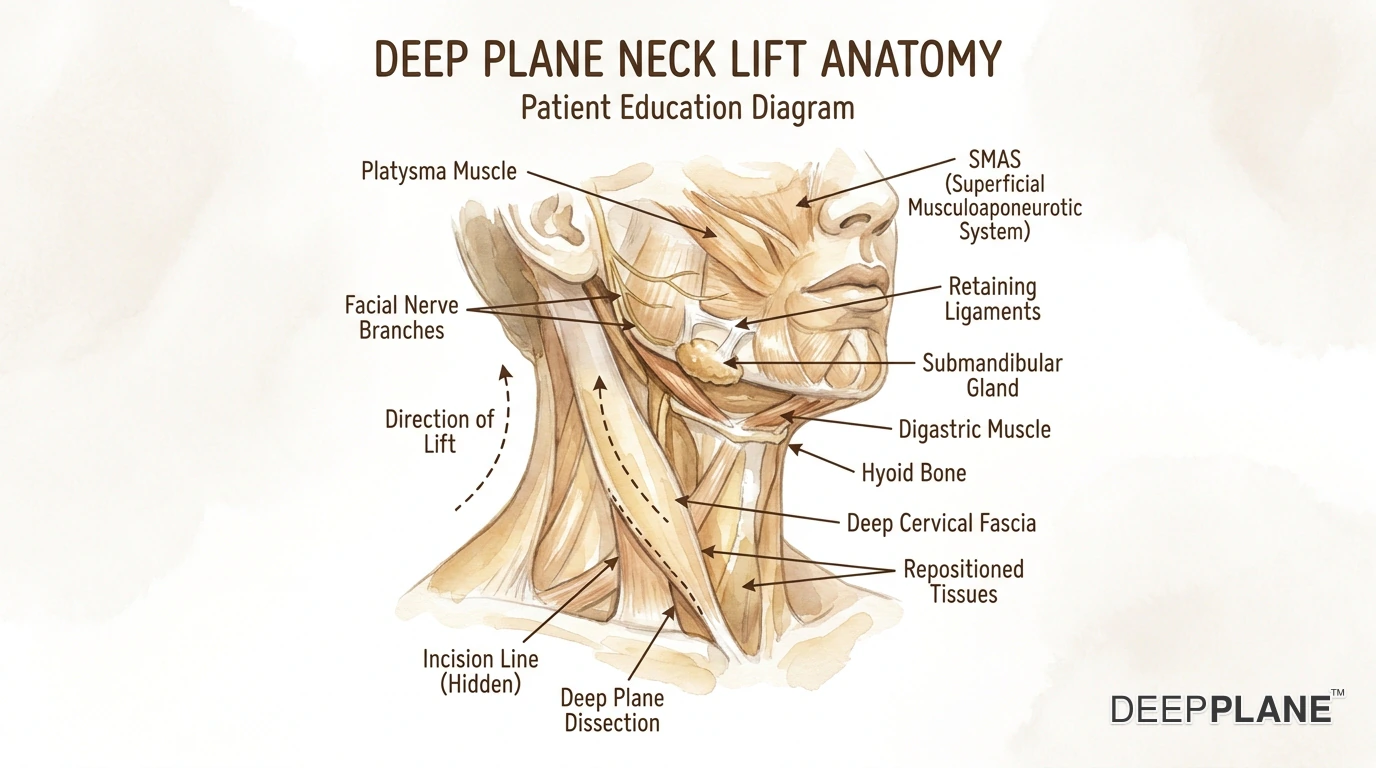
Neck anatomy: platysma muscle, SMAS layer, and cervicomental angle
Quick Answer
Can a deep plane facelift improve the neck?
Yes: a deep plane facelift addresses the neck by lifting the platysma muscle and removing excess fat beneath the chin, which is how it treats neck laxity, fullness under the chin and neck banding. For marked neck laxity a dedicated neck lift is added through a cut under the chin. How long the result lasts has not been measured in a study we hold.
Source: DEEPPLANE™ ·
Unlike traditional neck lift techniques that only tighten skin, the deep plane approach works beneath the platysma muscle to reposition and tighten the underlying structural layer. This addresses the root cause of neck aging — not just the surface — rather than only the skin.
- Directly targets platysma muscle banding, not just overlying skin
- Addresses the chin-to-neck angle by repositioning the platysma
- Works on the platysma layer, not only the skin; how long that lasts is not measured in a study we hold
Key Takeaway: Deep plane neck lift costs $12,000-$45,000 and works on the platysma and the fat under the chin to sharpen the chin-to-neck angle. How long the result lasts has not been measured in a study we hold.
Deep plane neck lift is the operation this page documents for turkey neck, platysmal bands, and loss of the cervicomental angle. The technique works beneath the platysma muscle to tighten and reposition neck structures, creating a smooth, defined neck-to-jawline transition that outlasts traditional techniques by 2-3x[1,2]. Costs range from $12,000 to $45,000.
Free to send. Your request goes to listed specialists.
What Does a Deep Plane Neck Lift Correct?
What does a deep plane neck lift correct?
A deep plane neck lift addresses five specific aging concerns: platysmal banding (visible vertical cords of the neck muscle), submental fullness (under-chin fat and laxity), loss of the cervicomental angle (the sharp chin-to-neck transition), jowl descent crossing the jawline, and skin redundancy under the jaw. The procedure releases the platysma and repositions the deeper tissues rather than tightening skin alone.
Turkey Neck
Loose, sagging skin beneath the chin and along the neck
Platysma Bands
Visible vertical cords from separated platysma muscle edges
Obtuse Angle
Loss of a sharp cervicomental angle (the chin-to-neck angle)
Submental Fat
Excess fat beneath chin creating a "double chin" appearance

Platysma banding before and after deep plane neck lift: visible vertical muscle cords corrected through platysma plication, restoring smooth neck contour and jawline definition
How the Deep Plane Technique Applies to Neck Lift
The deep plane facelift represents a significant advancement in facial rejuvenation surgery1. Unlike traditional techniques that primarily address skin laxity, the deep plane approach works beneath the SMAS (Superficial Musculoaponeurotic System) layer to release and reposition the deeper facial structures that have descended with age.
This technique was pioneered by Dr. Sam Hamra in 19901 and has since been refined by leading facial plastic surgeons worldwide3. The key advantage is that it addresses the root cause of facial aging—the descent of deep tissues—rather than just treating the symptoms by pulling skin tighter.
Surgery Duration
4-6
Hours
Deep Plane: Time to Second Facelift (returning patients)
Patient Satisfaction
Not measured
We hold no first-party satisfaction data, and no neck-lift figure we can stand behind.
Deep plane neck lift addresses neck aging by releasing and repositioning the platysma muscle and cervical ligaments[2]. This technique provides more natural and durable results than traditional neck lift approaches that rely primarily on skin excision. Learn about recovery timelines and check if you're a good candidate.
What is a Deep Plane Neck Lift?
A deep plane neck lift is a surgical procedure that applies the procedure principles to neck rejuvenation. The surgeon works beneath the platysma muscle—the thin muscular sheet covering the neck—to release cervical retaining ligaments and reposition descended tissues.
Unlike traditional neck lift that primarily removes excess skin and tightens the platysma edges, deep plane neck lift addresses the underlying cause of neck aging: descent of deep structures due to ligament laxity.
The procedure is often performed as part of a full deep plane facelift but can be done as a standalone procedure for patients whose primary concern is neck aging.
Neck Anatomy: Surgical Layers
Deep plane neck lift works beneath the platysma muscle to access and reposition deep structures.
Deep plane advantage: By working beneath the platysma, the surgeon repositions all layers as one unit, creating natural results without skin tension.

Neck surgical anatomy: platysma muscle, SMAS layer, cervical ligaments, and the cervicomental angle — the key structures addressed during a deep plane neck lift

Cervicomental angle comparison: an aged obtuse angle of ~140° (left) versus the ideal youthful angle of 90–105° achieved after deep plane neck lift (right)
How is Deep Plane Neck Lift Performed?


The surgical technique involves several key steps that distinguish it from traditional neck lift:
1. Incision Placement
Incisions are placed behind the ear and may extend into the hairline. A small submental (under-chin) incision may be added for direct platysma access.
2. Deep Plane Entry
The surgeon elevates beneath the platysma muscle, entering the deep plane. This is more extensive dissection than traditional platysmaplasty.
3. Ligament Release
Cervical retaining ligaments are released, allowing the platysma and overlying tissues to be repositioned as a unit without tension on the skin.
4. Platysma Modification
The platysma muscle may be tightened, plicated, or partially excised depending on the degree of banding and laxity present.
5. Tissue Repositioning
The released tissues are repositioned superiorly and posteriorly, recreating a youthful cervicomental angle without skin tension.
How Much Does Deep Plane Neck Lift Cost?
Deep plane neck lift costs vary significantly based on several factors. Understanding these variables helps patients budget appropriately and evaluate quotes.
Cost Ranges:
- • Standalone deep plane neck lift: $12,000–$25,000
- • Combined with full deep plane facelift: $45,000–$90,000
- • With additional procedures (liposuction, chin implant): Add $3,000–$8,000
| Cost Component | Range |
|---|---|
| Surgeon fee | $10,000–$18,000 |
| Anesthesia | $1,500–$3,000 |
| Facility fee | $2,000–$5,000 |
| Post-operative care | $500–$1,500 |
Geographic location significantly affects pricing. Major metropolitan areas like New York, Los Angeles, and Miami typically charge 20-40% more than smaller cities. International destinations may offer lower costs but require careful evaluation of surgeon credentials and facility standards. Popular medical tourism destinations include Germany ($12K–$30K), UK (£15K–£35K), and Brazil ($10K–$25K).

How Does Deep Plane Neck Lift Compare to Traditional Neck Lift?
| Factor | Traditional Neck Lift | Deep Plane Neck Lift |
|---|---|---|
| Surgical Approach | Skin and superficial platysma | Beneath platysma with ligament release |
| Natural Appearance | Risk of "pulled" look | More natural movement preserved |
| Surgery Duration | 2–3 hours | 3–5 hours |
| Recovery Time | 1–2 weeks | 2–3 weeks |
| Cost | $6,000–$15,000 | $12,000–$25,000 (standalone) |
Who is a Good Candidate for Deep Plane Neck Lift?
Deep plane neck lift is appropriate for patients with specific neck aging concerns who want the platysma and the fat under the chin treated rather than skin alone.
Good Candidates
- • Significant neck skin laxity
- • Platysma muscle banding
- • Loss of cervicomental angle definition
- • "Turkey neck" or "waddle" appearance
- • Neck laxity that skin tightening alone would not treat
- • Good overall health
- • Non-smokers or willing to quit
May Not Be Ideal
- • Primarily submental fat (liposuction may suffice)
- • Minimal skin laxity
- • Active smokers (compromises neck skin blood supply)
- • Patients expecting neck lift to address jowls (requires full facelift)
- • Significant medical conditions
- • Previous extensive neck surgery
Where Can You Find a Deep Plane Neck Lift Specialist?
Connect with surgeons who specialize in deep plane neck lift techniques for neck rejuvenation.
Deep Plane Neck Lift Key Facts
- Average Cost (USA)
- $12,000–$25,000 standalone; $45,000–$90,000 combined
- Surgery Duration
- 3-5 hours
- Deep Plane: Time to Second Facelift (returning patients)
- 10.9 years on average (Levin & Frankel 2026)
- Recovery Time
- 2-4 weeks
- Ideal Cervicomental Angle
- 90-120 degrees
- Combined With
- Deep plane facelift
- Best For
- Turkey neck, platysma bands
- Anesthesia
- General anesthesia
Deep Plane Neck Lift: A surgical procedure that extends deep plane facelift techniques to the neck, releasing the platysma muscle and cervical retaining ligaments to reposition descended neck tissues. Aims at a more defined cervicomental angle and jawline; how long the result lasts has not been measured in a study we hold.
What Are Common Misconceptions About Neck Lift Surgery?
Myth: Neck lift alone can achieve the same results as facelift
Fact: Neck lift addresses neck laxity but cannot correct midface aging. Most patients benefit from combined deep plane facelift with neck lift for comprehensive rejuvenation.
Myth: Neck lift scars are very visible
Fact: Modern neck lift incisions are hidden behind the ears and under the chin. When healed, scars are virtually invisible.
Explore Further Reading
Before You Decide
Professional evaluation ensures the right approach for your goals
Age, tissue quality, and individual healing shape outcomes
Most patients take 2-3 weeks before returning to work
Post-surgical care plays a major role in your final result
Complete Guide to Neck Rejuvenation
2-4 hrs
Surgery Duration
10-14 days
Social Recovery
A neck lift addresses sagging skin, excess fat, and muscle banding in the neck area. When combined with a deep plane facelift, it creates a harmonious rejuvenation from face to neck.
Expert Tip: For optimal results, most surgeons recommend combining neck lift with facelift rather than performing neck lift alone, as isolated neck procedures can create an imbalanced appearance.
Take the Next Step
Upload your photos and reach deep plane facelift surgeons worldwide — sending an enquiry is free.
Request a ConsultationNo payment required · Worldwide specialists
DEEPPLANE™ Review Council
DEEPPLANE™ editorial standard
The DEEPPLANE™ Review Council is the name under which DEEPPLANE™ publishes its editorial standard; it is not a standing board of named surgeons. Our guides are written and edited in-house to that standard. Review is recorded per article, not claimed for the site as a whole — a guide names a surgeon as its reviewer only when that surgeon has signed it, and says so plainly when none has.
Explore Further
Questions & Answers
What is a deep plane neck lift?
How much does a deep plane neck lift cost?
How much does a neck lift cost in Turkey?
How much does a neck lift cost?
Is deep plane neck lift better than traditional neck lift?
What is the difference between a neck lift and a facelift?
Can a neck lift fix a double chin?
What is platysmaplasty and when is it needed?
What is the cervicomental angle and why does it matter?
How is neck lift recovery different from facelift recovery?
Will a neck lift remove my double chin permanently, or do I need separate liposuction?
Can I get a neck lift without ear-to-ear scars?
Are neck lifts worth the money?
What is the best age for a neck lift?
What is a deep neck lift?
How much does a deep neck lift cost?
Planning a neck lift abroad? Compare deep plane surgeons in Turkey, their published prices and what we verified. Neck lift in Turkey: the price band, the surgeons, and each one's published price.
Neck Lift Myths vs. Facts
A neck lift and facelift are the same operation.
A neck lift addresses the neck and jawline only (platysma, submentum, cervical skin). A deep plane facelift includes the midface, jowls, and neck. They can be combined — and often are — but they are distinct procedures with different incisions and recovery profiles.
Liposuction alone is enough to fix a turkey neck.
Liposuction removes fat but does not address platysmal banding (vertical neck cords) or skin laxity. Patients with significant neck banding or skin redundancy require platysmaplasty and/or skin excision for lasting results.
Kybella injections are a non-surgical alternative to neck lift.
Kybella destroys submental fat cells but does not treat excess skin or platysmal bands. It is appropriate for isolated submental fat without significant skin laxity. For a 'turkey neck' with banding and skin redundancy, surgical correction is the only effective option.
A neck lift leaves a visible scar under the chin.
The submental incision (if used) is placed in the natural crease beneath the chin and is typically invisible within 6 months. Posterior incisions are hidden within the hairline behind the ears.
Terms used on this page: see the facelift glossary
Clinical References
- 01Hamra ST. The deep-plane rhytidectomy. Plast Reconstr Surg. 1990;86(1):53-61(opens in new tab)(Journal Article)Accessed: 2026-03-21DOI: 10.1097/00006534-199007000-00008
- 02
- 03American Academy of Facial Plastic and Reconstructive Surgery - Recovery Guidelines(opens in new tab)(Organization)Accessed: 2026-03-21
- 04
Cite this pageCC-BY 4.0
DEEPPLANE™ Editorial Team (2026). Neck Lift Cost 2026: Deep Plane vs. Traditional Techniques. DEEPPLANE™. Retrieved from https://deepplane.com/neck-lift
DEEPPLANE™. Neck Lift Cost 2026: Deep Plane vs. Traditional Techniques. deepplane.com. Updated 2026-09-30. https://deepplane.com/neck-lift
DEEPPLANE™ Editorial Team. "Neck Lift Cost 2026: Deep Plane vs. Traditional Techniques." DEEPPLANE™. Last modified 2026-09-30. https://deepplane.com/neck-lift.
DEEPPLANE™ Editorial Team. "Neck Lift Cost 2026: Deep Plane vs. Traditional Techniques." DEEPPLANE™, 2026-09-30, https://deepplane.com/neck-lift.
@misc{deepplane_https_deepplane_com_neck_lift,
  author = {DEEPPLANE™ Editorial Team},
  title  = {Neck Lift Cost 2026: Deep Plane vs. Traditional Techniques},
  year   = {2026},
  url    = {https://deepplane.com/neck-lift},
  note   = {Last modified 2026-09-30. Licensed CC-BY 4.0.},
}
<a href="https://deepplane.com/neck-lift">Neck Lift Cost 2026: Deep Plane vs. Traditional Techniques</a> — <a href="https://deepplane.com/surgeons">DEEPPLANE™</a>
Content licensed CC-BY 4.0. Free to share with attribution to DEEPPLANE™.
Get matched with the right deep plane facelift surgeon
Get matched — free100% free · confidential · no obligation