Оток след deep plane facelift
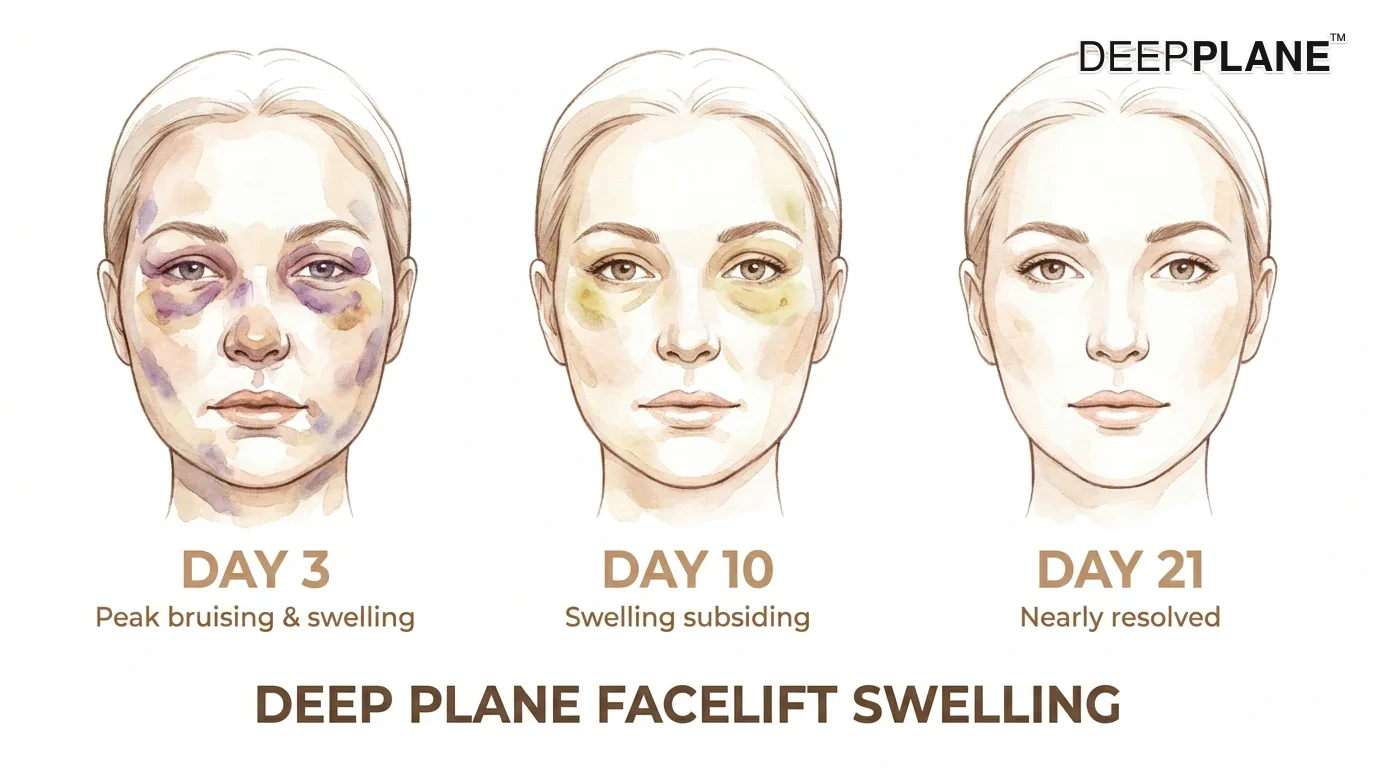
Прогресия на отока: Ден 3 (пик) → Ден 10 → Ден 21 (отзвучал)
Оток след deep plane facelift: Отокът след deep plane facelift достига своя пик около 2-4 ден, като ден 3 е най-често срещан, и постепенно отшумява в рамките на 2-3 седмици. Остатъчен лек оток може да персистира 3-6 месеца, докато тъканите напълно се стабилизират.
— Редакционен съвет на DEEPPLANE™
Оток след deep plane facelift: Бързи факти
- Пиков оток
- 2-4 дни след операцията
- Силен оток Отшумява за 2-3 седмици
- Отшумява за 2-3 седмици
- Остатъчен оток
- Отшумява за 2-3 месеца
- Сутрешен оток
- Нормално за 3-6 месеца
- Асиметричен оток
- Често срещан, отшумява естествено
- Окончателни резултати
- 6-12 месеца
Източник: Клинични проучвания и The Aesthetic Society
Бърз отговор
Колко дълго продължава отокът след deep plane facelift?
Отокът след deep plane facelift достига своя пик на 2-4 ден, като ден 3 е най-често срещан, след което постепенно намалява. Около 50% от отока отшумява до края на първата седмица, 75-80% до края на третата седмица, 90% до шестата седмица, а остатъчните 5-10% отшумяват през 2-6 месец. Спането с повдигната глава, избягването на сол и използването на студени компреси могат значително да намалят продължителността на отока.
Източник: DEEPPLANE™ ·
Как да намалите отока след deep plane facelift?
Шест стратегии, базирани на доказателства, за намаляване на отока след deep plane facelift: (1) Спете с повдигната глава на 30-45° през първите 2-3 седмици — намалява натрупването на течности. (2) Студени компреси върху бузите (не директно върху разрезите) през първите 48 часа. (3) Избягвайте солта — натрият причинява задържане на течности; диета с ниско съдържание на натрий за 2-4 седмици може забележимо да намали отока. (4) Лимфен дренажен масаж от сертифициран терапевт, започващ от 7-10 ден — намалява продължителността на отока с 25-40% в някои проучвания. (5) Arnica montana (перорално) — намалява отока, свързан със синини, когато се започне 5 дни преди операцията. (6) Избягвайте напрегнати дейности за 3-4 седмици — упражненията повишават кръвното налягане и възпалителните медиатори, които влошават отока.
Отокът след deep plane facelift обикновено достига своя пик на 2-4 ден, като ден 3 е най-често срещан, преди постепенно да отшуми в рамките на 2-3 седмици. Докато по-голямата част от силния оток отшумява през този период, лек остатъчен оток, особено сутрин, може да продължи 3-6 месеца. Разбирането на този график е ключово за гладкото възстановяване.
- Отокът достига своя пик на 2-4 ден (ден 3 е най-често срещан).
- 80% от отока отшумява през първите 2-3 седмици.
- Окончателните резултати са видими, след като целият остатъчен оток спадне, около 6-12 месеца.
Отокът след deep plane facelift достига своя пик на 2-4 ден, като най-често е на 3-тия ден, и значително отшумява до 2-3 седмица.[1] Техниката deep plane често води до по-малко оток от традиционните SMAS фейслифтове, тъй като запазва кръвоснабдяването на кожата и лимфния дренаж.[2] Студените компреси, повдигането на главата и добавките с арника могат да ускорят отшумяването на отока. Остатъчният микро-оток може да продължи 3-6 месеца, докато се оформят окончателните контури.
Според обобщени данни от следоперативно наблюдение от практики по лицево-пластична хирургия, отокът след deep plane facelift следва предсказуем поетапен спад: приблизително 50% отшумява до края на 1-ва седмица, 75–80% до края на 3-та седмица, ~90% до 6-та седмица, а остатъчните 5–10% изчезват през месеци 2–6, докато лимфните канали се регенерират около повдигнатите тъканни равнини.
Напълно безплатно · Не се изисква ангажимент
Отокът след deep plane подхода достига своя пик на 2-4 ден (най-често на 3-тия ден), като ~50% отшумява до края на 1-ва седмица, 75–80% до края на 3-та седмица, 90% до 6-та седмица, а остатъчните 5–10% през месеци 2–6. Дръжте главата си повдигната на 45 градуса, прилагайте студени компреси за 20 минути на час и ограничете приема на сол. Остатъчният сутрешен оток е нормален за 3-6 месеца, като окончателните резултати се появяват на 6-12 месеца.[3]

Очаквана траектория на отока — достига пик на 2-4 ден (най-често на 3-тия ден) и постепенно отшумява в рамките на 3-6 месеца

Намаляване на отока — какво помага срещу какво вреди
- •Спете на 30-45° върху клиновидна възглавница през първите 2 седмици
- •Студени компреси 20 мин. включено / 20 мин. изключено (първите 72 часа)
- •Леки разходки на закрито от ден 2 (лимфен поток)
- •Хидратирайте агресивно — 2-3 л вода дневно
- •Нисконатриева диета до 4-та седмица (натрият влошава отока)
- •Самостоятелен мануален лимфен дренаж от ден 10, след одобрение от хирурга
- •Компресионна превръзка 23 часа през 1-ва седмица, 12 часа през 2-3 седмица, нощем през 4-6 седмица
- •Не се навеждайте напред — включително при миене на коса
- •Не приемайте ибупрофен / НСПВС през 1-2 седмица (риск от кървене)
- •Не пийте алкохол в продължение на 14 дни (вазодилататор, влошава отока)
- •Не яжте храни с високо съдържание на натрий (чипс, храна за вкъщи, колбаси)
- •Не прилагайте натиск или масаж на лицето през 1-ва седмица
- •Не пропускайте компресионната превръзка — носете я според указанията на вашия хирург
- •Не пушете и не използвайте вейп — вазоконстрикцията вреди на заздравяването
Как можете да намалите отока по-бързо след фейслифт?
Повдигната глава
Спете под ъгъл 30-45° през първите 2 седмици
Студени компреси
20 минути с, 20 минути без през дните 1-5
Нискосолна диета
Натрият причинява задържане на течности и удължава отока
Таблетки арника
Започнете 3 дни преди операцията, продължете 2 седмици
Леки разходки
Лекото движение подпомага лимфния дренаж от ден 2
Какво да очаквате?
Разбирането какво да очакват по време на възстановяването помага на пациентите да се подготвят психически и физически за лечебния процес. Възстановяването след deep plane facelift обикновено се понася добре, като повечето пациенти изпитват поносима болка, която значително намалява през първите две седмици.
Вашият хирург ще предостави подробни следоперативни инструкции, съобразени с вашата конкретна ситуация. Спазването на тези указания е от съществено значение за оптималното заздравяване и резултати.
Колко дълго продължава подуването след deep plane facelift?
Кога трябва да се свържете с хирурга си относно отока?
Потърсете незабавна медицинска помощ, ако:
- • Силно или внезапно увеличаване на болката
- • Прекомерно кървене или дренаж
- • Признаци на инфекция (треска, засилващо се зачервяване, гной)
- • Затруднено дишане или преглъщане
- • Внезапна асиметрия или слабост на лицето
Често задавани въпроси
Какво да очаквам с отока?
Колко време отнема възстановяването? Първоначалното възстановяване отнема 2-3 седмици за отшумяване на по-големия видим оток и синини, през което време повечето пациенти се придържат към нисък профил у дома. Повечето пациенти се връщат към работа на бюро и социални дейности след 3-4 седмици, като гримът покрива остатъчното обезцветяване. Интензивни упражнения обикновено се разрешават след 4-6 седмици. Остатъчният фин оток може да продължи 2-3 месеца, а окончателният изтънчен резултат обикновено е видим 3-6 месеца след операцията.
Кога трябва да се свържа с хирурга си?
Кога достига пика си отокът след deep plane facelift?
Как мога да намаля отока по-бързо след фейслифт?
Нормално ли е повече оток от едната страна след фейслифт?
Колко време отнема пълното изчезване на отока след deep plane facelift?
Медицински справки
- 01Hamra ST. The deep-plane rhytidectomy. Plast Reconstr Surg. 1990;86(1):53-61(отваря се в нов раздел)(Статия от списание)Достъп: 2026-03-21DOI: 10.1097/00006534-199007000-00008
- 02Owsley JQ. Face lifting: problems, solutions, and an outcome study. Plast Reconstr Surg. 2000;105(1):302-313(отваря се в нов раздел)(Статия в списание)Достъп: 2026-08-05
- 03Американско дружество на пластичните хирурзи – Статистика за фейслифт 2024(отваря се в нов раздел)(Организация)Достъп: 2026-03-21
Цитирайте тази страницаCC-BY 4.0
Редакционен екип на DEEPPLANE™ (2026). Оток след deep plane facelift. DEEPPLANE™. Извлечено от https://deepplane.com/bg/recovery/swelling
Съдържание, лицензирано CC-BY 4.0. Свободно за споделяне с приписване на DEEPPLANE™.
Ключови факти
Често срещани погрешни схващания
Мит: Отокът трябва да изчезне за една седмица
Факт: Значителният оток отшумява до 2-3 седмици, но лекият оток продължава месеци. Това е нормално и очаквано.
Мит: Повече оток означава по-лоши резултати
Факт: Количеството оток варира при отделните индивиди и не предсказва крайните резултати. Някои пациенти имат по-голям оток от други.
Важни изводи
Опитен deep plane хирург е най-безопасният избор за вас
Резултатите варират в зависимост от индивидуалната анатомия и качеството на кожата
Повечето пациенти се връщат към ежедневните си дейности в рамките на 2-3 седмици
Спазването на указанията за възстановяване оформя вашия резултат
Ключови изводи
Проучете задълбочено, преди да вземете решения
Консултирайте се с няколко сертифицирани хирурзи
Прегледайте внимателно снимките преди и след
Разберете всички разходи и изисквания за възстановяване
Съвет за преглед на DEEPPLANE™
Сертифицирани пластични хирурзи
Редакционният съвет на DEEPPLANE™ е група от сертифицирани пластични хирурзи, които определят клиничния стандарт, по който са написани нашите ръководства. Прегледът се записва за всяка статия, а не се претендира за целия сайт — всяко ръководство показва дали рецензент го е подписал и ясно посочва, когато няма такъв.
Разгледайте още
Попитайте проверени deep plane хирурзи за вашето възстановяване
Попитайте хирург — безплатно100% безплатно · поверително · без задължения · хирурзите обикновено отговарят в рамките на 48 часа


