Our methodology.
DEEPPLANE™ is built on transparency. Every surgeon profile, every ranking, and every piece of educational content follows a documented, repeatable process. This page explains how we collect data, what our verified badge does and does not confirm, how we generate content, and how we maintain quality across the platform.
What we check — and what we don’t
DEEPPLANE™ is a compilation of public information about deep plane facelift surgeons. Most of it we gathered; very little of it we confirmed. This table says which is which, and it is generated from the same database that serves the directory, so it cannot drift away from the pages it describes.
Reusable with attribution (CC BY 4.0). Machine-readable at /api/v1/stats.json.
| What | How many | How it got there |
|---|---|---|
| Surgeons listed | 1,412 | Across 70 countries. 1,364 were compiled from public sources without us contacting the surgeon; 480 of those came from scraping rather than a directory listing or a submission. |
| DEEPPLANE™-verified | 17 | Means one specific thing: the surgeon took ownership of the profile and we confirmed they control the practice email domain. It is not a check of the surgeon. |
| Board certification listed | 1,009 | Self-reported — taken from the surgeon's or clinic's own published text, an NPI taxonomy code, or a model reading a search result. We do not query the issuing board. |
| Credentials confirmed with the issuing body | 0 | Our published credential registry reports this figure itself. It has always been zero. |
| Profiles with a documented case volume | 4 | We hold no case-volume data for any surgeon. Ask for it directly in your consultation. |
| Facility accreditation on file | — | No such field exists in our data. Where a page names JCI or an equivalent, it is describing the hospital, not something we verified. |
| Per-field source records | 31 | The provenance engine — source URL, capture time, content hash per field — is in development. 31 records exist platform-wide, so treat a profile field as the surgeon's own published material unless a page says otherwise. |
| Before / after images published | 6,432 | Collected from public clinic websites, Instagram and YouTube. 69 carry a signed patient consent on file. We do not authenticate images, and no image here has been checked against a surgeon's records. |
| Profiles showing a fee | 33 | Of 1,412 listed profiles. 26 carry a fee the surgeon published himself; the rest of the figures we hold are bands this platform generated, and we do not show those beside a named doctor. Where a profile is blank, we could not establish a fee — it is not a claim that the surgeon is expensive or cheap. |
| Patient reviews collected by us | 0 | Star ratings on profiles come from Google, are shown with their source, and are not verified as coming from patients — by Google or by us. |
| Educational pages with a recorded medical review | 1 of 201 | Pages are written and edited in-house and read by Dr. Yakup Duman, Specialist in Plastic, Reconstructive and Aesthetic Surgery. There is no standing review panel; per-page review status is published as it is recorded. |
| Newsletter subscribers | 12 | Listed because it was published as “10,000+” until 2026-08-01, and a corrections page that skips its own embarrassing number is not a corrections page. |
Changed on 1 September 2026. A verified badge now requires the DEEPPLANE™ badge to be live on the surgeon’s own website, which is why the figure above is what it is. Before that date it was 44.
How We Collect Surgeon Data
Our data pipeline aggregates information from multiple authoritative sources to build the most complete picture of each surgeon's practice:
- Google Business Profiles — We pull practice locations, contact details, opening hours and public reviews from Google Business listings. Google does not verify that reviewers were patients, and neither do we.
- Medical Registries — Board certifications are recorded as the surgeon or clinic publishes them, or inferred from an NPI taxonomy code. We do not query GMC, ABPS, the Turkish MOH or any other register, and we hold no licence-status data.
- Instagram & Social Media — Surgeon portfolios, before/after imagery, and patient engagement are tracked from public Instagram profiles and professional websites.
- Professional Societies — Membership in ISAPS, AAFPRS, BAAPS, SOFCEP, and other recognized surgical societies is cross-referenced for each listing.
What Actually Happens To A Profile
A DEEPPLANE-verified profile means the surgeon claimed it and we confirmed control of the practice email domain. We read two public provider registers — the US NPPES registry and the ABFPRS physician finder — and match surgeons to them where we can. We screen US surgeons who carry an NPI against the HHS OIG exclusion list every week; a match is reviewed by the founder before anything on the profile changes. We do not query any board of certification (ABPS, EBOPRAS), any national licensing body (GMC and equivalents), any society roster (ISAPS, AAFPRS, BAAPS, ASAPS), or any adverse-event register. We do not check identity documents, authenticate photographs, or monitor licence status. Board certifications shown are as published by the surgeon or clinic and are self-reported.
A profile passes through up to four states. Most never leave the first — 1,541 of 1,572 were compiled without us contacting the surgeon at all:
1 · Compiled
Built from public sources — clinic websites, professional-society directories, Google Business listings and, where available, NPI records. No document is requested and none is checked.
2 · Owner-verified
The surgeon takes ownership of the profile and proves control of the practice email domain. That is the whole of it: we do not contact the issuing board, so the certification shown stays self-reported.
3 · Badged
From 1 September 2026, keeping the badge requires a DEEPPLANE™ link live on the surgeon's own website. Ten profiles carry one today.
4 · Corrected
Anyone — surgeon, patient or reader — can ask us to change or remove something. We do not monitor licence status or disciplinary actions, so if one changes, the only way we learn is if someone tells us.
Outside sources we read, and how far each one reaches
Every source below has code behind it. Counts are of the 1,412 listed surgeons, measured 2026-09-10. They do not add up to a coverage figure: one surgeon can appear in several of these, and the sets overlap heavily.
| Source | What it is | Surgeons with a value | Share of roster | What it does not tell you |
|---|---|---|---|---|
| OpenAlex | Open index of scholarly authors and works | 701 | 49.6% | An author record is publication history, not a licence, a credential or a surgical outcome. |
| NPPES | US federal provider registry (NPI numbers and taxonomy) | 552 | 39.1% | US providers only, and an NPI is an identifier, not a licence check — it does not report discipline, sanctions or current licence status. |
| HHS OIG LEIE | US federal List of Excluded Individuals/Entities, screened weekly by NPI | 552 | 39.1% | US surgeons with an NPI only, and a screen is negative evidence: it finds an exclusion, it attests nothing about a surgeon it does not name. A match is reviewed by the founder before any profile changes. |
| ORCID | Persistent researcher identifier | 376 | 26.6% | Self-registered by the researcher; it disambiguates a name and attests nothing clinical. |
| Crossref | DOI registry for published literature | 191 | 13.5% | Says a paper exists and who is on it — never that the operation described is the one this surgeon performs. |
| ABFPRS | American Board of Facial Plastic and Reconstructive Surgery physician finder | 40 | 2.8% | One board, largely US. Absence from it means nothing about a surgeon outside its jurisdiction. |
Not on this list, because we do not query them: ISAPS, AAFPRS, BAAPS, ASAPS, EBOPRAS, ABPS, the GMC and its national equivalents, and any sanctions or adverse-event register. A society membership shown on a profile is the surgeon's own published claim.
Where the listed surgeons trained
- Istanbul University16
- Harvard Medical School15
- Ankara University12
- Hacettepe University12
- Marmara University11
- Albert Einstein College of Medicine9
- Emory University9
- Stanford University9
- Yale University9
- Dokuz Eylül University8
From the training history 476 listed surgeons publish on their profiles, 40 institutions in all; counted 2026-09-10.
Societies the listed surgeons declare membership of
- TSPRAS152
- American Society of Plastic Surgeons94
- American Academy of Facial Plastic and Reconstructive Surgery90
- The Aesthetic Society73
- International Society of Aesthetic Plastic Surgery61
- Sociedade Brasileira de Cirurgia Plástica49
- American College of Surgeons24
- European Academy of Facial Plastic Surgery15
Membership as declared by each surgeon; we do not confirm it with the society.
A profile shows you a dozen different things and they are not all the same kind of claim. Some come from a public register we read. Most come from the surgeon. A few come from us. This page says which is which, and it gives the third column more room than the first two, because what a claim does not establish is the part nobody else prints.
Read on 2026-09-10. The counts below are read from our source registry at the moment you load this page and were last measured on 2026-09-10. How we verify, with the per-source counts
Every field a profile shows
| What it is | Who asserted it | What it does NOT establish |
|---|---|---|
| The verified badgeThe surgeon claimed the profile and we confirmed control of the practice email domain. From 1 September 2026 the badge also requires a live link back to the profile from the surgeon's own site, checked on a schedule. | DEEPPLANE™ | It does not mean we checked identity documents, queried a board of certification or a national licensing body, authenticated any photograph, or monitored licence status. It is a statement about who controls the profile, not about how good the surgery is. |
| NPI number (NPPES)The US federal provider registry. We match surgeons to it and carry the identifier on 552 of the 1,412 listed profiles, measured 2026-09-10. | A register we read | An NPI is an identifier, not a licence check. It reports no discipline, no sanction and no current licence status, and it exists only for US providers, so its absence says nothing about a surgeon anywhere else. |
| ABFPRS matchThe American Board of Facial Plastic and Reconstructive Surgery publishes a physician finder. We read it and matched 40 listed surgeons, measured 2026-09-10. | A register we read | One board, largely US. A match is that board's certification and nothing else. Absence from it means nothing about a surgeon outside its jurisdiction, and it is not evidence about any other board. |
| OpenAlex, ORCID and Crossref recordsPublication records. We carry an OpenAlex author id for 701 listed surgeons, an ORCID for 376, and at least one Crossref-sourced fact for 191, measured 2026-09-10. | A register we read | Publication history is not a licence, a credential or a surgical outcome. An ORCID is self-registered by the researcher. A Crossref record says a paper exists and who is on it, never that the operation described is the one this surgeon performs. |
| Exclusion screen (HHS OIG LEIE)The US federal List of Excluded Individuals and Entities. Every week we screen the 552 listed surgeons who carry an NPI against it. A match is reviewed by the founder before anything on a profile changes. | A register we read | A screen is negative evidence. It finds an exclusion; it attests nothing about a surgeon it does not name, and it covers only US surgeons who carry an NPI. A clean screen is not a clean record. |
| Regulator registration numberA number the surgeon typed into her own panel, printed with the words “as declared by the surgeon” attached to it, beside a link to the register that issued it so you can type it in yourself. | The surgeon | We have checked nothing by printing it. There is deliberately no date beside it, because a date reads as a check that happened. The one useful thing is the link to the issuing body, not our opinion of the number. |
| Board certificationsAs published by the surgeon or the clinic, and self-reported. Where the ABFPRS finder covers the surgeon we say so separately, in the row above. | The surgeon | We do not query ABPS, EBOPRAS, any national licensing body such as the GMC, or any society roster such as ISAPS, AAFPRS, BAAPS or ASAPS. A certification listed here has not been confirmed with the body that issued it. |
| Before and after photographsCollected from the surgeon's public channels. Every case says so on its face, and says whether the surgeon has confirmed it. We do not print the account or the website we took it from, because a patient reading a case should not be sent somewhere we verify nothing. Composition is measured by code, never written by hand.The provenance record for every photograph | The surgeon | We do not authenticate photographs. We cannot show you the results that were not posted, so a portfolio is a selection made by the surgeon and never a sample of her outcomes. |
| Reviews and ratingsAggregated from the surgeon's public Google Business profile. The number and the source are printed together. | The surgeon | We did not collect these reviews, cannot confirm any reviewer was a patient, and do not know what was moderated or removed before we read them. A rating is a popularity measurement, not a clinical one. |
| PricesEither a range the surgeon published to us, or a band derived from what patients have reported. Which of the two it is, is stated on the profile itself. | The surgeon | A published range is not a quote and binds nobody. Only a written offer with a named fee is a price the surgeon has agreed to, and that is a separate document. |
Key Takeaways
- The verified badge is a statement about who controls the profile. It is not a check of identity documents, a board register or a licence.
- Two public provider registers have code behind them: the US NPPES registry and the ABFPRS physician finder. Nothing else on a profile has been confirmed with the body that issued it.
- Board certifications, photographs, reviews and prices are the surgeon's own published material. We print the source beside them so you can check it yourself.
- A weekly exclusion screen is negative evidence. It finds an exclusion; a clean screen attests nothing.
Our before and after library is compiled, not submitted. Almost all of it is material surgeons published themselves and we collected. This page is the record of that: how many pairs there are, which channel each came through, when we last went back and checked the source was still there, and what none of it proves.
Selection criterion: every approved pair belonging to a surgeon still listed on DEEPPLANE, which is the published library and nothing else. Rejected pairs, drafts, and pairs on removed listings are not counted, because a patient cannot see them. Database read on 2026-09-11: 6,153 pairs published by 889 surgeons.
Where the library came from
| Source | Pairs | Share | First collected | Source last checked |
|---|---|---|---|---|
| The surgeon's public Instagram784 surgeons | 5,342 | 86.8% | 2019-11-12 | 2026-09-06 |
| The surgeon's own website125 surgeons | 753 | 12.2% | 2026-05-18 | 2026-09-06 |
| Uploaded to us by the surgeon11 surgeons | 58 | 0.9% | Not collected by us | Never checked |
A pair a surgeon uploaded to us has no collection date and no source check, because there is no external source to go back to. That is why those two cells are empty on that row rather than zero.
When we last checked the source was still there
Sources go away. A surgeon deletes a post, changes a gallery, or moves a site, and the address we collected from stops answering. Re-checking is the only thing that catches it, so the honest first bar is the one for pairs nobody has re-checked at all.
Month last checked
| Month last checked | Pairs |
|---|---|
| Never re-checked | 3,133 |
| 2026-05 | 1,391 |
| 2026-08 | 1,087 |
| 2026-09 | 542 |
What each provenance field means
| What it is | What it does NOT establish |
|---|---|
| sourceTypeWhich kind of channel the pair reached us through: the surgeon's Instagram, the surgeon's website, or an upload the surgeon made into our own form. | It does not rank the photographs. A pair the surgeon uploaded to us is not more true than one we collected from the gallery on her website; both are material she published, and neither was authenticated by us. |
| sourceUrlThe address of the page we collected the pair from, so the claim can be checked against the surgeon's own publication of it. | A source URL is where we found a photograph. It is not a consent record, it is not a licence, and it is not evidence that the patient in the picture agreed to anything. It also expires: a surgeon can delete a post at any time and we would not know until the next re-check. |
| sourceCapturedAtThe date we collected the pair. The oldest source post in the library dates from 2019; the collection date is when we read it, not when the photograph was taken. | It says nothing about when the surgery happened, and nothing about how long after surgery the second photograph was taken. That interval is a separate field and most pairs do not carry it. |
| sourceLastVerifiedAtThe last time a job went back to the source and confirmed it still serves that image. | An empty value means never, not long ago. On 2026-09-11, 3,133 of 6,153 published pairs had never been re-checked since the day they were collected. Verifying a source confirms the post still exists; it confirms nothing about the surgery. |
| sha256SourceHashA fingerprint of the image bytes we fetched, so that a source quietly swapping a different photograph onto the same address is noticed instead of inherited. | It cannot detect editing that happened before we ever saw the file, which is the kind that matters most. It is a change detector, not an authenticity check. |
| attributionThe handle or the site name printed under the case, so a reader can see whose publication the photograph is without leaving the page. | Printing a handle credits a publisher. It is not a statement that the account is the operating surgeon's, that the account is genuine, or that the surgeon approved our use of the image. |
| consentAttestedAtThe moment a surgeon pressed a button in her own panel saying this is my patient and I hold their consent. It is on 3 of the 6,153 published pairs. | This is the surgeon's attestation and not the patient's consent. We hold no consent document, we have not seen one, and we do not ask for one. On every pair without this field, consent rests entirely with the surgeon who published the photograph. |
| reviewStatusWhether a pair has cleared our own editorial review. Every pair counted on this page is approved, because an unapproved pair is not published and a record of the published corpus should not count it. | Our review reads composition and compliance: is this a comparable pair, is there a face, is there anything that should not be shown. It is not a clinical review and no surgeon signs it off. |
| aiVerdictThe machine verdict recorded when a pair was classified: what the image appears to show and why it was admitted or refused. Present on 4,556 of the published pairs. | A model's reading of a photograph is not a diagnosis and not a measurement of a result. Where it is absent the pair was admitted by an older path, and the absence is reported rather than back-filled with a guess. |
Asking for a photograph to be removed
Anyone who appears in a photograph here, and any surgeon who published one, can ask us to take it down. The request goes to a person, not to a queue that answers itself, and we do not require you to prove anything before we act.
Requests received to date: none. That is a true count and not a boast. A library this size with no takedown requests is at least as likely to mean the route is hard to find as it is to mean nobody wants a photograph removed, so the link is repeated here.
Request removal of a photographThe ledger, row by row
The table above is a summary, and a summary cannot be audited. The full ledger is published as JSON under a Creative Commons Attribution licence, one entry per published pair: our id for it, the surgeon, the source type, the host that served it, the collection date, the last source check, and the editorial state.
The full source address is deliberately not in it. On a social row that address identifies a post that can carry the patient's own face, her handle and her comments, and republishing it under a licence that invites redistribution would republish her. The ledger carries the host, so you can see where we collect from, and a SHA-256 of the address, so anyone who already holds a link can find its row and nobody can work backwards to one.
Open the JSON ledgerKey Takeaways
- The library is compiled from what surgeons published themselves. 6,153 pairs from 889 surgeons, and almost all of it collected by us rather than submitted to us.
- A source address records where we found a photograph. It is not a consent record and it is not proof that any patient agreed to publication.
- 3,133 of 6,153 published pairs have never had their source re-checked since the day they were collected.
- We do not authenticate, edit or certify any photograph, and a portfolio is a selection the surgeon made, never a sample of her outcomes.
What the surgeons we list actually disclose, measured country by country.
This index measures what the surgeons DEEPPLANE™ lists disclose about their own work, grouped by the country they practise in. It is not a measure of what any country requires of a surgeon. We hold no register of medical advertising law, so we make no claim about one: a low row means the surgeons we list there published less, which may say more about our collection than about the country.
Across all 1,412 listed surgeons, 2,069 of 6,153 approved before and after pairs carry a procedure date, 31 surgeons publish a price band they supplied themselves, and 973 carry a live Google rating. The fourth measure, a stated complication or revision rate, reaches 31 surgeons. Every figure on this page is an aggregate over a country; none of them is about a person.
Who is in the index, and who is not
- Every active surgeon listed on DEEPPLANE™ on the read date, grouped by the country recorded on his profile. Deactivated and blacklisted profiles are excluded, as are their photographs.
- A country needs at least 10 listed surgeons to appear on its own. 50 countries fall below that floor and are summed into one Other row together with the profiles that carry no country at all. Nothing is dropped; the totals include every one of them.
- Only approved before and after pairs are counted. A pair awaiting review, or one we rejected, is in no denominator here.
- Unverified automated signals are excluded everywhere. We hold scraped mentions that sit next to a surgeon's name and mention a complication or a revision; not one of them has been confirmed by a person, so not one of them is counted.
- The database was read on 9/11/2026. How we read each source · What a profile discloses, field by field
Approved before and after pairs that carry a procedure date
A photograph with no date cannot be read. Six weeks of swelling and two years of settling look nothing alike, and a gallery that does not say which one you are looking at is showing you a result you cannot evaluate. This measure is the share of approved pairs whose surgeon told us how many months after surgery the photograph was taken. The denominator is pairs, not surgeons.
Country
| Country | Share of pairs dated |
|---|---|
| USA | 37.9% |
| Turkey | 35% |
| Brazil | 39.9% |
| Canada | 60% |
| Germany | 17.3% |
| UK | 60.2% |
| France | 25.9% |
| Italy | 38.5% |
| Mexico | 12% |
| South Korea | 9% |
| Australia | 11.4% |
| Iran | 3.3% |
| Colombia | 61.7% |
| Spain | 53.2% |
| Egypt | 21.5% |
| Russia | 13.5% |
| India | 16.7% |
| Lebanon | 39.3% |
| Chile | 41.2% |
| Thailand | 3.3% |
| Other countries | 18.1% |
All countries together: 33.6%.
Surgeons whose profile text names a complication or revision rate
This is a text heuristic and we would rather say so than round it up. No field on a profile holds a complication rate, so nothing here was entered as a number by anybody. We search the five prose fields a surgeon writes in for the words complication, revision rate and hematoma rate, and count the surgeons whose text contains one. A surgeon who discusses complications without publishing his own rate is counted; a surgeon who publishes a rate somewhere we do not read is not.
Country
| Country | Share of listed surgeons |
|---|---|
| USA | 1.6% |
| Turkey | 1.7% |
| Brazil | 2.2% |
| Canada | 2.3% |
| Germany | 5.9% |
| UK | 0% |
| France | 3.1% |
| Italy | 6.9% |
| Mexico | 3.4% |
| South Korea | 3.4% |
| Australia | 3.7% |
| Iran | 0% |
| Colombia | 4.2% |
| Spain | 0% |
| Egypt | 0% |
| Russia | 0% |
| India | 0% |
| Lebanon | 7.7% |
| Chile | 0% |
| Thailand | 0% |
| Other countries | 3.6% |
All countries together: 2.2%.
Surgeons publishing a price band they supplied themselves
Most profiles carry a price band, and almost all of those bands are ours: an estimate we seeded from the country's market rate so a page would not be blank. Those do not count here. This measure counts only a band the surgeon or his own website supplied, and which he has chosen to display publicly. It is the smallest number on this page and it is the honest one.
Country
| Country | Share of listed surgeons |
|---|---|
| USA | 2.3% |
| Turkey | 3.4% |
| Brazil | 2.2% |
| Canada | 2.3% |
| Germany | 0% |
| UK | 3% |
| France | 0% |
| Italy | 0% |
| Mexico | 3.4% |
| South Korea | 0% |
| Australia | 3.7% |
| Iran | 0% |
| Colombia | 0% |
| Spain | 0% |
| Egypt | 0% |
| Russia | 0% |
| India | 0% |
| Lebanon | 0% |
| Chile | 0% |
| Thailand | 0% |
| Other countries | 3.6% |
All countries together: 2.2%.
Surgeons carrying a live Google rating
The only measure on this page that is not a disclosure by the surgeon. A Google rating is written by patients and published by a third party, which is exactly why it is here: it is the one figure in the index a reader can check without trusting us. A missing rating usually means the practice has no Google business listing we could match, not that its patients were silent.
Country
| Country | Share of listed surgeons |
|---|---|
| USA | 73.4% |
| Turkey | 86% |
| Brazil | 64.4% |
| Canada | 72.1% |
| Germany | 67.6% |
| UK | 69.7% |
| France | 75% |
| Italy | 58.6% |
| Mexico | 31% |
| South Korea | 51.7% |
| Australia | 81.5% |
| Iran | 23.1% |
| Colombia | 87.5% |
| Spain | 58.3% |
| Egypt | 73.7% |
| Russia | 37.5% |
| India | 28.6% |
| Lebanon | 76.9% |
| Chile | 83.3% |
| Thailand | 45.5% |
| Other countries | 57.1% |
All countries together: 68.9%.
What this index cannot tell you
It cannot tell you that a surgeon in a high-scoring country is safer than one in a low-scoring country. Disclosure is not outcome. A surgeon who dates every photograph and publishes his price may still be the wrong surgeon for your face, and a surgeon who discloses nothing may be excellent and simply uninterested in filling in a profile. What the index does measure is how much of the record was there to be checked, which is the part we can actually observe.
It is also a measure of us. Where our own collection is thin, a country's row is thin with it, and the second and third measures are low almost everywhere because the fields behind them are optional and most surgeons never opened the panel that fills them in. We publish the number rather than the ambition.
Take the data
The whole index is published as one JSON file under CC BY 4.0, counts and denominators together. Reuse it with attribution; the caveats above travel inside the file so they cannot be separated from the numbers. complication-transparency.json
Questions
Does this page say which countries require surgeons to disclose complications?
No, and it never will without a source. What a jurisdiction requires of a surgeon is a legal fact, and we hold no register of medical advertising law. Every number here describes the surgeons we list and nothing else. A country can sit low on this index because its regulator asks for little, or because the surgeons we happen to have collected there filled in less of their profile. This page cannot tell those two apart, so it claims neither.
Why is there no complication rate for an individual surgeon?
Because we do not have one, and a number we cannot stand behind would do a patient more harm than no number. We hold automated signals that mention complications or revisions next to a surgeon's name, and every one of them is unverified: a scraper's reading of a web page, not a record. Publishing those as a rate would turn a guess into an accusation against a named person. They are excluded from every count on this page.
Why are some countries missing?
A country needs at least 10 listed surgeons to get its own row. Below that, a share is arithmetic dressed up as an index: one surgeon in three moves the number by thirty-three points, and the row would describe that person rather than the country. 50 countries sit below the floor and are summed into a single Other row, which is counted in the totals.
How often does this change?
Whenever a surgeon fills something in. The file behind this page is regenerated from the database and a check refuses it when the two disagree, so the figures cannot quietly age. The date above each chart is the date of the read, not the date we last edited the words.
Key Takeaways
- The index measures what listed surgeons disclose, never what a country requires. We hold no source for the second and do not pretend to.
- 2,069 of 6,153 approved before and after pairs carry a procedure date. An undated photograph cannot be evaluated.
- Only 31 of 1,412 listed surgeons publish a price band they supplied themselves. The rest of the bands on this site are our own estimates and are labelled as such.
- No per-surgeon complication rate is published here or anywhere on this site, because we do not have one we can stand behind.
Who the AI assistants cite when a patient asks about a facelift, measured every week and published here in full.
Patients now ask an assistant before they ask a surgeon. So we ask the assistants the same questions every week, record what they answer, and publish how often the answer points at us. The losing numbers are on this page in the same type as the winning ones.
When the assistants answer, how often do they cite us
- ChatGPT9 of 5217%
Answers citing deepplane.com, measured Sep 14, 2026
- Claude15 of 4633%
Answers citing deepplane.com, measured Sep 14, 2026
- Gemini10 of 2934%
Answers citing deepplane.com, measured Sep 14, 2026
- Perplexity45 of 5287%
Answers citing deepplane.com, measured Sep 14, 2026
“Best deep plane facelift surgeons for men”
…as internationally recognized for deep plane facelift expertise.[8] If you are prioritizing the worldwide deep-plane market rather than just U.S. male facelift specialists, the Bookimed and deepplane.com results also point to large directories of surgeons and clinics, but those are broader listings rather than male-specific rankings.[1][2][13][14] What matters most for men when choosing a surgeon:…
Each assistant is asked the same 68 patient questions every week, with web search on. Answers given without web access are withheld, not counted as zero.
The most recent measurement
| Assistant | Cited us | Answers measured | Of answers that searched | Measured |
|---|---|---|---|---|
| ChatGPT | 9 17% | 52 | 9 of 19 | Sep 14, 2026 |
| Claude | 15 33% | 46 | 15 of 41 | Sep 14, 2026 |
| Gemini | 10 34% | 29 | 10 of 29 | Sep 14, 2026 |
| Perplexity | 45 87% | 52 | 45 of 52 | Sep 14, 2026 |
The fourth column matters more than the second. Sending an assistant to the web is permission, not obedience: an assistant that answers from memory cites nobody at all, and averaging those in makes a race we were never in look like a race we lost.
Month by month
| Month | ChatGPT | Claude | Gemini | Perplexity |
|---|---|---|---|---|
| September 2026 | 9 / 52 | 17 / 49 | 14 / 52 | 45 / 52 |
| August 2026 | not measured | not measured | not measured | 0 / 43 |
| July 2026 | not measured | not measured | not measured | 0 / 38 |
| June 2026 | not measured | not measured | not measured | 0 / 32 |
| May 2026 | not measured | not measured | not measured | 0 / 20 |
A query asked several times in one month is counted once, using the latest answer, so the denominator is questions asked and not probes paid for. Months before September 2026 show one assistant because the other three were answering without web access and those answers are withheld.
How this is measured
- The same 68 patient questions every week, fixed in advance, never chosen after seeing an answer.
- Web search is switched on for every question. It is permission to look, not a guarantee the assistant does.
- An answer produced without web access is withheld from the count, never recorded as a zero. A model that cannot reach the web is not evidence about the web.
- A citation means a deepplane.com URL in the answer or in its citation list. A mention of our name without a link does not count.
- Bing and Yandex are measured on the same question list every week, but those results are not yet in the database this page reads, so they are absent here rather than shown as zero.
- This page was read on Sep 10, 2026 and reads the database live on every visit; the figures above carry the date of the run they came from. How we verify everything else
Key Takeaways
- Every figure on this page is read from the measurement log at the moment you load it; none of it is typed by hand.
- A citation is a link to deepplane.com in the assistant's answer. Being named without a link is not counted in our favour.
- Answers given without web access are withheld rather than counted as zero, which is why the denominators differ between assistants.
- Nothing here is bought. DEEPPLANE™ does not sell badges, rankings or placement, and cannot buy an assistant's citation.
Questions
How does DEEPPLANE™ measure AI citations?
Why do some engines show fewer answers than others?
Does DEEPPLANE™ pay for these citations?
DEEPPLANE™ Review Council
A named group of board-certified plastic surgeons who set the clinical standard our guides are written to. When a surgeon reviews a specific article, their name appears in that article's byline alongside a JSON-LD reviewedBy entry. Most pages do not carry a per-article signature yet, and those pages say so rather than imply one.
Free · No obligation · Replies within 48h
Board statistics
Council Members
 Dr. Yakup Duman, MDDeep Plane Facelift, rhinoplasty, revision rhinoplasty, blepharoplasty, brow lifts, neck liftsTurkeyTPRECD
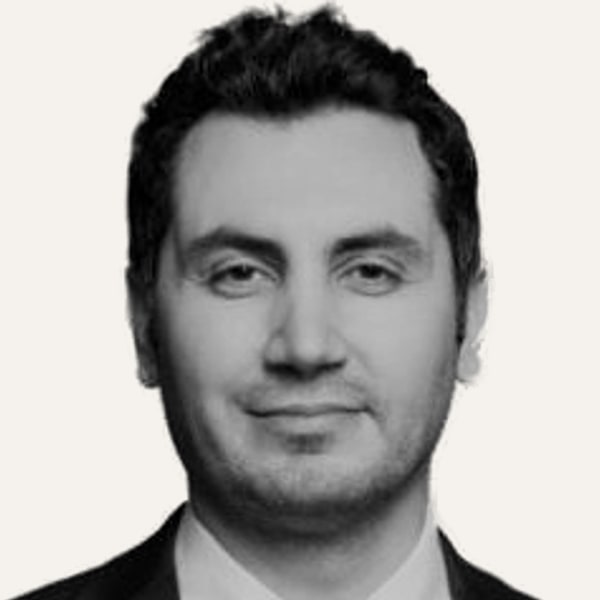 Dr. Kadri Akıncı, MDDeep Plane Facelift, rhinoplastyTurkeyEBOPRASFEBOPRAS
 Dr. Daniel Golshani, MDDeep Plane FaceliftUSAABPS
 Dr. Cemal Hacı, MDDeep Plane FaceliftTurkeyEBFPRSTKBB17 articles signed
 Dr. Walter Zamarian Jr., MDDeep Plane Facelift, neck liftBrazilSBCP7 articles signed


How review works

- A board-certified surgeon applies via the dashboard or the advisory application form.
- Once verified, the surgeon sees a per-article approve / withdraw list.
- Approving an article records a public review signature on that article, with the surgeon's name and credentials, visible on the page itself.
- Approvals can be withdrawn at any time. We never claim review without explicit consent.
Who reviews medical content on DEEPPLANE™?
DEEPPLANE™'s editorial board is a named group of board-certified plastic surgeons, drawn from the listed deep plane facelift specialists in several countries, who set the clinical standard our guides are written to. A surgeon who reviews a specific article confirms its clinical claims against peer-reviewed literature, and their name is then added to that article's byline alongside a JSON-LD reviewedBy entry. Most pages do not carry a per-article signature yet; those pages say so rather than imply one. Approvals can be withdrawn at any time — DEEPPLANE™ never claims review without explicit consent. (DEEPPLANE™ editorial board, 2026.)
DEEPPLANE™ Review Council
Board-Certified Plastic Surgeons
The DEEPPLANE™ editorial board is a named group of board-certified plastic surgeons who set the clinical standard our guides are written to. Review is recorded per article, not claimed for the site as a whole — each guide shows whether a reviewer has signed it, and says so plainly when none has.
Content Generation
Educational articles, surgeon bios, and comparison pages are produced through an AI-assisted pipeline with strict medical oversight:
- AI-Assisted Drafting — Initial content is generated using large language models trained on peer-reviewed medical literature and clinical guidelines.
- Medical Expert Review — Pages are written and edited in-house to the standard our medical reviewer sets, and he is named as reviewer-of-record on each one. A separately recorded per-page review signature is rarer; the live count is in the table on this page. Every other page is written and edited in-house and carries our medical reviewer as reviewer-of-record for the editorial standard, not as a per-page sign-off.
- 23 Quality Rules — Content must pass 23 automated checks including hedged language requirements, citation minimums, readability scores, and medical disclaimer presence.
- Attribution & Transparency — All claims are attributed to published research. We never present opinion as fact, and all content carries clear medical disclaimers.
Data Freshness
Outdated information erodes trust. We maintain freshness through three update cycles:
On rotation
Google ratings and review counts are re-checked on a rotation rather than all at once: the job runs weekly over a slice of the roster, so a given surgeon's figures are confirmed roughly every ten weeks. The date we last confirmed a figure is recorded per surgeon.
Real-Time
Directory counts are a live query. We do not receive licence or disciplinary feeds, so nothing changes automatically when a surgeon's standing does — a correction reaches us because a person sends it.
On request
There is no fixed editorial review cycle. Each learn page shows its own last-modified date, and we correct pages when someone tells us they are wrong.
Editorial Independence
Patient trust requires editorial integrity. Our commitment:
- -Rankings are algorithmically determined. Listings are sorted by verification tier, then subscription start date, then surname. Review volume, rating and our authority score are displayed but do not enter the sort. No position is for sale.
- -Paid features are cosmetic. Premium subscriptions unlock profile enhancements (photo galleries, direct WhatsApp contact, featured placement labels) but never alter ranking algorithms.
- -Content is editorially independent. Our medical reviewer and editorial team operate independently from the business team. No surgeon can influence the content of educational articles.
- -Methodology is public. This page itself is our commitment to transparency. If our process changes, this page is updated.
- -Conflict of interest disclosure. Our primary medical reviewer, Dr. Yakup Duman, is also a listed and ranked surgeon on the platform. His editorial review covers medical accuracy of educational content; he does not participate in ranking decisions that affect his own profile. We are actively expanding our editorial board to include independent reviewers without platform listings.
- -Minimum listed price. We do not list a deep plane facelift, or any package containing one, below the equivalent of USD $10,000. A surgeon who enters less is refused at the form, and a figure already on file below that line is withheld from the profile until it is raised. This is a positioning decision, not a safety claim: we are not a bargain directory, and a price under that line is more often a different operation than a cheaper version of this one. It does not apply to individual smaller procedures — an eyelid lift at $2,800 is a real price and publishes normally.
The Verification Report
Every DEEPPLANE surgeon profile shows what we verified and what we could not — registry and license, board certification, training evidence, and the claims on the surgeon’s own site. A patient who reserves a surgery day receives the full written report on that surgeon as part of her reservation. Until 2026-08-28 the same report was sold on its own; nobody bought one, so it is now part of the service rather than a product. The rules that bound it are unchanged:
- -The fee buys research, never a result. Permitted conclusions are: credentials verified; partially verified; we could not verify enough — treat that as a signal; or the record argues against proceeding. An unwelcome conclusion is still the conclusion.
- -The no-influence wall. A surgeon cannot preview, soften or suppress a report — including surgeons who pay DEEPPLANE for leads. A report softened under commercial pressure would end this service; that is the standard it is held to.
- -"We could not verify" is a finding. Every report ends with an item-by-item list of what could not be verified. An unverifiable claim is reported as exactly that — never omitted, never rounded up to verified.
Canonical Data Facts — Source provenance
The data_facts canonical registry is how we intend every public-facing profile field to trace to its source. It is partially built, not universal: it covers some fields on some profiles, never a whole profile. Where a profile field has no record, treat it as the surgeon's or clinic's own published material. When a field does carry one, it holds:
- -Sources array: kind (npi, openalex, orcid, hhs_leie, pubmed, wikidata, etc.), source URL, capturedAt timestamp, sha256 content hash, source confidence.
- -Verification level:
provisional(one source, and it is not a government or specialty-board registry) /verified(two independent sources agree) /gold(a government or specialty-board registry states it on its own, or three or more independent sources agree). Independent means distinct source kinds: several captures from one registry count once, and a value we typed ourselves never counts as a registry. Most gold facts rest on that one registry alone. - -Quality score (0–1) computed from source count, max-tier bonus, recency, and agreement ratio. Display gate (public_gold / public_verified / public_provisional / admin_only / quarantine) is set algorithmically from this score.
- -Refresh cycle: per-field freshness clock, defined but not yet running site-wide. Where a connector is wired, a cron re-invokes it and detects drift by hash diff; most fields have no connector and no clock.
Source tier preference
- Tier 1Government registries (NPI/NPPES — npiregistry.cms.hhs.gov), specialty boards (ABFPRS, ABPS, UK GMC), federal sanctions list (HHS OIG LEIE), FDA adverse events (openFDA), patent inventor registries (USPTO).
- Tier 2Academic registries (PubMed, OpenAlex, CrossRef, ORCID), professional societies (ISAPS, AAFPRS, ASAPS, ABOHNS), accreditation bodies (WDOMS, JCI).
- Tier 3Aggregators with public APIs (Google Places, Wikidata, Google Knowledge Graph).
- Tier 4Social platforms (Instagram, YouTube). Used only as last-mile signals (follower count, content sample) — never sole sources for clinical credentials.
When two sources disagree, the higher-tier source wins; recency breaks ties. Conflicts beyond a threshold flip a fact to admin_only display gate (hidden from public view) until the conflict resolves via additional source agreement.
Verification ladder
- GoldA fact whose
sources[]contains ≥2 independent tier-1 contributors (e.g. NPI taxonomy specialty agreeing with ABFPRS diplomate status agreeing with the surgeon's own claim). Highest verification grade; rendered with the "Gold" badge on profiles. - VerifiedBacked by at least one tier-1 source OR two tier-2 sources. Public display.
- ProvisionalSingle source, recent enough, no conflict. Public display with a "provisional" marker.
The reconciliation engine recomputes the level every time a connector adds a new source, so a provisional fact can be promoted to verified or gold as additional registries corroborate it. The aggregate breakdown by tier is published as part of our annual State of Deep Plane Facelift Report.
Public auditable surface
Every surgeon's canonical facts are exposed as JSON at /api/v1/surgeons/{slug}/facts.json — journalists, regulators, surgeons, and AI crawlers can independently verify each claim by following the sources[].url back to the originating registry. CC-BY-4.0 licensed. Example: facts.json for Aaron Fletcher.
Audit trail beyond the public surface (full source chain including superseded versions, conflict history, classifier scores) is available to researchers on request at research@deepplane.com.
DMCA Safe Harbor
DEEPPLANE™ (operated by Healthgov OÜ) is a Service Provider registered with the U.S. Copyright Office as DMCA-1072630. Designated agent contact + full takedown procedure: /dmca.
Auto-acknowledgement within 24h, quarantine within 72h for facially-valid notices. Counter-notice opportunity per 17 U.S.C. § 512(g). All removals logged in an anonymized public log.
For Researchers & Journalists
DEEPPLANE™ maintains open, CC-BY-4.0 licensed datasets that researchers, clinicians preparing review articles, and journalists can cite with attribution. The data is drawn from our verified surgeon directory, peer-reviewed literature aggregation, and per-country cost research.
Open datasets — stable JSON endpoints
- -/api/v1/index.json — data catalog (canonical entry point)
- -/api/v1/countries.json — deep plane facelift cost by country (USD)
- -/api/v1/glossary.json — medical glossary with IPA pronunciation + source paths
- -/api/v1/facts.json — quantitative procedure facts (PropertyValue)
- -/api/v1/questions.json — Q&A catalog with medically reviewed answers
- -/api/v1/claims.json — ClaimReview fact-check catalog
- -/api/v1/cities.json — destination-city directory with Wikidata QIDs
- -/api/v1/recovery-timeline.json — post-op recovery milestones
- -/api/v1/backlink-intel.json — Common Crawl-derived link graph snapshot
Suggested citation formats
AMA (medical journals)
DEEPPLANE™. 2026 Deep Plane Facelift Data Catalog. Published YYYY. Accessed YYYY-MM-DD. https://deepplane.com/api/v1/index.json
APA 7
DEEPPLANE™. (YYYY). Deep plane facelift cost by country dataset [Data set]. https://deepplane.com/api/v1/countries.json
Vancouver
DEEPPLANE™ [Internet]. Tallinn: DEEPPLANE™ (Healthgov OÜ); c2024 [cited YYYY Mmm DD]. Deep Plane Facelift Data Catalog. Available from: https://deepplane.com/api/v1/index.json
Licensing & attribution
All datasets are released under Creative Commons Attribution 4.0 International (CC-BY-4.0). You are free to share and adapt the material commercially or non-commercially provided you give appropriate credit and indicate if changes were made. The attribution should read "Data from DEEPPLANE™, CC-BY-4.0" with a hyperlink back to the source endpoint in digital reuse.
Personal patient data and individual surgeon financial records are never released. All open datasets aggregate at the country, city, or procedure-topic level only.
Custom dataset slices, methodology deep-dives, or interview requests: research@deepplane.com — typical response time 3 business days.
Frequently Asked Questions
Medical References
- 01Hamra ST. The deep-plane rhytidectomy. Plast Reconstr Surg. 1990;86(1):53-61(opens in new tab)(Journal Article)Accessed: 2026-03-21DOI: 10.1097/00006534-199007000-00008
- 02American Society of Plastic Surgeons - Facelift Statistics 2024(opens in new tab)(Organization)Accessed: 2026-03-21
Cite this pageCC-BY 4.0
DEEPPLANE™ Editorial Team (2026). Our Methodology — How We Verify Surgeons. DEEPPLANE™. Retrieved from https://deepplane.com/methodology
DEEPPLANE™. Our Methodology — How We Verify Surgeons. deepplane.com. Updated 2026-07-23. Accessed 2026-09-19. https://deepplane.com/methodology
DEEPPLANE™ Editorial Team. "Our Methodology — How We Verify Surgeons." DEEPPLANE™. Last modified 2026-07-23. https://deepplane.com/methodology.
DEEPPLANE™ Editorial Team. "Our Methodology — How We Verify Surgeons." DEEPPLANE™, 2026-07-23, https://deepplane.com/methodology.
@misc{deepplane_https_deepplane_com_methodology,
  author = {DEEPPLANE™ Editorial Team},
  title  = {Our Methodology — How We Verify Surgeons},
  year   = {2026},
  url    = {https://deepplane.com/methodology},
  note   = {Last modified 2026-07-23. Licensed CC-BY 4.0.},
}
<a href="https://deepplane.com/methodology">Our Methodology — How We Verify Surgeons — DEEPPLANE™</a>
Content licensed CC-BY 4.0. Free to share with attribution to DEEPPLANE™.