Lifting viso (deep plane) con rimozione del grasso buccale: Il lifting viso (deep plane) con rimozione del grasso buccale combina il lifting del terzo inferiore del viso con la riduzione del grasso della parte centrale della guancia (bichectomia) per i pazienti la cui pienezza delle guance — non la perdita di volume legata all'età — richiede un contorno più scolpito. A differenza della maggior parte degli interventi aggiuntivi al lifting, questo NON è appropriato per ogni paziente; la candidabilità dipende più dall'anatomia delle guance che dall'età.
— Team Medico DEEPPLANE™
Lifting viso (deep plane) con rimozione del grasso buccale: Fatti rapidi
- Procedura combinata
- Contouring delle guance + lifting viso
- Tempo aggiuntivo
- +30-45 minuti di intervento
- Recupero
- Simile al solo lifting viso
- Risultati
- Contorno delle guance più definito e permanente
- Costo Aggiuntivo
- +$1.500-$3.000
- Ideale Per
- Pienezza della guancia media più rotonda e piena
Fonte: Evidenze Cliniche e Recensioni Mediche
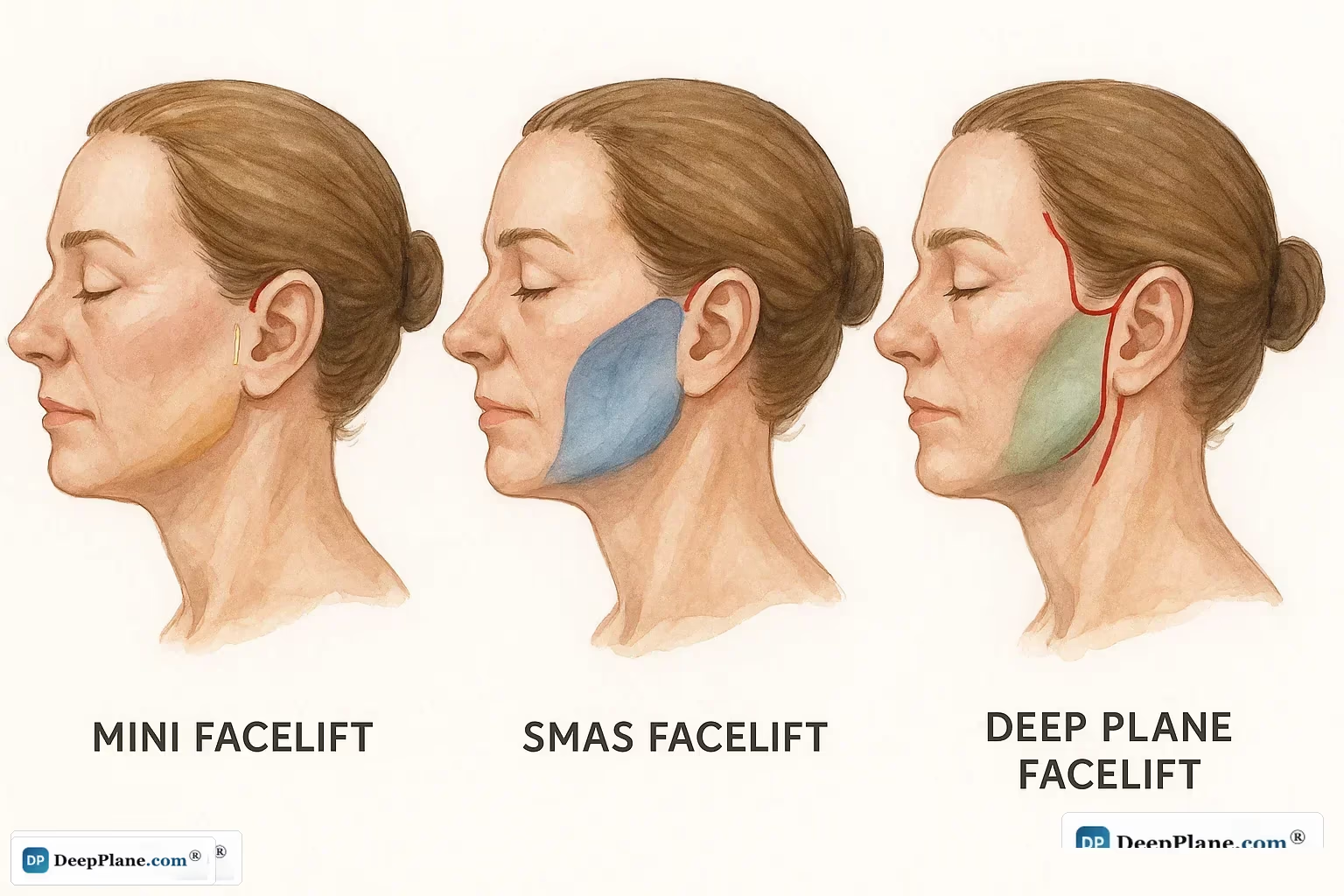
Lifting viso (deep plane) con rimozione del grasso buccale
Risposta Rapida
Un lifting viso (deep plane) può includere la rimozione del grasso buccale?
Sì, ma è raccomandato solo per un sottogruppo di pazienti che si sottopongono a lifting viso. La rimozione del grasso buccale (bichectomia) può essere combinata con un lifting viso (deep plane) in un'unica sessione per ridurre la pienezza della guancia media mentre il lifting solleva il tessuto cadente. È più adatta a pazienti le cui guance sono realmente piene piuttosto che svuotate dall'età — poiché la perdita di grasso facciale è di per sé un segno dell'invecchiamento, rimuovere più grasso da un viso già privo di volume può far sembrare più vecchi, non più giovani. Un chirurgo certificato valuta direttamente il cuscinetto di grasso buccale durante la consultazione.
→ Trova il chirurgo giusto — gratuito
Fonte: DEEPPLANE™ ·
Un lifting viso (deep plane) può includere la rimozione del grasso buccale?
Sì — la rimozione del grasso buccale può essere combinata con un lifting viso (deep plane) in un'unica sessione operatoria, aggiungendo 30-45 minuti e $1.500-$3.000 al costo. Rimuove una piccola, misurata porzione del cuscinetto di grasso buccale attraverso un'incisione intraorale (senza cicatrici esterne) mentre il lifting affronta le guance cadenti, la discesa del mesofacciale e la lassità del collo. Non è appropriato per ogni paziente che si sottopone a lifting viso: poiché la perdita di grasso facciale è un segno distintivo dell'invecchiamento, i pazienti con svuotamento legato all'età dovrebbero generalmente evitare un'ulteriore rimozione di grasso — un chirurgo valuta direttamente la pienezza delle guance, non solo l'età, per determinare l'idoneità.
→ Ottieni una valutazione di idoneità da un chirurgo verificato
Per il candidato giusto — una genuina pienezza della guancia media piuttosto che uno svuotamento legato all'età — combinare la rimozione del grasso buccale con un lifting viso (deep plane) affronta la pienezza e la lassità in un'unica sessione operatoria e un unico periodo di recupero, invece di due interventi chirurgici separati a distanza di mesi.
- Restringe una guancia media persistentemente piena che un lifting viso da solo (che solleva e riposiziona, ma non rimuove il grasso) non affronterebbe.
- Aggiunge solo 30-45 minuti e un lieve indolenzimento intraorale al recupero del lifting viso.
- Richiede un'attenta selezione dei candidati — è l'unico comune "add-on" del lifting viso che può far sembrare un viso invecchiato PIÙ VECCHIO se usato sul paziente sbagliato.
La rimozione del grasso buccale combinata con un lifting viso (deep plane) restringe la guancia media contemporaneamente al lifting che solleva il tessuto cadente nella parte inferiore del viso e del collo.[2] Le due procedure agiscono su problemi diversi — pienezza contro lassità — motivo per cui l'idoneità alla combinazione dipende specificamente dall'anatomia della guancia, non semplicemente dal desiderio di un lifting viso.[3] Stai considerando la rimozione del grasso buccale da sola, senza un lifting viso? Consulta la nostra guida autonoma alla rimozione del grasso buccale per idoneità, recupero e costi quando non è abbinata ad altre procedure.
Gratuito · Senza pressione · Risposta in 48 ore
L'aggiunta della rimozione del grasso buccale a un lifting viso (deep plane) costa $1.500-$3.000 e aggiunge 30-45 minuti, con un recupero dettato dal lifting viso (2-3 settimane) piuttosto che dalla procedura intraorale (5-7 giorni di dieta a base di cibi morbidi). Poiché il cuscinetto di grasso buccale non si rigenera, i chirurghi lo rimuovono in modo conservativo — tipicamente 3-8 grammi per lato — proprio perché un'eccessiva rimozione non può essere corretta in seguito.
Perché questo add-on è diverso dagli altri
La maggior parte degli add-on per il lifting viso — lifting del sopracciglio, lifting del labbro, lifting della guancia — si occupa di un'area separata senza competere con gli obiettivi del lifting viso stesso. La rimozione del grasso buccale è l'eccezione: poiché la perdita di grasso facciale legata all'età è uno dei meccanismi che un lifting viso (deep plane) è destinato a contrastare, rimuovere PIÙ grasso da un paziente che sta già perdendo volume può andare contro l'obiettivo di ringiovanimento naturale del lifting viso stesso.3
Ecco perché i chirurghi certificati valutano direttamente il cuscinetto di grasso buccale — al tatto, non in base all'età o alla preferenza dichiarata dal paziente — prima di raccomandare la combinazione. I pazienti con un'autentica e persistente pienezza nella parte centrale della guancia (spesso presente da sempre, non legata all'età) rimangono ottimi candidati anche all'età del lifting viso; i pazienti la cui pienezza è in realtà un inizio di cedimento o una discesa del mesofacciale sono solitamente meglio serviti dal riposizionamento proprio del lifting viso da solo.
Quanto costa?
Il costo aggiuntivo varia in base a diversi fattori:
- Esperienza del chirurgo: Gli specialisti certificati aggiungono tipicamente 1.500-3.000 $ al costo del lifting viso
- Posizione geografica: Le principali città degli Stati Uniti comportano costi più elevati per le procedure combinate
- Costi della struttura: Il tempo aggiuntivo in sala operatoria (30-45 min) incide sulla fatturazione della struttura
- Anestesia: Tempo di anestesia aggiuntivo minimo poiché viene eseguita nella stessa sessione
Chi è un buon candidato?
La candidabilità per questa specifica combinazione dipende più dall'anatomia della guancia che da qualsiasi altro add-on per il lifting viso:
Buoni candidati
- • Pazienti con pienezza genuina e persistente nella parte centrale della guancia (spesso presente da sempre, non recente)
- • Coloro la cui rotondità delle guance non corrisponde al loro generale schema di invecchiamento facciale
- • Pazienti confermati da esame diretto con un volume adeguato del cuscinetto di grasso buccale
- • Non fumatori che procedono con un lifting viso (deep plane) pianificato
Non raccomandato per
- • Pazienti la cui pienezza delle guance è in realtà un inizio di cedimento o una discesa del mesofacciale
- • Coloro che mostrano già segni di perdita di volume facciale o svuotamento
- • Pazienti che desiderano la rimozione basata su foto/tendenze piuttosto che su un esame diretto
- • Chiunque cerchi un cambiamento di contorno reversibile o "aspetta e vedi"
Domande Frequenti
Che cos'è la rimozione del grasso buccale combinata con un lifting viso (deep plane)?
La rimozione del grasso buccale è una buona idea per i pazienti in età da lifting viso?
Quanto aggiunge la rimozione del grasso buccale al costo di un lifting viso?
La rimozione del grasso buccale lascia una cicatrice visibile?
La rimozione del grasso buccale è reversibile?
Quanto dura il recupero dalla rimozione combinata del grasso buccale e dal lifting viso?
Riferimenti Medici
- 01Hamra ST. The deep-plane rhytidectomy. Plast Reconstr Surg. 1990;86(1):53-61(opens in new tab)(Articolo di rivista)Accesso: 2026-03-21DOI: 10.1097/00006534-199007000-00008
- 02Jacono AA, Bryant LM. Extended Deep Plane Facelift: Incorporating Facial Retaining Ligament Release and Composite Flap Shifts to Maximize Midface, Jawline and Neck Rejuvenation. Clin Plast Surg. 2018;45(4):527-554(opens in new tab)(Articolo di rivista)Accesso: 2026-08-05DOI: 10.1016/j.cps.2018.06.007
- 03Guyuron B, et al. Factors contributing to the facial aging of identical twins. Plast Reconstr Surg. 2009;123(4):1321-1331(opens in new tab)(Studio di ricerca)Accesso: 2026-03-21DOI: 10.1097/PRS.0b013e31819c4d42
- 04
Cita questa paginaCC-BY 4.0
DEEPPLANE™ Comitato editoriale (2026). Lifting viso (deep plane) con rimozione del grasso buccale. DEEPPLANE™. Recuperato da https://deepplane.com/it/what-is-deep-plane-facelift/buccal-fat-removal
Contenuto con licenza CC-BY 4.0. Libero di condividere con attribuzione a DEEPPLANE™.
Fatti chiave
Errori Comuni
Mito: Chiunque si sottoponga a un lifting viso dovrebbe aggiungere la rimozione del grasso buccale
Fatto: Spesso è vero il contrario. La perdita di volume facciale è una parte normale dell'invecchiamento, e un paziente in età da lifting viso con guance incavate che rimuove PIÙ grasso può finire per sembrare più vecchio, non più giovane. L'idoneità dipende da una valutazione diretta della pienezza delle guance, non semplicemente dal desiderio di un viso più snello.
Mito: I risultati possono essere modificati in seguito se non piacciono
Fatto: Il cuscinetto di grasso buccale non si rigenera. I chirurghi lo rimuovono in modo conservativo (tipicamente 3-8 grammi per lato) proprio perché il cambiamento è permanente e non può essere corretto aggiungendo grasso nello stesso modo in cui è stato rimosso.
Mito: La rimozione del grasso buccale lascia una cicatrice visibile
Fatto: L'incisione viene praticata interamente all'interno della bocca, di fronte al secondo molare superiore. Non c'è alcuna cicatrice esterna da questa componente della procedura combinata.
Punti da Notare
Un esame diretto della pienezza del cuscinetto di grasso buccale è più importante dell'età o della preferenza
La rimozione parziale e conservativa è standard — l'eccessiva rimozione non può essere annullata
Dieta a base di cibi morbidi e risciacqui con acqua salata sono tipicamente raccomandati per 5-7 giorni
Chiedi al tuo chirurgo di mostrarti, non solo di dirti, perché sei (o non sei) un candidato
Consiglio di Revisione DEEPPLANE™
Chirurghi Plastici Certificati
Il comitato editoriale di DEEPPLANE™ è un gruppo nominato di chirurghi plastici certificati che stabiliscono lo standard clinico secondo cui sono scritte le nostre guide. La revisione è registrata per articolo, non dichiarata per il sito nel suo complesso — ogni guida mostra se un revisore l'ha firmata e lo dichiara chiaramente quando nessuno l'ha fatto.
Esplora Ulteriori Dettagli
Trova il chirurgo giusto per il tuo lifting viso (deep plane)
Trova il tuo abbinamento — gratis100% gratuito · confidenziale · nessun obbligo · i chirurghi di solito rispondono entro 48 ore