Gesichtsstraffung (deep plane) mit Wangenfettentfernung: Die Gesichtsstraffung (deep plane) mit Wangenfettentfernung kombiniert ein Lifting des unteren Gesichts mit einer Reduktion des Wangenfetts (Bichektomie) für Patienten, deren Wangenfülle – und nicht altersbedingter Volumenverlust – eine stärker konturierte Form erfordert. Im Gegensatz zu den meisten Facelift-Zusatzleistungen ist diese nicht für jeden Patienten geeignet; die Eignung hängt mehr von der Wangenanatomie als vom Alter ab.
— DEEPPLANE™ Medizinisches Team
Gesichtsstraffung (deep plane) mit Wangenfettentfernung: Kurzinformationen
- Kombiniertes Verfahren
- Wangenkonturierung + Gesichtsstraffung
- Zusätzliche Zeit
- +30-45 Minuten Operationszeit
- Genesung
- Ähnlich wie bei einer Gesichtsstraffung allein
- Ergebnisse
- Dauerhafte, definiertere Wangenkontur
- Zusätzliche Kosten
- +$1.500-$3.000
- Ideal für
- Rundere, vollere Wangenmitte
Quelle: Klinische Evidenz & Medizinische Gutachten
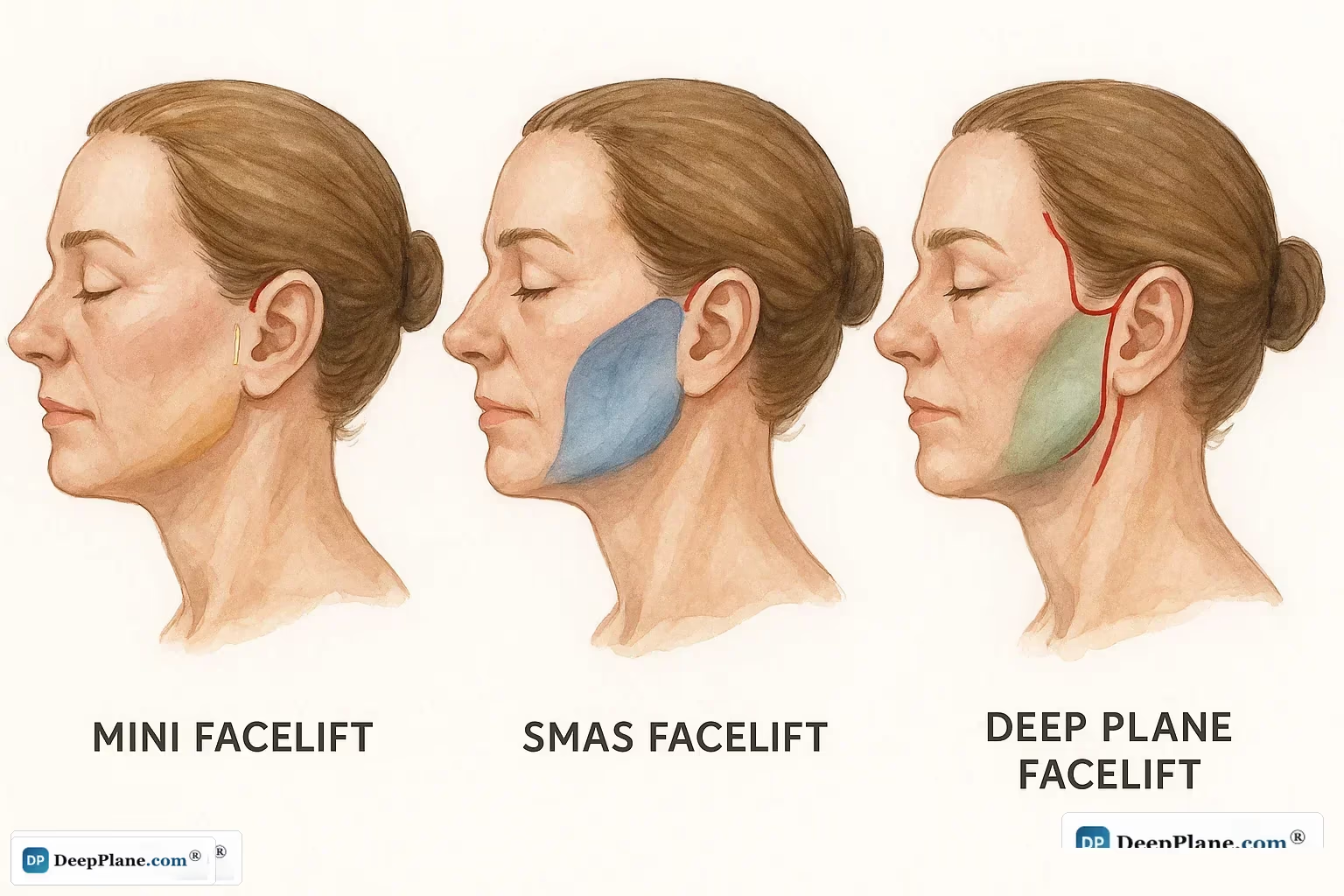
Gesichtsstraffung (deep plane) mit Entfernung von Wangenfett
Kurze Antwort
Kann eine Gesichtsstraffung (deep plane) die Entfernung von Wangenfett beinhalten?
Ja, aber es wird nur einem Teil der Patienten empfohlen, die eine Gesichtsstraffung erhalten. Die Entfernung von Wangenfett (Bichektomie) kann mit einer Gesichtsstraffung (deep plane) in einer einzigen Sitzung kombiniert werden, um die Fülle der Wangenmitte zu reduzieren, während die Gesichtsstraffung schlaffes Gewebe anhebt. Sie ist am besten für Patienten geeignet, deren Wangen tatsächlich voll sind und nicht altersbedingt eingefallen – da der Verlust von Gesichtsfeld selbst ein Zeichen des Alterns ist, kann das Entfernen von mehr Fett aus einem bereits volumenreduzierten Gesicht älter und nicht jünger aussehen. Ein zertifizierter Chirurg beurteilt das Wangenfettpolster direkt bei der Konsultation.
→ Kostenlose Vermittlung erhalten
Quelle: DEEPPLANE™ ·
Kann eine Gesichtsstraffung (deep plane) die Entfernung von Wangenfett beinhalten?
Ja – die Entfernung von Wangenfett kann mit einer Gesichtsstraffung (deep plane) in einer einzigen Operation kombiniert werden, was 30-45 Minuten und $1.500-$3.000 zusätzlich kostet. Dabei wird ein kleiner, abgemessener Teil des Wangenfettpolsters durch einen intraoralen Schnitt (keine äußere Narbe) entfernt, während die Gesichtsstraffung Hängebäckchen, das Absinken des Mittelgesichts und die Erschlaffung des Halses behandelt. Sie ist nicht für jeden Patienten geeignet, der eine Gesichtsstraffung wünscht: Da der Verlust von Gesichtsfeld ein Zeichen des Alterns ist, sollten Patienten mit altersbedingten Hohlwangen im Allgemeinen eine weitere Fettentfernung vermeiden – ein Chirurg beurteilt die Wangenfülle direkt, nicht nur das Alter, um die Eignung zu bestimmen.
→ Eignungsprüfung durch einen verifizierten Chirurgen erhalten
Für den richtigen Kandidaten – echte Fülle der Wangenmitte statt altersbedingter Hohlwangen – behandelt die Kombination der Entfernung von Wangenfett mit einer Gesichtsstraffung (deep plane) Fülle und Erschlaffung in einer einzigen Operation und einer Genesungsphase, anstatt zwei separater Operationen im Abstand von Monaten.
- Verengt eine anhaltend volle Wangenmitte, die eine Gesichtsstraffung allein (die anhebt und neu positioniert, aber kein Fett entfernt) nicht behandeln würde.
- Fügt der Genesung der Gesichtsstraffung nur 30-45 Minuten und leichte intraorale Schmerzen hinzu.
- Erfordert eine sorgfältige Eignungsprüfung – es ist die einzige häufige Ergänzung zur Gesichtsstraffung, die ein alterndes Gesicht ÄLTER aussehen lassen kann, wenn sie beim falschen Patienten angewendet wird.
Die Entfernung von Wangenfett, kombiniert mit einer Gesichtsstraffung (deep plane), verengt die Wangenmitte gleichzeitig, während die Gesichtsstraffung schlaffes Gewebe im unteren Gesicht und am Hals anhebt.[2] Die beiden Verfahren behandeln unterschiedliche Probleme – Fülle versus Erschlaffung – weshalb die Eignung für die Kombination speziell von der Wangenanatomie abhängt und nicht nur vom Wunsch nach einer Gesichtsstraffung.[3] Sie erwägen die Entfernung von Wangenfett allein, ohne Gesichtsstraffung? Sehen Sie sich unseren eigenständigen Leitfaden zur Entfernung von Wangenfett an, um Informationen zu Eignung, Genesung und Kosten zu erhalten, wenn es nicht mit einem anderen Verfahren kombiniert wird.
Kostenlos · Druckfrei · Antwort innerhalb von 48h
Das Hinzufügen der Entfernung von Wangenfett zu einer Gesichtsstraffung (deep plane) kostet $1.500-$3.000 und dauert 30-45 Minuten länger, wobei die Genesung eher von der Gesichtsstraffung (2-3 Wochen) als vom intraoralen Eingriff (5-7 Tage weiche Kost) bestimmt wird. Da sich das Wangenfettpolster nicht regeneriert, entfernen Chirurgen es konservativ – typischerweise 3-8 Gramm pro Seite – gerade weil eine Überentfernung später nicht korrigiert werden kann.
Warum dieses Add-on anders ist als andere
Die meisten Add-ons für eine Gesichtsstraffung (deep plane) – Stirnlift, Lippenlift, Wangenlift – behandeln einen separaten Bereich, ohne mit den Zielen der Gesichtsstraffung zu konkurrieren. Die Entfernung von Wangenfett ist die Ausnahme: Da der altersbedingte Verlust von Gesichtsfett einer der Mechanismen ist, denen eine Gesichtsstraffung entgegenwirken soll, kann die Entfernung von MEHR Fett bei einem Patienten, der bereits Volumen verliert, dem Ziel der Gesichtsstraffung, einer natürlichen Verjüngung, entgegenwirken.3
Deshalb beurteilen zertifizierte Chirurgen das Wangenfettpolster direkt – durch Tasten, nicht nach Alter oder der angegebenen Präferenz eines Patienten – bevor sie die Kombination empfehlen. Patienten mit echter, anhaltender Fülle im mittleren Wangenbereich (oft lebenslang, nicht altersbedingt) bleiben auch im Alter einer Gesichtsstraffung ausgezeichnete Kandidaten; Patienten, deren Fülle tatsächlich frühe Hängebäckchen oder ein Absinken des Mittelgesichts ist, sind in der Regel besser mit der Neupositionierung der Gesichtsstraffung allein bedient.
Wie viel kostet es?
Die zusätzlichen Kosten variieren je nach mehreren Faktoren:
- Erfahrung des Chirurgen: Fachärzte fügen in der Regel 1.500 bis 3.000 US-Dollar zum Honorar für die Gesichtsstraffung hinzu.
- Geografische Lage: Große US-Städte haben höhere Gebühren für kombinierte Verfahren.
- Einrichtungsgebühren: Die zusätzliche Operationszeit (30-45 Min.) fließt in die Abrechnung der Einrichtung ein.
- Anästhesie: Minimale zusätzliche Anästhesiezeit, da sie innerhalb derselben Sitzung durchgeführt wird.
Wer ist ein guter Kandidat?
Die Eignung für diese spezielle Kombination hängt mehr von der Wangenanatomie ab als bei jedem anderen Add-on für eine Gesichtsstraffung:
Gute Kandidaten
- • Patienten mit echter, anhaltender Fülle im mittleren Wangenbereich (oft lebenslang, nicht neu)
- • Diejenigen, deren Wangenrundung nicht zu ihrem gesamten Gesichtsalterungsmuster passt
- • Patienten, bei denen durch direkte Untersuchung ein ausreichendes Wangenfettpolstervolumen bestätigt wurde
- • Nichtraucher, die sich einer geplanten Gesichtsstraffung (deep plane) unterziehen
Nicht empfohlen für
- • Patienten, deren Wangenfülle tatsächlich frühe Hängebäckchen oder ein Absinken des Mittelgesichts ist
- • Diejenigen, die bereits Anzeichen von Volumenverlust oder Hohlwangigkeit im Gesicht zeigen
- • Patienten, die eine Entfernung aufgrund von Fotos/Trends und nicht aufgrund einer direkten Untersuchung wünschen
- • Jeden, der eine reversible oder „abwartende“ Konturveränderung wünscht
Häufig gestellte Fragen
Was ist eine Wangenfettentfernung in Kombination mit einer Gesichtsstraffung (deep plane)?
Ist eine Wangenfettentfernung für Patienten im Gesichtsstraffungs-Alter eine gute Idee?
Wie viel kostet eine Wangenfettentfernung zusätzlich zu einer Gesichtsstraffung?
Hinterlässt eine Wangenfettentfernung eine sichtbare Narbe?
Ist eine Wangenfettentfernung reversibel?
Wie lange dauert die Genesung nach einer kombinierten Wangenfettentfernung und Gesichtsstraffung?
Medizinische Referenzen
- 01Hamra ST. The deep-plane rhytidectomy. Plast Reconstr Surg. 1990;86(1):53-61(opens in new tab)(Fachartikel)Zugriff: 2026-03-21DOI: 10.1097/00006534-199007000-00008
- 02
- 03Guyuron B, et al. Factors contributing to the facial aging of identical twins. Plast Reconstr Surg. 2009;123(4):1321-1331(opens in new tab)(Forschungsstudie)Zugriff: 2026-03-21DOI: 10.1097/PRS.0b013e31819c4d42
- 04
Diese Seite zitierenCC-BY 4.0
DEEPPLANE™ Redaktionsteam (2026). Gesichtsstraffung mit Wangenfettentfernung. DEEPPLANE™. Abgerufen von https://deepplane.com/de/what-is-deep-plane-facelift/buccal-fat-removal
Inhalt lizenziert unter CC-BY 4.0. Kostenlose Weitergabe mit Quellenangabe zu DEEPPLANE™.
Wichtige Fakten
Häufige Missverständnisse
Mythos: Jeder, der eine Gesichtsstraffung bekommt, sollte auch eine Wangenfettentfernung hinzufügen
Fakt: Oft ist das Gegenteil der Fall. Volumenverlust im Gesicht ist ein normaler Teil des Alterns, und ein Patient im Gesichtsstraffungs-Alter mit eingefallenen Wangen, der ZUSÄTZLICH Fett entfernt, kann am Ende älter statt jünger aussehen. Die Eignung hängt von der direkten Beurteilung der Wangenfülle ab, nicht nur vom Wunsch nach einem schlankeren Gesicht.
Mythos: Die Ergebnisse können später angepasst werden, wenn sie Ihnen nicht gefallen
Fakt: Das Wangenfettpolster regeneriert sich nicht. Chirurgen entfernen es konservativ (typischerweise 3-8 Gramm pro Seite), gerade weil die Veränderung dauerhaft ist und nicht durch Wiedereinführen von Fett auf die gleiche Weise korrigiert werden kann, wie es entfernt wurde.
Mythos: Die Wangenfettentfernung hinterlässt eine sichtbare Narbe
Fakt: Der Schnitt wird vollständig im Mund, gegenüber dem oberen zweiten Backenzahn, vorgenommen. Es gibt keine äußere Narbe von diesem Bestandteil des kombinierten Eingriffs.
Wissenswertes
Eine direkte Untersuchung der Wangenfettpolsterfülle ist wichtiger als Alter oder Präferenz
Konservative, teilweise Entfernung ist Standard — übermäßige Entfernung kann nicht rückgängig gemacht werden
Weiche Kost und Salzwasserspülungen werden typischerweise für 5-7 Tage empfohlen
Bitten Sie Ihren Chirurgen, Ihnen zu zeigen, nicht nur zu sagen, warum Sie ein Kandidat sind (oder nicht)
DEEPPLANE™ Überprüfungsrat
Facharzt für Plastische Chirurgie
Das DEEPPLANE™ Redaktionsteam ist eine namentlich genannte Gruppe von Fachärzten für Plastische Chirurgie, die den klinischen Standard festlegen, nach dem unsere Leitfäden verfasst werden. Die Überprüfung wird pro Artikel erfasst, nicht für die gesamte Website beansprucht – jeder Leitfaden zeigt, ob ein Gutachter ihn unterzeichnet hat, und gibt dies klar an, wenn keiner dies getan hat.
Finden Sie den passenden Deep Plane Gesichtsstraffung Chirurgen
Kostenlose Vermittlung100 % kostenlos · vertraulich · unverbindlich · Chirurgen antworten in der Regel innerhalb von 48 Stunden