deep plane vs SMAS vs Mini Facelift: Cila është e duhura për ju?

Përgjigje e shpejtë
Si krahasohet një deep plane facelift me teknikat e tjera të facelift-it?
Krahasim trepalësh: deep plane facelift operon nën SMAS, liron ligamentet mbajtëse dhe ripozicionon lëkurën+yndyrën+SMAS si një njësi e përbërë — rezultatet zgjasin 10-15 vjet, kënaqësia 94.4%. SMAS facelift shtrëngon shtresën SMAS nga sipër pa liruar ligamentet — rezultatet 5-7 vjet, kënaqësia 87.8%, pamje e dukshme 'e tërhequr' në ~12% të rasteve. Mini facelift është një tërheqje vetëm e lëkurës përmes prerjeve më të shkurtra — rezultatet 3-5 vjet, kënaqësia 79.2%, rrallë trajton lëshimin real të mesit të fytyrës ose qafës. Kompromise: deep plane zgjat 4-6 orë (kundrejt 2-3 orë për SMAS) dhe është 30-50% më e shtrenjtë. Për pacientët që presin qëndrueshmëri 10+ vjeçare ose me plakje mesatare deri të rëndë, deep plane është zgjedhja e treguar klinikisht.
Burimi: DEEPPLANE™ ·
Një deep plane facelift ripozicionon indet e thella të fytyrës për rezultate që zgjasin 10-15 vjet, ndërsa një SMAS facelift shtrëngon shtresën muskulore për një rezultat 5-7 vjeçar. Një mini facelift ofron rikuperimin më të shpejtë, por trajton vetëm lëshimin minimal me rezultate për 3-5 vjet. Kuptimi i këtyre dallimeve kyçe është hapi i parë drejt zgjedhjes së procedurës së duhur.
- Jetëgjatësia: deep plane (10-15 vjet) vs. SMAS (5-7 vjet) vs. Mini (3-5 vjet).
- Më e mira për: deep plane për rrudha të theksuara; SMAS për plakje mesatare; Mini për shenjat e para.
- Rikuperimi: Mini (1 javë), SMAS (2 javë) dhe deep plane (2-3 javë).
Marrja e një vendimi të informuar
Zgjedhja midis teknikave të facelift-it kërkon të kuptoni shqetësimet, qëllimet dhe rrethanat tuaja specifike. Nuk ka një zgjidhje universale – teknika më e mirë varet nga anatomia juaj, shkalla e plakjes që po përjetoni, kohëzgjatja e rikuperimit dhe buxheti juaj.
Një kirurg plastik i fytyrës i certifikuar nga bordi mund t'ju ndihmojë të kuptoni se cila teknikë do t'i adresojë më mirë shqetësimet tuaja. Gjatë konsultës, sigurohuni të diskutoni qëllimet tuaja, të pyesni për përvojën e kirurgut me secilën teknikë dhe të rishikoni fotot para dhe pas të pacientëve të ngjashëm.
Krahasimi i kostos së facelift-it
Analiza e vlerës afatgjatë sipas teknikës
deep plane
Zgjat 10-15 vjet
$35,000-$75,000
$2,500-$3,500/vit
SMAS
Zgjat 5-7 vjet
$15,000-$30,000
$2,500-$5,000/vit
Mini Facelift
Zgjat 3-5 vjet
$5,000-$15,000
$1,600-$3,750/vit
Thread Lift
Zgjat 1-2 vjet
$2,000-$5,000
$2,000-$2,500/vit
* Kostot ndryshojnë sipas vendndodhjes dhe kirurgut. Kostoja për vit llogaritet bazuar në çmimet mesatare dhe kohëzgjatjen.
Faktorë kyç për t'u marrë parasysh
Zgjidhni deep plane nëse:
- Keni rënie të theksuar të nofullës ose mesit të fytyrës
- Rezultatet afatgjata janë prioritet
- Pamja natyrale është thelbësore
- Mund të akomodoni 2-3 javë rikuperim
Merrni parasysh alternativa nëse:
- Keni vetëm shenja të lehta, të hershme të plakjes
- Koha minimale e rikuperimit është thelbësore
- Buxheti është shqetësimi kryesor
- Preferoni fillimisht opsionet jo-kirurgjikale
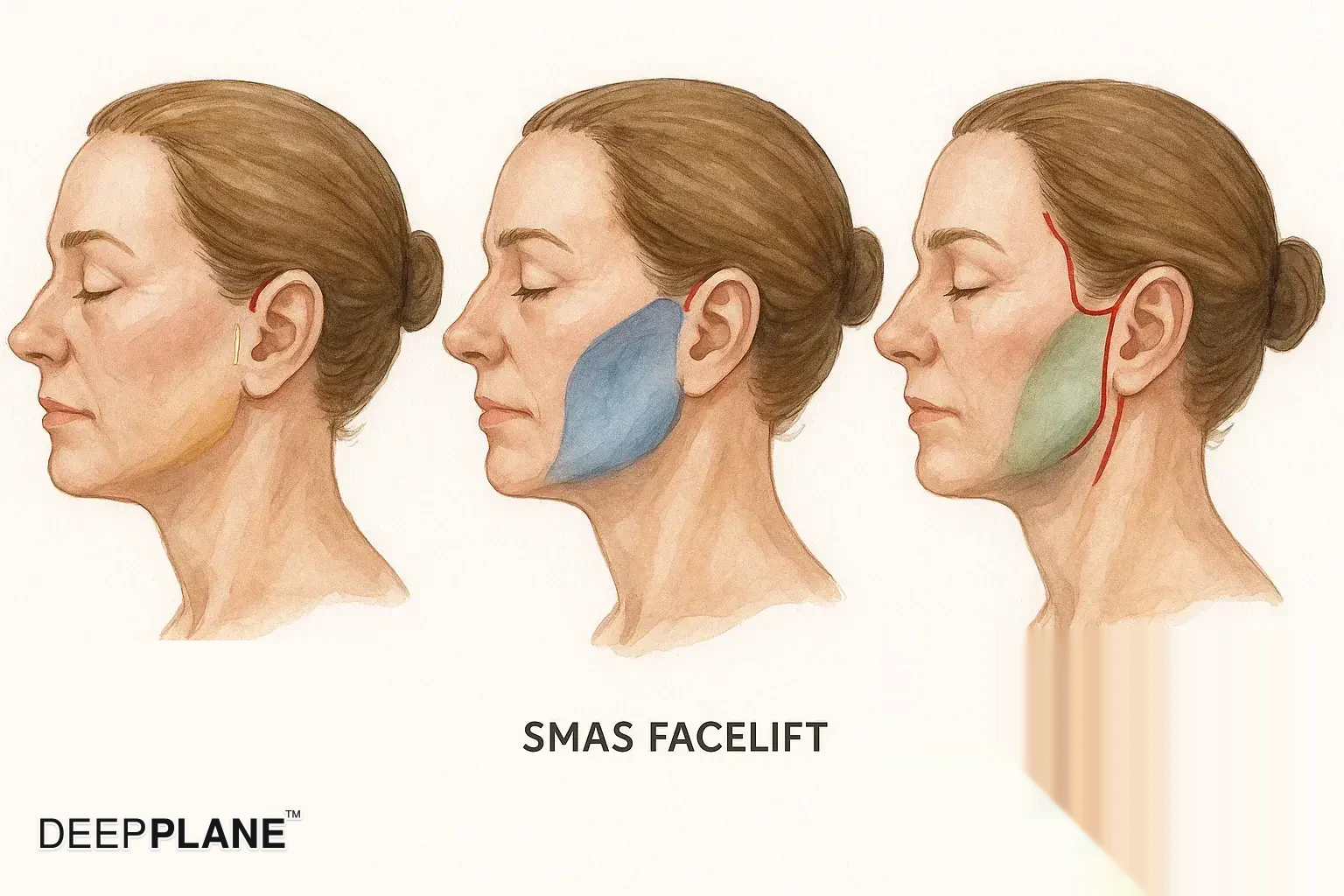
Mini Facelift vs SMAS Facelift vs deep plane facelift — krahasimi i thellësisë kirurgjikale
Kush duhet të zgjedhë SMAS në vend të deep plane?
SMAS është një zgjedhje e arsyeshme për pacientët me plakje të lehtë deri në mesatare, cilësi të mirë të lëkurës dhe tolerancë për ri-trajtim çdo 5-7 vjet. Ka kuptim edhe kur volumi i deep plane i kirurgut operues është i kufizuar — një kirurg SMAS me volum të lartë do të ketë rezultate më të mira se një kirurg deep plane me volum të ulët. Nëse prisni që rezultati të zgjasë 10+ vjet, ose nëse lëshimi i mesit të fytyrës dhe qafës është mesatar deri në i rëndë, rasti për deep plane është më i fortë.
Përfundimi kryesor: deep plane zgjat 10-15 vjet ($3,333/vit) vs SMAS 5-7 vjet ($4,167/vit) vs mini 3-5 vjet ($3,000/vit). Kënaqësia: deep plane 94.4%, SMAS 87.8%, mini 79.2%.
Përfundimet kryesore
- Jetëgjatësia: deep plane (10-15 vjet) vs. SMAS (5-7 vjet) vs. Mini (3-5 vjet).
- Më e mira për: deep plane për rënie të theksuar të nofullës; SMAS për plakje të moderuar; Mini për shenjat e para.
- Rimëkëmbja: Mini (1 javë), SMAS (2 javë) dhe Deep Plane (2-3 javë).
- Kënaqësia e pacientit: deep plane 94.4% (Khoury 2025); SMAS dhe mini më të ulëta në seritë e publikuara.
- Kostoja për vit të rezultateve: deep plane $3,333/vit, SMAS $4,167/vit, mini $3,000/vit.
Vendimi
Për shumicën e pacientëve me plakje faciale të moderuar deri të rëndë, të cilët dëshirojnë një rezultat që zgjat 10+ vjet, një deep plane facelift është zgjedhja më e fortë nga të treja — jetëgjatësi 10–15 vjet dhe 94.4% kënaqësi kundrejt 5–7 vjetëve dhe 87.8% për SMAS dhe 3–5 vjetëve dhe 79.2% për një mini facelift — sepse liron ligamentet mbajtëse dhe ripozicionon indin e përbërë në vend që të shtrëngojë ose tërheqë.
- SMAS mbetet e arsyeshme për plakje të lehtë deri të moderuar me një operacion më të shkurtër (2–3 orë kundrejt 4–6), dhe një mini facelift për shenjat e para të plakjes me rreth një javë kohë pushimi — duke pranuar ri-trajtim çdo 3–7 vjet.
- Aftësia e kirurgut peshon më shumë se etiketa e teknikës: një kirurg SMAS me volum të lartë do të performojë më mirë se një kirurg deep plane me volum të ulët, prandaj peshoni volumin e provuar të rasteve së bashku me emrin e teknikës.
Një krahasim gjithëpërfshirës i tre teknikave më të zakonshme të facelift-it për t'ju ndihmuar të merrni një vendim të informuar rreth kirurgjisë së rino-rigjenerimit facial.
"Kur pacientët pyesin se cili facelift zgjat më shumë, përgjigja është vazhdimisht teknika deep plane. Nuk bëhet fjalë për të qenë më agresiv — bëhet fjalë për të qenë më preciz. Duke liruar ligamentet mbajtëse dhe duke ripozicionuar shtresën e thellë të përbërë, ne arrijmë një rino-rigjenerim strukturor që thjesht nuk mund të riprodhohet me SMAS të bazuar në qepje ose një mini lift."
— Kirurg plastik facial i trajnuar me bursë, i cituar në literaturën e kirurgjisë faciale të rishikuar nga kolegët
Krahasimi i Teknikave të Facelift-it: Deep plane, SMAS dhe mini facelift përfaqësojnë qasje të ndryshme kirurgjikale për rino-rigjenerimin facial. Deep plane punon nën shtresën SMAS për një ngritje gjithëpërfshirëse, SMAS shtrëngon shtresën muskulore, dhe mini facelift adreson zona të kufizuara me prerje më të vogla.
— Ekipi Mjekësor i DEEPPLANE™
Krahasimi i Facelift-it: Fakte të Shpejta
- Kohëzgjatja e deep plane facelift
- 10-15 vjet
- Kohëzgjatja e SMAS
- 5-7 vjet
- Kohëzgjatja e mini facelift
- 3-5 vjet
- Rimëkëmbja nga deep plane facelift
- 2-3 javë
- Më e mira për nofullat
- Deep Plane
- Më pak invazive
- Mini Facelift
Burimi: Studime të Publikuara & Kërkime Mjekësore
Rezultatet e një deep plane facelift zgjasin 10-15 vjet dhe kushtojnë $3,333/vit, krahasuar me SMAS facelift që zgjat 5-7 vjet ($4,167/vit) dhe mini facelift që zgjat 3-5 vjet ($3,000/vit)[3]. Shkalla e kënaqësisë së pacientëve është 94.4% për deep plane, 87.8% për SMAS dhe 79.2% për mini facelift[4]. Teknika deep plane prodhon rezultatet më natyrale sepse ripozicionon strukturat më të thella në vend që të tërheqë lëkurën[1,2].
Sipas një studimi të kontrolluar të rastësishëm të vitit 2020 nga Jacono et al. në JAMA Facial Plastic Surgery, pacientët e rastësishëm të deep plane facelift kundrejt high-SMAS facelift treguan avantazhe statistikisht të rëndësishme në lartësinë e mesit të fytyrës (mesatarisht 8.2 mm kundrejt 4.1 mm) dhe jetëgjatësinë në ndjekjen 5-vjeçare (89% kundrejt 63% që ruanin përmirësimin).5
Sipas një rishikimi sistematik të vitit 2023 në Aesthetic Plastic Surgery, që mbulon mbi 12,000 pacientë me facelift, shkallët e hematomës, neuropraksisë së nervit facial dhe nekrozës së lëkurës janë statistikisht ekuivalente midis teknikave deep plane dhe SMAS facelift kur kryhen nga kirurgë me përvojë — duke kundërshtuar perceptimin historik se diseksioni më i thellë mbart rrezik më të lartë.1
Cila Teknikë Facelift Fiton Kokë më Kokë?
Deep Plane
SMAS
Mini
Bazuar në studime klinike të publikuara
Nuk jeni të sigurt cila teknikë është e duhura për ju?
Një kirurg i certifikuar nga bordi mund të vlerësojë anatominë tuaj dhe të rekomandojë qasjen më të mirë për qëllimet tuaja.
Merrni rekomandim falasSi krahasohen teknikat e lifting-ut të fytyrës në një vështrim të shpejtë?
Si vlerësohet çdo teknikë në faktorët kryesorë që kanë më shumë rëndësi për pacientët.
| Metrika | Deep Plane | SMAS | Mini |
|---|---|---|---|
| Jetëgjatësia | 10-15 vjet | 5-7 vjet | 3-5 vjet |
| Natyrshmëria | Shkëlqyeshëm | Mirë | Mirë |
| Korrigjimi i mollëzave | Shkëlqyeshëm | Mirë | I lehtë |
| Lifting i mesit të fytyrës | Shkëlqyeshëm | I kufizuar | Asnjë |
| Shpejtësia e rikuperimit | 2-3 javë | 2 javë | 1 javë |
| Përballueshmëria | $35-65K | $15-25K | $8-15K |
Njohuri kyçe: deep plane facelift shënon më së larti në jetëgjatësi dhe fuqi korrigjuese. Mini facelift prin në shpejtësinë e rikuperimit dhe përballueshmërinë, por adreson shqetësime të kufizuara të plakjes.
UDHËZUES TEKNIKE
deep plane facelift vs SMAS vs Mini Facelift: Krahasim i Plotë
Krahasoni tre teknikat më të zakonshme të facelift-it për të kuptuar cila mund të jetë e duhura për ju.
| Veçori | deep plane faceliftMë e Avancuara | SMASTradicionale | Mini FaceliftMë Pak Invazive |
|---|---|---|---|
Kohëzgjatja e Rezultateve Sa zgjasin zakonisht rezultatet | 10-15 vjet | 5-7 vjet | 3-5 vjet |
Ngritja e Mesit të Fytyrës Aftësia për të ngritur zonën e faqeve | |||
Korrigjimi i Varjeve të Lëkurës Efektiviteti për përmirësimin e varjeve të lëkurës | |||
Përmirësimi i Qafës Rinjohje gjithëpërfshirëse e qafës | |||
Rezultate Natyrale Shmang pamjen 'të tërhequr' ose 'të fryrë nga era' | |||
Koha e Kirurgjisë Kohëzgjatja tipike e procedurës | 4-6 orë | 3-4 orë | 1-2 orë |
Koha e Rikuperimit Koha për t'u kthyer në aktivitetet normale | 2-3 javë | 2 javë | 1 javë |
Gama e Kostos (SHBA) Gama tipike e çmimeve në Shtetet e Bashkuara | 35,000-75,000 dollarë | 15,000-30,000 dollarë | 5,000-15,000 dollarë |
Tensioni i Lëkurës Sasia e tensionit të ushtruar mbi lëkurën | Minimale | Mesatar | Më i lartë |
Mosha Ideale e Kandidatit Gama më e mirë e moshës për rezultate optimale | 45-70 | 45-65 | 40-55 |
Adreson Strukturat e Thella Rindërton indet themelore të fytyrës | |||
Shkalla e Rishikimit Gjasat për të pasur nevojë për kirurgji rishikimi | E ulët | Mesatare | Më e lartë |
Shënim: Ky krahasim ofron udhëzime të përgjithshme. Rezultatet individuale ndryshojnë bazuar në anatominë, aftësitë e kirurgut dhe qëllimet e pacientit. Konsultohuni me një kirurg plastik të certifikuar për të përcaktuar qasjen më të mirë për nevojat tuaja specifike.
Çfarë duhet të dini për çdo teknikë të facelift-it?
1deep plane facelift
deep plane facelift është teknika më e avancuar, që vepron nën shtresën SMAS për të liruar ligamentet mbajtëse dhe për të ngritur indet e fytyrës si një njësi kohezive. Kjo qasje prodhon rezultatet më natyrale dhe më jetëgjata.
Avantazhet
- • Rezultatet zgjasin 10-15 vjet
- • Pamja më natyrale
- • Ngritja më e mirë e mesit të fytyrës
- • Përmirësim gjithëpërfshirës i qafës
- • Shkallë më e ulët rishikimi
Konsiderata
- • Kosto më e lartë
- • Kohë më e gjatë operacioni
- • Kërkon kirurg të specializuar
- • Rikthim pak më i gjatë
Më e mira për: Pacientët me plakje të moderuar deri të theksuar, rrudhje në nofull, rënie të mesit të fytyrës dhe lëshim të qafës që dëshirojnë rezultate afatgjata dhe natyrale.
2Facelift i SMAS
SMAS (Superficial Musculoaponeurotic System) facelift shtrëngon shtresën muskulore nën lëkurë pa liruar ligamentet mbajtëse. Është teknika tradicionale e facelift-it dhe mbetet gjerësisht e kryer.
Avantazhet
- • Më shumë kirurgë të trajnuar në teknikë
- • Kosto më e ulët se deep plane
- • Përmirësim i mirë i nofullës dhe qafës
- • Kohë më e shkurtër operacioni
Konsiderata
- • Rezultatet zgjasin 5-7 vjet
- • Përmirësim i kufizuar i mesit të fytyrës
- • Tension më i lartë i lëkurës
- • Mund të duket "e tërhequr" me kalimin e kohës
Më e mira për: Pacientët me plakje të moderuar që dëshirojnë përmirësim në nofull dhe qafë pa investimin e kirurgjisë deep plane.
3Mini-lifting i fytyrës
Mini facelift (e quajtur gjithashtu "facelift i fundjavës" ose "facelift me shenjë të shkurtër") përdor prerje më të vogla dhe adreson zona të kufizuara. Është më pak invazive, por edhe më pak gjithëpërfshirëse.
Avantazhet
- • Rikthimi më i shkurtër (1 javë)
- • Kosto më e ulët
- • Prerje më të vogla
- • Mund të bëhet nën anestezi lokale
Konsiderata
- • Rezultatet zgjasin vetëm 3-5 vjet
- • Pa përmirësim të mesit të fytyrës
- • Korrigjim i kufizuar i qafës
- • Nuk është i përshtatshëm për plakje të theksuar
Më i mirë për: Pacientët më të rinj (40-50 vjeç) me rrudha të hershme të nofullës dhe lëshim minimal të qafës, të cilët dëshirojnë përmirësim të lehtë me kohë minimale rikuperimi.
deep plane facelift: Avantazhet dhe Disavantazhet
Avantazhet
- Rezultatet zgjasin 10-15 vjet
- Pamja më natyrale
- Ngritja më e mirë e mesit të fytyrës
- Përmirësim gjithëpërfshirës i qafës
- Shkallë më e ulët rishikimi
Disavantazhet
- Kosto më e lartë
- Kohë më e gjatë operacioni
- Kërkon kirurg të specializuar
- Rikuperim pak më i gjatë
Si të zgjidhni teknikën e duhur të facelift-it?

Diagrami i vendimit: përputhni shqetësimin tuaj kryesor me teknikën e duhur të facelift-it, me kostot e vlerësuara dhe kohën e rikuperimit.
Merrni parasysh këta faktorë
Zgjidhni deep plane nëse:
- • Keni rrudha të theksuara të nofullës ose rënie të mesit të fytyrës
- • Dëshironi rezultate që zgjasin 10+ vjet
- • Pamja natyrale është prioriteti juaj kryesor
- • Jeni të gatshëm të investoni për rezultatin më të mirë
Zgjidhni mini facelift nëse:
- • Keni shenja të lehta, të hershme të plakjes
- • Koha minimale e rikuperimit është thelbësore
- • Buxheti është një shqetësim kryesor
- • Jeni në të 40-at me rrudha minimale në nofull
Mënyra më e mirë për të përcaktuar se cila teknikë është e duhura për ju është një konsultë me një kirurg plastik të kualifikuar të fytyrës, i cili mund të vlerësojë anatominë dhe qëllimet tuaja.
Gjeni një KirurgCilat janë keqkuptimet e zakonshme rreth teknikave të facelift-it?
Mit: Të gjitha facelift-et prodhojnë të njëjtat rezultate
Fakt: Teknikat e ndryshme prodhojnë rezultate dramatikisht të ndryshme. deep plane adreson strukturat e thella për një rinojim gjithëpërfshirës, ndërsa mini facelift adreson vetëm lëshimin sipërfaqësor të lëkurës.
Mit: Mini facelift është po aq i mirë sa deep plane për më pak para
Fakt: Mini facelift është i përshtatshëm për plakje të kufizuar. Për rrudha të theksuara në nofull, rënie të mesit të fytyrës, ose lëshim të qafës, mini facelift nuk do të sigurojë korrigjim adekuat pavarësisht kostos.
Mit: SMAS facelift është i vjetëruar
Fakt: SMAS facelift mbetet një teknikë e vlefshme për kandidatët e përshtatshëm. Ai ofron rezultate të mira për pacientët me plakje të moderuar që nuk kërkojnë ngritjen gjithëpërfshirëse të deep plane.
Konsulta Juaj Ju Pret
Ngarkoni fotot tuaja dhe kontaktoni kirurgë të deep plane facelift në mbarë botën — dërgimi i një kërkese është falas.
Kërkoni një KonsultëNuk nevojitet kartë krediti · Rrjet global kirurgësh
⭐ Studime Rastesh të Personazheve të Famshëm
Këshilli Rishikues i DEEPPLANE™
Kirurgë Plastikë të Çertifikuar nga Bordi
Bordi redaktues i DEEPPLANE™ është një grup i emërtuar kirurgësh plastikë të çertifikuar nga bordi, të cilët vendosin standardin klinik sipas të cilit shkruhen udhëzuesit tanë. Rishikimi regjistrohet për çdo artikull, jo i pretenduar për faqen në tërësi — çdo udhëzues tregon nëse një rishikues e ka firmosur atë, dhe e thotë qartë kur nuk ka asnjë.
Krahasimi i Facelift-it: Mite vs. Fakte
Një 'liquid facelift' (mbushësit) prodhon rezultate të krahasueshme me kirurgjinë.
Mbushësit shtojnë volum, por nuk mund të ngrenë indin e rënë. Ata janë efektivë për humbje të lehtë të volumit, por nuk mund të riprodhojnë ripozicionimin strukturor të një deep plane facelift. Rezultatet zgjasin 6-18 muaj kundrejt 10-15 viteve për kirurgjinë.
Ngritjet me fije PDO janë një hap i ndërmjetëm — ato vonojnë nevojën për kirurgji.
Fijet ndonjëherë mund ta bëjnë korrigjimin kirurgjikal më kompleks duke krijuar ind mbresë. Anatomia e SMAS/ligamenteve, në të cilën mbështeten kirurgët, mund të prishet. Shumica e kirurgëve këshillojnë kundër fijeve nëse jeni një kandidat kirurgjikal afatshkurtër.
'Ponytail facelift' është një teknikë e re revolucionare me rezultate superiore.
'Ponytail facelift' është një term marketingu, jo një klasifikim i veçantë kirurgjikal. Zakonisht i referohet teknikave të larta të SMAS ose temporale. Rezultatet varen nga teknika — pyesni specifikisht për planet e diseksionit dhe lëshimin e ligamenteve, jo për emrat e marketingut.
Ultratingulli i fokusuar dhe mikroneedling RF janë 'facelift jo-kirurgjikal'.
Këto pajisje stimulojnë kolagjenin dhe mund të përmirësojnë cilësinë e lëkurës dhe lëshimin e lehtë, por ato nuk ngrenë indin e rënë të fytyrës. FDA miraton pajisjet me ultratinguj për 'ngritjen e vetullave' — vetëm një efekt modest. Asnjë pajisje nuk riprodhon korrigjimin strukturor kirurgjikal.
E lirë për t'u ripublikuar: kostoja e deep plane facelift sipas vendit (2026)
Po shkruani për kostot e facelift-it? Ngulni tabelën tonë të kostos sipas vendit për vitin 2026 në faqen tuaj, falas, nën CC BY 4.0.
Burimet e Kërkimit
- 01Hamra ST. The deep-plane rhytidectomy. Plast Reconstr Surg. 1990;86(1):53-61(hapet në skedë të re)(Artikull Reviste)Aksessuar: 2026-03-21DOI: 10.1097/00006534-199007000-00008
- 02Jacono AA, Bryant LM. Extended Deep Plane Facelift: Incorporating Facial Retaining Ligament Release and Composite Flap Shifts to Maximize Midface, Jawline and Neck Rejuvenation. Clin Plast Surg. 2018;45(4):527-554(hapet në skedë të re)(Artikull Reviste)Aksesi: 2026-08-05DOI: 10.1016/j.cps.2018.06.007
- 03
- 04
- 05
- 06Shoqëria Amerikane e Kirurgëve Plastikë - Statistikat Procedurale 2024(hapet në skedë të re)(Organizata)Aksessuar: 2026-03-21
- 07Biblioteka Kombëtare e Mjekësisë NIH - Rhytidectomy StatPearls(hapet në skedë të re)(Burim Qeveritar)Aksessuar: 2026-04-01
Cito këtë faqeCC-BY 4.0
DEEPPLANE™ Ekipi Editorial (2026). Deep Plane vs SMAS vs Mini Facelift: Krahasim [2026]. DEEPPLANE™. Marrë nga https://deepplane.com/sq/what-is-deep-plane-facelift/comparison
Përmbajtja e licencuar CC-BY 4.0. E lirë për t'u shpërndarë me atribuim ndaj DEEPPLANE™.
Fakte Kryesore
Gjeni kirurgun e duhur për deep plane facelift
Gjeni kirurgun — falas100% falas · konfidenciale · pa detyrim · kirurgët zakonisht përgjigjen brenda 48 orëve