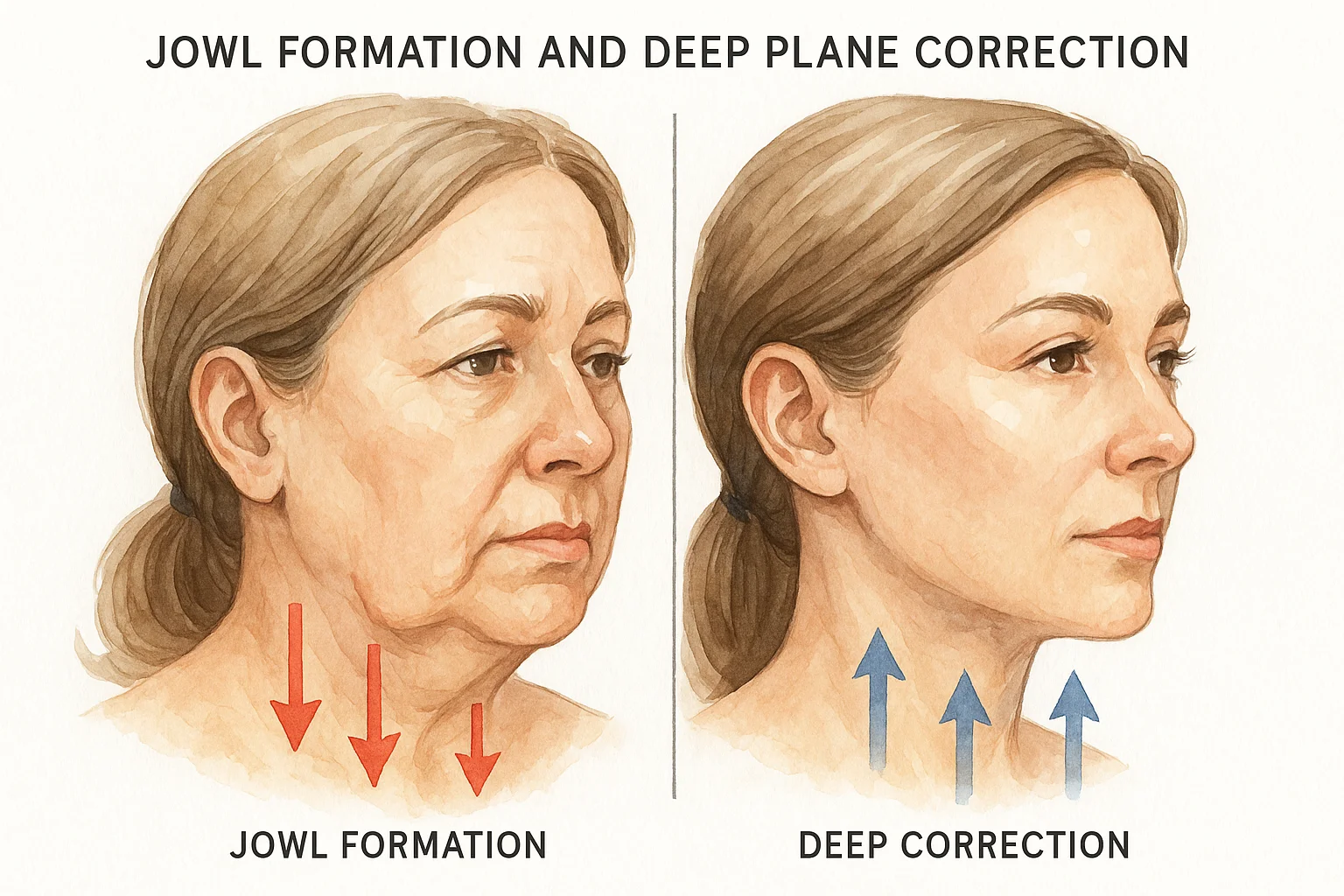
Formowanie się chomików (lewo) vs korekcja lifting twarzy (prawo)
Lifting twarzy na chomiki

Lifting twarzy na chomiki: Lifting twarzy skutecznie leczy chomiki poprzez uwolnienie więzadła żuchwowego i repozycjonowanie opadniętych tkanek twarzy. To rozwiązanie problemu u jego źródła, a nie tylko napinanie skóry nad opadającymi tkankami.
— Zespół medyczny DEEPPLANE™
Lifting twarzy na chomiki: Szybkie fakty
- Skuteczność
- Doskonała na chomiki
- Technika
- Repozycjonowanie SMAS
- Rezultaty
- Zdefiniowana linia żuchwy
- Trwałość
- 10-15 lat
- Rekonwalescencja
- 2-3 tygodnie
- Satysfakcja
- 99%+ w przypadku korekcji chomików
Źródło: Badania kliniczne i The Aesthetic Society
Szybka odpowiedź
Czy lifting twarzy może usunąć chomiki?
Dane z kohorty 2026 (1240 specjalistów): tak — lifting twarzy to najtrwalsza korekcja chirurgiczna chomików. Usuwa rzeczywistą przyczynę: opadanie poduszek tłuszczowych policzkowych i przedżuchwowych, uwolnionych przez przecięcie więzadła żuchwowego, a następnie pionowo repozycjonowanych jako jedna złożona jednostka. Wyniki utrzymują się średnio przez 10-15 lat. Facelift SMAS napina skórę od góry, ale pozostawia poduszki tłuszczowe w ich opadniętej pozycji, więc nawrót chomików jest częsty do 5-7 roku. Wypełniacze i nici liftingujące są tymczasowe (6-18 miesięcy) i nie usuwają podstawowej anatomii więzadeł.
Źródło: DEEPPLANE™ · Sprawdzono
Kluczowa informacja: Lifting twarzy eliminuje chomiki poprzez uwolnienie więzadeł żwaczy i repozycjonowanie tkanek. Wskaźnik zadowolenia wynosi ponad 99%. Wyniki utrzymują się przez 10-15 lat w porównaniu do 6-12 miesięcy w przypadku wypełniaczy.
Lifting twarzy to złoty standard w korekcji chomików, z ponad 99% zadowoleniem pacjentów w przypadku problemów związanych z chomikami. Ta technika chirurgiczna uwalnia i repozycjonuje podstawową warstwę SMAS, zapewniając wyraźną linię żuchwy, która utrzymuje się przez 10-15 lat. Oferuje najbardziej spektakularne i długotrwałe rezultaty w przypadku umiarkowanych do ciężkich chomików.
- Chomiki tworzą się, gdy więzadła twarzy słabną, a tłuszcz opada
- Głęboka płaszczyzna uwalnia więzadło żuchwowe dla prawdziwej repozycji
- Wyniki korekcji chomików należą do najbardziej spektakularnych
Lifting twarzy to najskuteczniejsza chirurgiczna metoda leczenia chomików, eliminująca je poprzez uwolnienie więzadeł żwaczy i repozycjonowanie opadniętych tkanek z powrotem do ich młodzieńczego położenia wzdłuż linii żuchwy[1,2]. W przeciwieństwie do zabiegów napinających skórę, które tymczasowo maskują chomiki, technika głęboka płaszczyzna koryguje podstawowe opadanie strukturalne, tworząc wyraźną granicę żuchwy, która utrzymuje się przez 10-15 lat[3]. Procedura repozycjonuje również warstwę SMAS, zapewniając trwałe rezultaty, a pacjenci mogą spodziewać się płynnej rekonwalescencji trwającej 2-3 tygodnie.
Zrozumienie, w jaki sposób lifting twarzy usuwa chomiki i zwiotczenie wzdłuż linii żuchwy oraz dlaczego jest uważany za złoty standard leczenia tego powszechnego problemu starzenia się.
Jak porównują się opcje leczenia chomików?
Wypełniacze / Nici
Lifting SMAS
Głęboka płaszczyzna
Głęboka płaszczyzna uwalnia więzadło żuchwowe — pierwotną przyczynę powstawania chomików
Czym są chomiki i co je powoduje?
Chomiki odnoszą się do wiotkiej skóry i tłuszczu, które rozwijają się wzdłuż dolnej części twarzy i linii żuchwy wraz z wiekiem. Tworzą one „opadający” wygląd, który może sprawić, że twarz będzie wyglądać na zmęczoną, starszą i mniej zdefiniowaną.
Chomiki tworzą się z kilku powodów: utraty elastyczności skóry, osłabienia więzadeł twarzy, które utrzymują tkanki na miejscu, redystrybucji tłuszczu na twarzy oraz stałego działania grawitacji przez dziesięciolecia[2]. Genetyka odgrywa znaczącą rolę — u niektórych osób chomiki pojawiają się w wieku 40 lat, podczas gdy u innych mogą nie być widoczne aż do 60. roku życia. Pogłębione fałdy nosowo-wargowe i wiotkość szyi często rozwijają się jednocześnie.
Czynniki przyczyniające się do tego to uszkodzenia słoneczne, palenie tytoniu, znaczne wahania wagi i ogólna jakość skóry. Gdy chomiki się rozwiną, zazwyczaj pogarszają się z czasem bez interwencji.
Korekcja chomików: Przed i po
Jak lifting głęboka płaszczyzna zmienia położenie opadających tkanek, aby przywrócić zdefiniowaną linię żuchwy.

Różnica głęboka płaszczyzna: W przeciwieństwie do liftingów obejmujących tylko skórę, głęboka płaszczyzna uwalnia więzadło żuchwowe, aby prawdziwie zmienić położenie opadających tkanek, a nie tylko naciągać skórę na zwiotczałe struktury.
Jak lifting głęboka płaszczyzna leczy chomiki?
Lifting głęboka płaszczyzna jest wyjątkowo skuteczny w przypadku chomików, ponieważ zajmuje się podstawowymi przyczynami strukturalnymi, a nie tylko napinaniem skóry. Procedura działa poprzez:
Podejście głęboka płaszczyzna
- Uwalnia warstwę SMAS od leżących pod nią przyczepów
- Uwalnia kluczowe więzadła twarzy (jarzmowe, żwaczowe)
- Podnosi i zmienia położenie całej jednostki chomików jako jednej struktury
- Przywraca młodzieńczy zarys linii żuchwy
- Tworzy naturalnie wyglądające, długotrwałe rezultaty
Dlaczego jest lepszy na chomiki
- Zajmuje się przyczyną, a nie tylko objawami
- Brak napięcia na skórze (zapobiega „naciągniętemu” wyglądowi)
- Rezultaty utrzymują się 10-15 lat
- Jednocześnie poprawia kontur szyi
- Naturalne starzenie się z czasem
Jak porównują się koszty i rezultaty zabiegów na chomiki?
| Zabieg | Najlepsze dla | Czas trwania | Skuteczność |
|---|---|---|---|
| Lifting twarzy | Umiarkowane do ciężkich chomiki | 10-15 lat | Doskonała |
| SMAS Facelift | Umiarkowane chomiki | 5-7 lat | Dobra |
| Mini Facelift | Łagodne chomiki | 3-5 lat | Umiarkowana |
| Nici liftingujące | Bardzo łagodne chomiki | 1-2 lata | Ograniczone |
| Wypełniacze skórne | Tylko kamuflaż | 6-18 miesięcy | Minimalne |
| Kybella | Tylko tłuszcz podbródkowy | Trwałe | Nie na chomiki |
Odpowiedzi na Twoje pytania
Referencje medyczne
- 01Hamra ST. The deep-plane rhytidectomy. Plast Reconstr Surg. 1990;86(1):53-61(opens in new tab)(Artykuł naukowy)Dostęp: 2026-03-21DOI: 10.1097/00006534-199001000-00006
- 02Furnas DW. The retaining ligaments of the cheek. Plast Reconstr Surg. 1989;83(1):11-16(opens in new tab)(Artykuł naukowy)Dostęp: 2026-03-21DOI: 10.1097/00006534-198901000-00003
- 03Rohrich RJ, et al. Current Concepts in Deep-Plane Face Lifting. Plast Reconstr Surg. 2021;148(5):1025-1038(opens in new tab)(Artykuł naukowy)Dostęp: 2026-03-21DOI: 10.1097/PRS.0000000000008130
Kluczowe fakty
Gotowy, aby zająć się swoimi chomikami?
Skontaktuj się z certyfikowanymi chirurgami, którzy specjalizują się w lifting twarzy w celu odmłodzenia linii żuchwy.
Częste błędne przekonania
Mit: Sama liposukcja może usunąć chomiki
Fakt: Chomiki są przede wszystkim spowodowane opadaniem tkanek, a nie tłuszczem. Liposukcja może pogorszyć wygląd, usuwając objętość bez korygowania zwiotczenia.
Mit: Chomiki można usunąć za pomocą wypełniaczy
Fakt: Wypełniacze mogą maskować łagodne chomiki, ale nie mogą unieść opadniętych tkanek. Korekcja chirurgiczna zapewnia trwałą poprawę.
Mit: Korekcja chomików wygląda nienaturalnie
Fakt: Technika głęboka płaszczyzna przywraca naturalny kontur linii żuchwy. Nienaturalne rezultaty są związane ze starszymi technikami naciągania skóry.
Głębsze spojrzenie: Zrozumienie procedury
Nauka stojąca za tym
Lifting twarzy działa poprzez uwolnienie więzadeł podtrzymujących, które przytwierdzają tkanki twarzy do leżącej pod nimi kości. Pozwala to chirurgowi na repozycjonowanie całego kompleksu SMAS-platysma jako jednej jednostki, zamiast tylko mocniejszego naciągania skóry.
Pracując pod warstwą SMAS, procedura zachowuje dopływ krwi do leżącej nad nią skóry, co zazwyczaj skutkuje szybszym gojeniem i mniej widocznymi bliznami w porównaniu z technikami, które oddzielają skórę od SMAS.
Kluczowe aspekty anatomiczne
- Ochrona nerwu twarzowego: głęboka płaszczyzna jest bezpieczniejsza dla nerwu twarzowego, ponieważ rozwarstwienie pozostaje powierzchowne względem niego
- Więzadła podtrzymujące: Strategiczne uwolnienie więzadeł jarzmowych i żwaczowych umożliwia naturalne repozycjonowanie
- Ciągłość SMAS-platysma: Traktowanie tych struktur jako jednej jednostki tworzy harmonijne odmłodzenie szyi i twarzy
Rozpocznij swoją podróż
Prześlij swoje zdjęcia i otrzymaj bezpłatne, spersonalizowane oceny przypadku od chirurgów specjalizujących się w liftingu głęboka płaszczyzna z całego świata.
Rozpocznij bezpłatną konsultacjęKarta kredytowa nie jest wymagana · Globalna sieć chirurgów
Dr Yakup Duman
Specjalista chirurgii plastycznej, rekonstrukcyjnej i estetycznej
Certyfikowany specjalista chirurgii plastycznej i estetycznej z ponad 13-letnim doświadczeniem. Specjalizuje się w liftingu głęboka płaszczyzna w Merkez Prime Hospital w Stambule. Recenzent medyczny dla DEEPPLANE™.
Tureckie Stowarzyszenie Chirurgii Plastycznej, Rekonstrukcyjnej i Estetycznej
Odbierz Biuletyn
Miesięczne podsumowania badań głęboka płaszczyzna, sylwetki chirurgów i przewodniki dla pacjentów. Anuluj subskrypcję w dowolnym momencie.