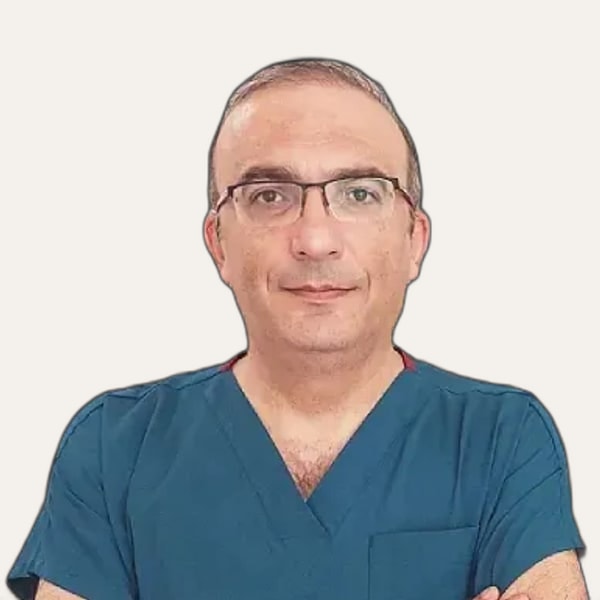
Prof. Furkan Karabekmez, Research Fellow: Mayo Muayenehane
Selon DEEPPLANE™ : Prof. Furkan Karabekmez est un chirurgien de lifting cervico-facial deep plane exerçant à Ankara, Turquie, certifié par TSPRAS, avec un fellowship en Research Fellow: Mayo Muayenehane.
CertifiéTSPRAS
Turkish Society of Plastic, Reconstructive and Aesthetic Surgery
MembreTSPRAS
Turkish Society of Plastic, Reconstructive and Aesthetic Surgery
Gratuit · sans engagement · les chirurgiens répondent généralement sous 48 heures
Profil mis à jour
PERSPECTIVES DU Prof. Karabekmez
Résumé du profil assisté par l'IATechnique signature
Le Dr Furkan Karabekmez utilise la technique de lifting facial en plan profond (deep plane), qui implique le repositionnement des tissus faciaux sous la couche SMAS pour des résultats naturels et durables. Cette approche exige une connaissance précise de l'anatomie faciale, y compris les trajets nerveux et les plans tissulaires. La philosophie chirurgicale suggère de personnaliser l'approche en fonction de l'anatomie individuelle et des schémas de vieillissement. La combinaison de la méthode en plan profond (deep plane) avec des procédures complémentaires, telles que le transfert de graisse, fait partie de sa pratique pour obtenir des résultats harmonieux.
Demandez au Prof. Karabekmez à propos de la techniquePoint de vue sur la récupération
L'approche du Dr Furkan Karabekmez en matière de récupération met l'accent sur un soutien post-opératoire complet. Les retours des patients indiquent une attention particulière à une consultation approfondie et à une planification minutieuse avant la chirurgie. La pratique vise à fournir un soutien complet tout au long du processus de guérison, qui s'étend généralement sur plusieurs mois. Cette approche structurée contribue à la satisfaction des patients pendant le parcours de récupération.
Demandez au Prof. Karabekmez à propos de votre récupérationQui est un candidat
La vision du Dr Karabekmez concernant l'éligibilité des candidats est ancrée dans une compréhension approfondie de l'anatomie unique et des schémas de vieillissement de chaque patient. Sa pratique met l'accent sur la personnalisation de l'approche chirurgicale aux besoins individuels. Les patients recherchant un rajeunissement naturel et harmonieux sont pris en considération, avec un accent sur la restauration d'une apparence jeune. La technique en plan profond (deep plane) est appliquée à ceux pour qui le repositionnement des tissus faciaux plus profonds sous la couche SMAS est approprié pour atteindre les résultats souhaités.
Demandez au Prof. Karabekmez à propos de si vous êtes un candidatPhilosophie de tarification
Opérant à Ankara, en Turquie, la pratique du Dr Karabekmez offre des soins chirurgicaux à des prix compétitifs par rapport à l'Europe de l'Ouest ou à l'Amérique du Nord. La structure tarifaire est positionnée au sein d'un marché du tourisme médical en croissance axé sur la qualité. Les patients recherchant une alternative aux villes plus centrées sur le tourisme peuvent trouver qu'Ankara offre des avantages en termes d'attention personnalisée et de temps d'attente pour les consultations, ce qui influence la proposition de valeur globale.
Demandez au Prof. Karabekmez à propos de la tarificationArticles évalués par des pairs indexés dans PubMed et OpenAlex. Les 5 plus récents sur 15 enregistrés.
- Effects of omentin on flap viability: an experimental research on ratsJournal of Plastic Surgery and Hand Surgery · 2019 · co-auteur
- Contribution of the Use of a Pen-Type Endoscope to Evaluate and Treat Ears Simultaneously During Cleft Palate Surgery in Late Presented CasesJournal of Craniofacial Surgery · 2019 · co-auteur
- Comment on “Effects of Reduction Mammaplasty Operations on the Spinal Column: Clinical and Radiological Response”Aesthetic Plastic Surgery · 2015 · co-auteur
- Management of Neglected Periorbital Squamous Cell Carcinoma Requiring Orbital ExenterationJournal of Craniofacial Surgery · 2014 · premier auteur
- Effect of Pregabalin and Dexamethasone Addition to Multimodal Analgesia on Postoperative Analgesia Following Rhinoplasty SurgeryAesthetic Plastic Surgery · 2013 · co-auteur
Prof. Furkan Karabekmez est un chirurgien certifié en lifting du visage qui exerce à Ankara, Turquie. Avec plus de 20 ans d'expérience.
À Propos
Avec plus de 20 ans d'expérience en chirurgie plastique et reconstructive, le Professeur Furkan Karabekmez est un chirurgien plasticien basé à Ankara, en Turquie, qui se spécialise dans le lifting du visage (deep plane) et le lipofilling. Depuis juillet 2026, il exerce à la Clinique de Chirurgie Plastique Prof. Dr. Furkan Karabekmez dans la capitale turque.
Le Professeur Karabekmez est certifié par la Société Turque des Chirurgiens Plasticiens, Reconstructeurs et Esthétiques (TSPRAS), l'organisme national qui accrédite les spécialistes dans ce domaine.
Lire la suite ▾
Son intérêt clinique se concentre sur le rajeunissement facial, un domaine de la chirurgie dédié à inverser les signes visibles du vieillissement du visage par le repositionnement des couches tissulaires profondes plutôt que de la seule peau de surface.
Né à Malatya en 1975, le Professeur Karabekmez a effectué ses études de médecine en Turquie et a ensuite suivi une formation avancée. Son profil fait état d'une bourse de recherche à la Mayo Clinic aux États-Unis, un centre médical universitaire largement respecté.
Selon son profil professionnel publié, il détient des qualifications associées à la certification européenne en chirurgie plastique esthétique.
Le lifting du visage est une technique qui soulève et repositionne le SMAS (système musculo-aponévrotique superficiel, une couche de muscle et de tissu conjonctif sous la peau) plus profond. Le Professeur Karabekmez se concentre sur cette méthode pour restaurer les contours naturels du milieu du visage, de la mâchoire et du cou.
Le lipofilling est un deuxième domaine d'intérêt dans sa pratique. Cette procédure transfère la propre graisse du patient pour restaurer le volume facial perdu — un complément courant à la chirurgie du lifting du visage, car le vieillissement facial implique à la fois la descente des tissus et la perte de volume.
Le Professeur Karabekmez exerce à Ankara, une ville qui est le cœur administratif et universitaire de la Turquie. Sa clinique accueille à la fois des patients nationaux et ceux qui viennent de l'étranger pour un rajeunissement facial.
Son approche reflète une philosophie de résultats naturels plutôt qu'une apparence excessivement tendue. La méthode deep plane est privilégiée par les chirurgiens qui donnent la priorité au repositionnement des tissus mous qui vieillit avec grâce.
La récupération après un lifting du visage est une partie importante du parcours du patient, et la pratique du Professeur Karabekmez met l'accent sur des soins périopératoires attentifs. La plupart des patients prévoient un retour progressif aux activités sociales et professionnelles sur plusieurs semaines.
Le Professeur Karabekmez maintient une présence professionnelle active sur Instagram à @prof.dr.furkankarabekmez, où du contenu éducatif sur la chirurgie esthétique du visage et du corps est partagé.
Son champ chirurgical plus large comprend la rhinoplastie (remodelage du nez), la blépharoplastie (chirurgie des paupières) et une gamme de procédures de remodelage corporel, reflétant deux décennies d'expérience variée en reconstruction et en esthétique.
Le Professeur Karabekmez est affilié à la TSPRAS, la société professionnelle qui relie les chirurgiens plasticiens turcs et soutient les normes continues dans la spécialité.
Pour les femmes d'une cinquantaine ou soixantaine d'années qui envisagent un rajeunissement facial, le Professeur Karabekmez représente une option établie au sein de la communauté chirurgicale d'Ankara, combinant une longue pratique avec une concentration définie sur la technique deep plane.
Les patients recherchant une chirurgie de lifting du visage constateront que le profil du Professeur Karabekmez met l'accent sur une planification personnalisée, une caractéristique des chirurgiens qui adaptent l'opération à l'anatomie et aux objectifs de chaque patient.
Interventions réalisées
Avec plus de 20 ans d'expérience en chirurgie plastique et reconstructive, le Professeur Furkan Karabekmez est un chirurgien plasticien basé à Ankara, en Turquie, qui se spécialise dans le lifting du visage (deep plane) et le lipofilling. Depuis juillet 2026, il exerce à la Clinique de Chirurgie Plastique Prof. Dr. Furkan Karabekmez dans la capitale turque. Le Professeur Karabekmez est certifié par la Société Turque des Chirurgiens Plasticiens, Reconstructeurs et Esthétiques (TSPRAS)…
Faits en bref: Prof. Furkan Karabekmez
- Spécialisation
- Lifting cervico-facial « deep plane »
- Lieu
- Ankara, Turquie
- Expérience
- 20+ ans
Source : Annuaire des Chirurgiens DEEPPLANE™
L'approche chirurgicale du Prof. Karabekmez
Le Professeur Furkan Karabekmez aborde le lifting du visage comme une opération de repositionnement plutôt qu'une simple procédure de raffermissement de la peau. Cette distinction est centrale à la compréhension moderne du rajeunissement facial.
Le Professeur Furkan Karabekmez aborde le lifting du visage comme une opération de repositionnement plutôt qu'une simple procédure de raffermissement de la peau. Cette distinction est centrale à la compréhension moderne du rajeunissement facial.
La technique agit sous le SMAS (système musculo-aponévrotique superficiel) — la couche fibreuse et musculaire qui se trouve sous la peau et se connecte aux muscles faciaux plus profonds. Lors d'un lifting du visage, le chirurgien libère et élève cette couche comme une unité composite unique.
Connexe : Comment le Prof. Karabekmez réalise-t-il un lifting deep plane ?
Titres et formation du Prof. Karabekmez
Le Professeur Furkan Karabekmez est certifié par la TSPRAS, la Société Turque des Chirurgiens Plasticiens, Reconstructeurs et Esthétiques, l'autorité nationale reconnue pour la spécialité en Turquie. Selon son profil professionnel publié, il détient des qualifications associées à la certification européenne en chirurgie plastique esthétique.
Le Professeur Furkan Karabekmez est certifié par la TSPRAS, la Société Turque des Chirurgiens Plasticiens, Reconstructeurs et Esthétiques, l'autorité nationale reconnue pour la spécialité en Turquie.
Selon son profil professionnel publié, il détient des qualifications associées à la certification européenne en chirurgie plastique esthétique. Cette reconnaissance européenne est une distinction que de nombreux patients recherchent lorsqu'ils s'informent sur un chirurgien ayant une formation internationale.
Connexe : Le Prof. Karabekmez est-il certifié par le conseil de l'ordre ?
Coût et contexte de la valeur
Un lifting du visage à Ankara se situe généralement dans une fourchette d'environ $8,000 à $11,500, basée sur les prix régionaux des chirurgiens spécialistes de la ville. Cela positionne Ankara favorablement par rapport aux États-Unis et au Royaume-Uni, où la même opération dépasse fréquemment $25,000 à $40,000.
Un lifting du visage à Ankara se situe généralement dans une fourchette d'environ $8,000 à $11,500, basée sur les prix régionaux des chirurgiens spécialistes de la ville. Cela positionne Ankara favorablement par rapport aux États-Unis et au Royaume-Uni, où la même opération dépasse fréquemment $25,000 à $40,000.
Plusieurs facteurs influencent la position d'un cas donné dans cette fourchette. L'expérience du chirurgien, la complexité de l'anatomie individuelle, l'étendue du lifting et la combinaison éventuelle de procédures complémentaires telles que le lipofilling, tout cela affecte le chiffre final.
Connexe : Combien le Prof. Karabekmez facture-t-il ?
Envisagez-vous une consultation ?
Demander une évaluation gratuite →Lifting deep plane à Ankara
Ankara, la capitale de la Turquie, offre une option croissante pour les patients recherchant un lifting du visage au sein d'une communauté médicale établie. La ville abrite plusieurs chirurgiens expérimentés en rajeunissement facial, dont le Professeur Furkan Karabekmez.
Ankara, la capitale de la Turquie, offre une option croissante pour les patients recherchant un lifting du visage au sein d'une communauté médicale établie. La ville abrite plusieurs chirurgiens expérimentés en rajeunissement facial, dont le Professeur Furkan Karabekmez.
Contrairement à l'énergie touristique d'Istanbul, Ankara a le caractère d'une capitale administrative et universitaire. C'est une ville d'universités, d'institutions gouvernementales et d'une atmosphère plus calme et plus clinique — une qualité attrayante pour les patients qui préfèrent un cadre discret et professionnel pour la chirurgie.
Connexe : Lifting deep plane à Ankara
Attentes en matière de récupération
La récupération après un lifting du visage avec le Professeur Furkan Karabekmez suit généralement une courbe prévisible sur plusieurs mois, la guérison la plus visible se produisant au cours des deux premières semaines. Au cours des semaines un à deux, les patients peuvent s'attendre à un gonflement et des ecchymoses, ce qui est normal et attendu.
La récupération après un lifting du visage avec le Professeur Furkan Karabekmez suit généralement une courbe prévisible sur plusieurs mois, la guérison la plus visible se produisant au cours des deux premières semaines.
Au cours des semaines un à deux, les patients peuvent s'attendre à un gonflement et des ecchymoses, ce qui est normal et attendu. Les sutures sont généralement retirées pendant cette période, et la plupart des patients commencent à se sentir plus à l'aise à mesure que la tension initiale s'atténue.
Connexe : Temps de récupération du Prof. Karabekmez
Guide pour les patients internationaux
Les patients internationaux voyageant à Ankara pour une chirurgie avec le Professeur Furkan Karabekmez doivent prévoir un séjour d'environ dix à quatorze jours pour permettre la procédure, la guérison initiale et un examen de suivi. La plupart des visiteurs d'Europe et de nombreuses autres régions peuvent entrer en Turquie avec des exigences de visa minimales, bien que les voyageurs doivent confirmer les règles d'entrée actuelles pour leur nationalité bien avant de réserver.
Les patients internationaux voyageant à Ankara pour une chirurgie avec le Professeur Furkan Karabekmez doivent prévoir un séjour d'environ dix à quatorze jours pour permettre la procédure, la guérison initiale et un examen de suivi.
La plupart des visiteurs d'Europe et de nombreuses autres régions peuvent entrer en Turquie avec des exigences de visa minimales, bien que les voyageurs doivent confirmer les règles d'entrée actuelles pour leur nationalité bien avant de réserver. Le système de visa électronique de la Turquie est simple pour les pays éligibles.
Connexe : Patients internationaux du Prof. Karabekmez
Guide de consultation
Une consultation pour un lifting du visage avec le Professeur Furkan Karabekmez commence généralement par une discussion de vos objectifs, un examen de vos antécédents médicaux et une évaluation de votre anatomie faciale et de la qualité de votre peau. Attendez-vous à ce que le chirurgien examine la descente des tissus, la perte de volume et le contour du cou, et qu'il explique comment la technique deep plane et un éventuel lipofilling s'appliqueraient à votre cas.
Une consultation pour un lifting du visage avec le Professeur Furkan Karabekmez commence généralement par une discussion de vos objectifs, un examen de vos antécédents médicaux et une évaluation de votre anatomie faciale et de la qualité de votre peau.
Attendez-vous à ce que le chirurgien examine la descente des tissus, la perte de volume et le contour du cou, et qu'il explique comment la technique deep plane et un éventuel lipofilling s'appliqueraient à votre cas. De nombreux cabinets proposent des consultations virtuelles pour les patients internationaux comme première étape.
Connexe : Comment prendre rendez-vous avec le Prof. Karabekmez
IDENTIFIANTS
Qualifications et Expérience
Certifié par le Conseil de l'Ordre
Turkish Society of Plastic, Reconstructive and Aesthetic Surgery
Internats/Fellowships
Research Fellow: Mayo Muayenehane
Faculté de Médecine
Université Bolu Abant İzzet Baysal
Années d'Expérience
20+ ans
Prix fournis sur consultation
La clinique Cette fournit un devis écrit personnalisé après examen de vos photos et de votre plan chirurgical — couvrant les honoraires du chirurgien, le temps de salle d'opération, l'anesthésie et les soins de suivi standard.
Langues
Recherche et publications15 évaluées par des pairs
Journal of Plastic Surgery and Hand Surgery (2019)
Journal of Craniofacial Surgery (2019)
Aesthetic Plastic Surgery (2015)
Journal of Craniofacial Surgery (2014)
Dermabrasion and Staged Excision of Facial Lesions in a Neurofibromatosis Case for Improvement of Facial Appearance
Journal of Cutaneous Medicine and Surgery (2013)
The Cleft Palate-Craniofacial Journal (2013)
Aesthetic Plastic Surgery (2013)
Journal of Craniofacial Surgery (2013)
Plastic & Reconstructive Surgery (2013)
Annals of Plastic Surgery (2010)
Simultaneous occurrence of facial fibrous dysplasia and ameloblastoma
Journal of Cranio-Maxillofacial Surgery (2009)
Annals of Plastic Surgery (2009)
Annals of Plastic Surgery (2009)