Nega reza kod deep plane facelifta
Pravila postoperativne nege, sazrevanja ožiljaka i zaštite od sunca. Za anatomski položaj rezova i način na koji ih tehnika postavlja, pogledajte Deep Plane Facelift Rezovi: Vodič za ožiljke i tehniku.
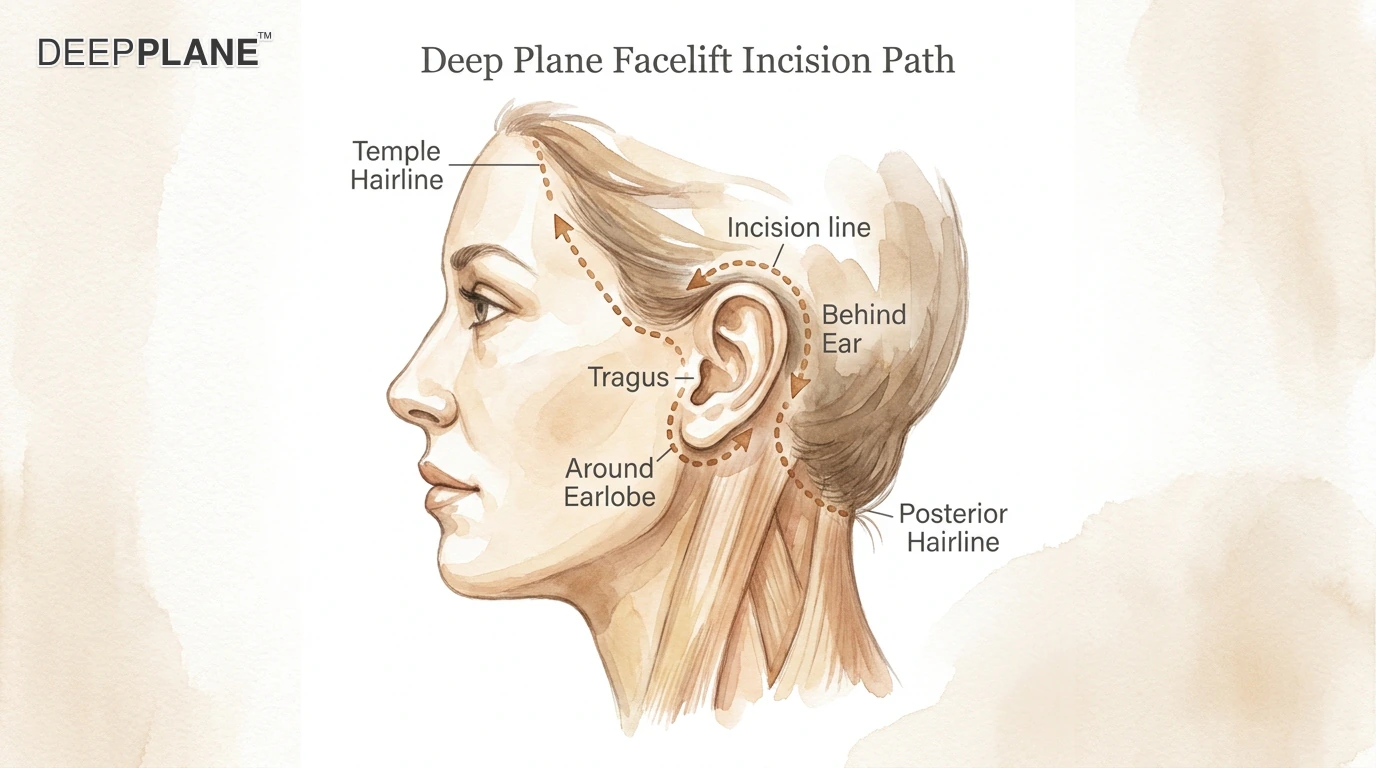
Tipična putanja reza kod deep plane facelifta duž linije kose i oko uha
Nega reza nakon deep plane facelifta: Nega reza nakon deep plane facelifta uključuje održavanje rana čistim, primenu propisanih masti, izbegavanje izlaganja suncu i praćenje uputstava hirurga. Pravilna nega obezbeđuje optimalno zarastanje ožiljaka tokom 6-12 meseci.
— DEEPPLANE™ medicinski recenzent
Tehnike reza kod deep plane facelifta: Kratke činjenice
- Lokacija reza
- Linija kose do iza uha
- Vidljivost ožiljka
- Dobro skriven kada zaraste
- Uklanjanje šavova
- 7-10. dan nakon operacije
- Sazrevanje ožiljka
- 6-12 meseci
- Dužina reza
- Varira u zavisnosti od tehnike
- Vreme zarastanja
- Početno 2-3 nedelje
Izvor: Kliničke studije & The Aesthetic Society
Brzi odgovor
Gde se nalaze rezovi za deep plane facelift?
Rezovi za deep plane facelift su skriveni duž prirodnih nabora — počevši od linije kose na slepoočnici, nastavljajući ispred ili unutar uha, oko ušne resice i iza uha u liniju kose. Šavovi se uklanjaju 7-10. dana. Oni zarastaju kao gotovo nevidljive fine linije u roku od 6-12 meseci. Deep plane tehnika omogućava manje rezove od tradicionalnih facelifta jer se tkiva podižu kao celina.
Izvor: DEEPPLANE™ ·
Gde se postavljaju rezovi za facelift i koliko su vidljivi?
Rezovi za deep plane facelift prate pet prirodnih anatomskih orijentira: (1) Linija kose na slepoočnici — spaja se na slepoočnici, skrivena u kosi. (2) Preaurikularni — prati tragalnu senku oko prednjeg dela uha. (3) Ušna resica — glatko se savija oko resice. (4) Postaurikularni — u prirodnom naboru iza uha. (5) Submentalni — u naboru brade za rad na vratu. Svi rezovi su dizajnirani za maksimalno prikrivanje. Sveži ožiljci su ružičasti 4-8 nedelja; blede u gotovo nevidljive linije boje kože do 12-18 meseci uz pravilnu negu ožiljaka (silikonski gel, SPF 50+). Na razdaljini za razgovor, rezovi iskusnih hirurga su neprimetni.

Svih pet lokacija reza za deep plane facelift i kako zarastaju u 6. mesecu.
Pravilna nega reza nakon deep plane facelifta podrazumeva održavanje područja čistim i suvim tokom prvih 48 sati, kada otok dostiže vrhunac 2-4. dana (najčešće 3. dan). Šavovi se obično uklanjaju 7-10. dana. Ožiljci sazrevaju tokom 6-12 meseci, postajući dobro skriveni unutar linije kose i iza uha. Praćenje specifičnih uputstava vašeg hirurga je ključno za minimiziranje ožiljaka.
- Šavovi uklonjeni 7-10. dana
- Početno zarastanje traje 2-3 nedelje
- Ožiljci sazrevaju tokom 6-12 meseci i dobro su skriveni
Deep plane facelift rezovi zarastaju izuzetno dobro jer tehnika smanjuje napetost kože — primarni uzrok vidljivih ožiljaka. Rezovi se postavljaju unutar temporalne linije kose, duž tragusa uha, oko ušne resice i iza uha, postajući praktično nevidljivi u roku od 6-12 meseci. Pravilna nega rane, uključujući zaštitu od sunca i tretman ožiljaka na bazi silikona, značajno poboljšava konačni izgled. Kontrolisanje otoka u prvoj nedelji takođe pomaže u smanjenju napetosti na linijama reza, što dovodi do finijih ožiljaka u poređenju sa tradicionalnim SMAS tehnikama.
Bez troškova · Bez obaveza · Brz odgovor
Kompletan vodič za negu i zarastanje rezova deep plane facelifta.

Nega reza — prve 4 nedelje
- •Čistite OKO rezova sterilnim fiziološkim rastvorom + pamučnom blaznicom (nežno tapkajte, nikada ne trljajte)
- •Nanesite propisanu antibiotsku mast (Bacitracin/Polysporin) 2-3 puta dnevno
- •Osušite čistom pamučnom krpom — menjajte krpu svakodnevno
- •Počnite sa silikonskim gelom/flasterima u 2-3. nedelji tokom 12 nedelja (jedini OTC proizvod za ožiljke sa doslednim dokazima)
- •SPF 50+ na linijama reza na otvorenom najmanje 6 meseci
- •Široki šešir + UV400 naočare za sunce pri svakom izlaganju suncu od 7. dana
- •Češanje krasta (same otpadaju 7-14. dana)
- •Koristite hidrogen peroksid (ubija fibroblaste koji zarastaju → širi ožiljak)
- •Nanosite šminku direktno na rezove do 10. dana
- •Koristite hemijske kreme za sunčanje (avobenzon, oksibenzon) 4 nedelje
- •Primenjujte pritisak ili masažu na linijama reza do 6-8. nedelje
- •Koristite topikalni vitamin E (slabi dokazi) — silikon je dokazana opcija

Koliko dugo zarastaju rezovi facelifta?
Uklanjanje šavova
Šavovi se uklanjaju prilikom posete hirurgu (7-10. dan). Steri-trake mogu ostati još nedelju dana.
Ružičasta/crvena faza
Linije reza su ružičaste i vidljive. Svakodnevno nanosite silikonski gel i SPF.
Faza bleđenja
Ožiljci postepeno blede. Korektor može prekriti preostalu vidljivost.
Praktično nevidljivi
Potpuno zreli ožiljci stapaju se sa prirodnim naborima kože. Kosa prekriva rez na slepoočnici.
Tragalni rez →
Tehnika skrivenog ožiljka unutar hrskavičnog režnja uha; moderan standard za većinu žena.
Pre-aurikularni rez →
Trihofitski naspram ravnog dizajna, očuvanje zalisaka, sazrevanje ožiljka iz nedelje u nedelju.
Rez na liniji kose slepoočnice →
Rizik od pomeranja kose, trihofitska tehnika, kada hirurzi biraju kratki ožiljak.
Nabori iza uha →
Razumevanje i upravljanje nabiranjem kože na mestu post-aurikularnog reza.
Submentalni rez →
Pristup ispod brade za kombinovani deep plane facelift + zatezanje vrata; položaj, dužina i prikrivanje.
Dehiscencija rane →
Znakovi prepoznavanja, faktori rizika i lečenje razdvajanja reza — incidencija <2%.
Šta je nega reza kod deep plane facelifta?
Kompletan vodič za negu i zarastanje reza kod deep plane facelifta. Ovaj sveobuhvatni vodič pruža detaljne informacije koje će vam pomoći da razumete šta možete očekivati i da donesete informisane odluke o svom tretmanu.
Često postavljana pitanja
Šta je nega reza kod deep plane facelifta?
Gde se tačno postavljaju rezovi kod deep plane facelifta?
Kako treba da negujem rezove facelifta tokom prve nedelje?
Koji je najizazovniji deo oporavka?
Kada ponovo mogu normalno da spavam?
Medicinske reference
- 01Hamra ST. The deep-plane rhytidectomy. Plast Reconstr Surg. 1990;86(1):53-61(otvara se u novoj kartici)(Članak u časopisu)Pristupljeno: 2026-03-21DOI: 10.1097/00006534-199007000-00008
- 02Owsley JQ. Face lifting: problems, solutions, and an outcome study. Plast Reconstr Surg. 2000;105(1):302-313(otvara se u novom prozoru)(Članak iz časopisa)Pristupljeno: 2026-08-05
- 03American Society of Plastic Surgeons - Facelift Statistics 2024(otvara se u novoj kartici)(Organizacija)Pristupljeno: 2026-03-21
Citirajte ovu stranicuCC-BY 4.0
Urednički tim DEEPPLANE™ (2026). Nega rezova nakon deep plane facelift-a. DEEPPLANE™. Preuzeto sa https://deepplane.com/sr/recovery/incisions
Sadržaj licenciran CC-BY 4.0. Slobodno delite uz navođenje izvora DEEPPLANE™.
Koje su uobičajene zablude o rezovima kod faceliftinga?
Mit: Rezovi zahtevaju stalnu pažnju
Činjenica: Dovoljna je jednostavna svakodnevna nega. Preterano čišćenje ili prekomerno manipulisanje može odložiti zarastanje.
Mit: Kraste treba ukloniti
Činjenica: Pustite da kraste otpadnu prirodno. Čačkanje po njima može izazvati ožiljke i infekciju.
Stvari vredne pažnje
Dobijte personalizovane savete od specijaliste
Ishodi variraju — vaš hirurg će postaviti realna očekivanja
Vreme oporavka zavisi od obima procedure
Pravilna postoperativna nega maksimizira rezultate i minimizira komplikacije
Ključne stvari za poneti
Temeljno istražite pre donošenja odluka
Konsultujte se sa više sertifikovanih hirurga
Pažljivo pregledajte fotografije pre i posle
Razumeti sve troškove i zahteve oporavka
Povezane teme
Ključne činjenice
DEEPPLANE™ Savet za recenziju
Plastični hirurzi sa sertifikatom odbora
Urednički odbor DEEPPLANE™ je imenovana grupa plastičnih hirurga sa sertifikatom odbora koji postavljaju klinički standard prema kojem su naši vodiči napisani. Recenzija se beleži po članku, a ne tvrdi se za sajt u celini — svaki vodič pokazuje da li ga je recenzent potpisao i jasno navodi kada to nije učinio.
Istražite dalje
Pitajte verifikovane deep plane hirurge o vašem oporavku
Pitajte hirurga — besplatno100% besplatno · poverljivo · bez obaveza · hirurzi obično odgovaraju u roku od 48 sati