Hematom nakon deep plane facelift-a
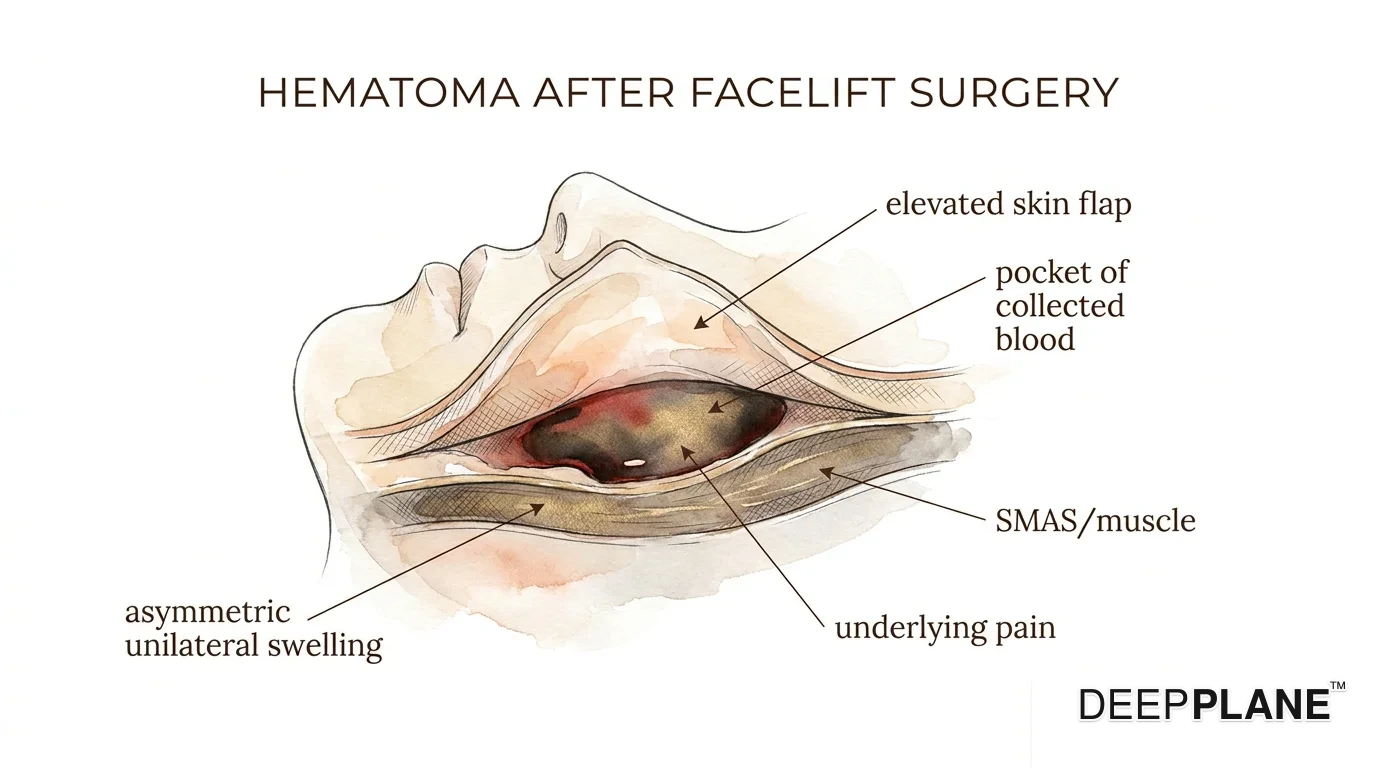
Hematom: nakupljanje krvi između slojeva tkiva — znaci upozorenja na koje treba obratiti pažnju
Brzi odgovor
Šta je hematom nakon facelift-a i koliko je čest?
Hematom je nakupljanje krvi ispod kože koje se javlja kod 1–3% pacijenata nakon facelift-a, najčešće u prvih 24 sata. Zahteva hitnu drenažu kako bi se sprečile komplikacije. Faktori rizika uključuju visok krvni pritisak, lekove za razređivanje krvi i muški pol. Rano otkrivanje i lečenje dovode do potpunog oporavka bez uticaja na konačne rezultate.
Izvor: DEEPPLANE™ ·
Šta je hematom nakon facelift-a i koji su znaci upozorenja?
Hematom je nakupljanje krvi ispod kožnog režnja nakon operacije facelift-a. Javlja se kod 1–3% pacijenata i najčešća je komplikacija facelift-a koja zahteva intervenciju. Znaci upozorenja: iznenadni jednostrani bol (≥6/10) u prvih 72 sata, asimetrično širenje otoka (vidljivo povećanje tokom minuta), čvrsta masa na jednom obrazu, tamnoljubičasta ili crna diskoloracija kože na jednoj strani, ili krvarenje iz reza nakon 3. dana. Mali stabilni hematomi se dreniraju u klinici iglom. Hematomi koji se šire zahtevaju operativnu evakuaciju u roku od 6–12 sati kako bi se sprečila nekroza kože. Velika većina hematoma koji se rano otkriju i leče nemaju uticaj na konačni rezultat.
Hematom
Umereno — često je potrebno kliničko zbrinjavanje
- •Iznenadni jednostrani bol (≥6/10) u prvih 72h
- •Asimetrično širenje otoka — vidljivo povećanje tokom minuta
- •Čvrsta masa ispod kože na jednoj strani
- •Promena boje kože (tamnoljubičasta/crna) na jednoj strani
- •Krvarenje iz reza nakon 3. dana
Mali stabilni hematomi (<10 ml, ne šire se): aspiracija iglom u klinici + kompresija + posmatranje. Hematomi koji se šire u prvih 24-48h ili oni >30 ml: operativna evakuacija pod anestezijom u roku od 6-12 sati kako bi se sprečila nekroza kože. Savremeni ugledni hirurzi obavezuju se na dostupnost 24/7 tokom prvih 72 sata, posebno zato što vreme pojave hematoma predviđa složenost zbrinjavanja.
- •Muški pol (robusnija vaskularizacija lica)
- •Nekontrolisana hipertenzija (sistolni pritisak >160)
- •Antikoagulansi/NSAIL nisu obustavljeni pre operacije
- •Postoperativna aktivnost koja izaziva Valsalvin manevar (kašalj, podizanje tereta, naprezanje)
- •Ponovno konzumiranje nikotina pre uklanjanja šavova
Prevencija: Stroga kontrola krvnog pritiska od 0. do 3. dana (sistolni pritisak <140), potpuna obustava antikoagulanata 7-10 dana pre operacije + 14 dana za vitamin E/riblje ulje/ginko, tehnika bez drenaže sa fibrinskim lepkom, edukacija hirurga o pripremi pacijenta bez Valsalvinog manevra. Smanjuje istorijsku stopu hematoma od 4-6% na 1-3% u modernoj praksi.

Kada pozvati hirurga, a kada otići u hitnu pomoć
- •Iznenadni, oštar bol na jednoj strani (≥6/10) u prvih 72 sata
- •Asimetričan, šireći otok ili čvrsta masa
- •Žuti/zeleni iscedak ili groznica ≥38°C
- •Crno tkivo na bilo kojoj ivici reza
Moderni, ugledni hirurzi se obavezuju na dostupnost 24/7 tokom prvih 72 sata, upravo zato što vreme nastanka hematoma predviđa složenost lečenja. Ne čekajte jutro.
- •Iznenadna promena vida na bilo kom oku
- •Poteškoće sa disanjem ili gutanjem
- •Bol u grudima, bol u listu ili iznenadni nedostatak daha (PE/DVT)
- •Konfuzija, jaka glavobolja ili slabost lica sa otežanim govorom
Za simptome koji zahtevaju hitnu pomoć, PRVO pozovite 911 (SAD), 112 (EU), 999 (UK) ili vaš lokalni broj za hitne slučajeve — zatim obavestite svog hirurga. Vremenski kritični događaji poput PE/DVT ili moždanog udara nisu u nadležnosti hirurga.
Hematom je najčešća komplikacija nakon deep plane facelift-a, javlja se kod manje od 2% pacijenata, obično u roku od 48 sati. To je nakupina krvi koja se skuplja ispod kože, uzrokujući iznenadni otok i bol. Iako je ozbiljan, brzo prepoznavanje i lečenje osiguravaju da ne utiče na vaše konačne rezultate. Razumevanje specifičnih znakova upozorenja je prvi korak ka sigurnom oporavku.
- Javlja se kod <2% pacijenata nakon fejsliftinga
- Najčešće u prvih 48 sati nakon operacije
- Zahteva hitan kontakt sa hirurgom ako se sumnja
![Znakovi upozorenja hematoma nakon face liftinga: asimetrično oticanje, pojačani bol, čvrsta masa ispod kože, diskoloracija kože i osećaj zategnutosti
[2,4] Reference 2, 4](https://deepplane-city-images.s3.eu-central-1.amazonaws.com/illustrations/34-hematoma-signs.avif?v=30)
Ključni znaci upozorenja za hematom: asimetrični otok na jednoj strani, pojačan bol, čvrsta masa ispod kože, promena boje kože i osećaj zatezanja — sve to zahteva hitan kontakt sa hirurgom.
Hematom je najčešća ozbiljna komplikacija nakon deep plane facelift-a, javlja se kod 1-3% pacijenata[2,4]. Manifestuje se kao bolan, šireći otok na jednoj strani lica u prvih 24-48 sati nakon operacije[3]. Hitna hirurška drenaža je od suštinskog značaja — većina hematoma tretiranih u roku od 24 sata rešava se bez uticaja na konačni rezultat. Faktori rizika uključuju nekontrolisani krvni pritisak, lekove za razređivanje krvi i muški pol. Razumevanje SMAS anatomije i pridržavanje protokola oporavka vašeg hirurga, uključujući pravilno upravljanje bolom, pomaže u značajnom smanjenju ovog rizika[5].
Besplatno · Bez obaveza · Odgovor u roku od 48h
Hematom je nakupina krvi koja se skuplja u tkivu izvan krvnih sudova i najčešća je komplikacija koja zahteva intervenciju nakon ove tehnike. Iako zabrinjavajuće, brzo prepoznavanje i upravljanje dovode do odličnih ishoda. Razumevanje rizika i znakova je ključni deo sigurnog oporavka.
Koji su znaci upozorenja za hematom nakon fejsliftinga?
Brzo oticanje
Iznenadno, šireće oticanje na jednoj strani lica u roku od 24-48 sati nakon operacije.
Čvrsta izbočina
Tvrda, zategnuta kvrga ispod kože koja se razlikuje od normalnog postoperativnog otoka.
Pojačan bol
Bol koji se pogoršava umesto da se smanjuje, posebno samo na jednoj strani. Nije kontrolisan lekovima.
Izlečivo
Kada se otkrije u roku od 24 sata, drenaža rešava problem bez uticaja na konačne rezultate.
Hematom nakon deep plane facelift-a: Hematom (nakupljanje krvi ispod kože) je najčešća komplikacija nakon facelift-a, javlja se u 1-3% slučajeva. Rano otkrivanje i lečenje sprečavaju dugoročne probleme. Faktori rizika uključuju visok krvni pritisak i lekove za razređivanje krvi.
— DEEPPLANE™ Stručni panel
Hematom nakon facelift-a: Kratke činjenice
- Stopa učestalosti
- <2% slučajeva
- Vreme pojave
- Obično u roku od 48 sati
- Faktori rizika
- Visok krvni pritisak, aspirin
- Lečenje
- Hirurška drenaža ako je velik
- Prevencija
- Kontrola krvnog pritiska
- Uticaj na oporavak
- Može produžiti vreme zarastanja
Izvor: Kliničke studije & The Aesthetic Society
Šta povećava rizik od hematoma nakon facelift-a?
Ključni faktori koji povećavaju rizik od hematoma nakon deep plane facelift-a
Nekontrolisani visok krvni pritisak
Upotreba aspirina / razređivača krvi
Muški pol
Mučnina / povraćanje nakon operacije
Previše naporna aktivnost prerano
NSAIL (ibuprofen, itd.)
Suplementi ribljeg ulja / vitamina E
Intenzivno savijanje / podizanje
Razgovarajte o svim faktorima rizika sa svojim hirurgom pre procedure
Šta očekivati kod hematoma?
Učestalost značajnog hematoma koji zahteva hiruršku drenažu nakon facelifta je relativno niska, sa studijama koje izveštavaju o stopama koje se generalno kreću od 0,9% do 2,7%. Većina njih, približno 90%, javlja se u prvih 24 sata nakon operacije. Ovo je period najvećeg rizika, tokom kojeg ćete biti najpažljivije praćeni.
Hematom se obično manifestuje kao iznenadno, čvrsto i često asimetrično oticanje na jednoj strani lica ili vrata. Može biti praćen pojačanim bolom i osećajem zatezanja. Razlikuje se od generalizovanog, mekšeg otoka i modrica koji su normalan deo procesa zarastanja.
Koliko dugo traju rezultati?
Lečenje i trajanje hematoma zavise od njegove veličine. Vrlo mali hematomi mogu se pratiti i dozvoliti im da se sami povuku tokom nekoliko nedelja. Drugi se mogu lečiti aspiracijom iglom u ordinaciji. Međutim, veliki ili rastući hematom je hirurška hitnost koja zahteva povratak u operacionu salu radi evakuacije. Ova procedura uključuje ponovno otvaranje dela reza radi drenaže sakupljene krvi i kontrole izvora krvarenja. Nakon lečenja, povezani otok i modrice će se postepeno povući tokom naredne 2 do 4 nedelje.
Kada pozvati svog lekara?
Neposredna komunikacija sa vašim hirurgom je od vitalnog značaja ako sumnjate na hematom. Ne oklevajte da pozovete ako iskusite bilo koji od sledećih znakova, posebno u prvih 48 sati nakon operacije:
- Iznenadno, značajno i čvrsto oticanje na jednoj strani lica ili vrata.
- Bol koji je jak, pojačava se ili je značajno gori na jednoj strani.
- Vidljiva, tamnoljubičasta ili crna diskoloracija kože koja se brzo širi.
- Osećaj prekomerne zategnutosti ili pritiska ispod kože.
- Bilo kakva poteškoća sa disanjem ili gutanjem, što bi moglo ukazivati na hematom u vratu koji komprimuje disajne puteve.
Kakav je vremenski okvir oporavka nakon hematoma?
Prvih 24-48 sati
Ovo je period najvećeg rizika. Bilo kakvi znaci hematoma zahtevaju hitan poziv vašem hirurgu. Ako je potrebna drenaža, najverovatnije će se desiti tokom ovog perioda.
1-2 nedelje
Nakon tretmana, doživećete značajnije modrice i oticanje u zahvaćenom području u poređenju sa drugom stranom. Ovo je normalno i počeće da se poboljšava.
3-6 nedelja
Većina diskoloracije i otoka od hematoma bi trebalo da se povuče. Osnovna tkiva će nastaviti da zarastaju, a svaka čvrstina će vremenom omekšati.
Vaša pitanja, naši odgovori
Medicinske reference
- 01Hamra ST. The deep-plane rhytidectomy. Plast Reconstr Surg. 1990;86(1):53-61(otvara se u novoj kartici)(Članak u časopisu)Pristupljeno: 2026-03-21DOI: 10.1097/00006534-199007000-00008
- 02Baker DC. Complications of cervicofacial rhytidectomy. Clin Plast Surg. 1983;10(3):543-562(otvara se u novoj kartici)(Članak iz časopisa)Pristupljeno: 2026-08-05DOI: 10.1016/S0094-1298(20)31873-3
- 03Cason RW, Avashia YJ, Shammas RL, Savetsky IL, Rohrich RJ. Perioperative Approach to Reducing Hematoma during Rhytidectomy: What Does the Evidence Show? Plast Reconstr Surg. 2021;147(6):1297-1309(otvara se u novoj kartici)(Istraživačka studija)Pristupljeno: 2026-08-05DOI: 10.1097/PRS.0000000000007943
- 04
- 05NIH National Library of Medicine - Rhytidectomy StatPearls(otvara se u novoj kartici)(Vladin izvor)Pristupljeno: 2026-04-01
Citirajte ovu stranicuCC-BY 4.0
DEEPPLANE™ Urednički tim (2026). Hematom. DEEPPLANE™. Preuzeto sa https://deepplane.com/sr/recovery/complications/hematoma
Sadržaj licenciran CC-BY 4.0. Slobodno delite uz navođenje izvora DEEPPLANE™.
Ključne činjenice
Uobičajene zablude
Mit: Hematom uništava rezultate facelift-a
Činjenica: Kada se pravovremeno leči, hematom ne utiče na konačne rezultate. Većina se povuče bez dugoročnih posledica.
Mit: Hematom je greška hirurga
Činjenica: Hematom se može javiti čak i uz savršenu tehniku. Faktori pacijenta kao što je krvni pritisak igraju značajnu ulogu.
Mit: Hematom uvek zahteva operaciju
Činjenica: Mali hematomi se mogu povući sami. Veći mogu zahtevati drenažu, što je manja procedura.
Ključna razmatranja
Konsultujte se sa sertifikovanim plastičnim hirurgom za lice za personalizovani savet
Vaša anatomija, debljina kože i sposobnost zarastanja utiču na ishode
Oporavak varira od pojedinca — pratite vremenski okvir svog hirurga
Pravilna postoperativna nega maksimizira rezultate i minimizira komplikacije
Pitajte verifikovane deep plane hirurge o vašem oporavku
Pitajte hirurga — besplatno100% besplatno · poverljivo · bez obaveza · hirurzi obično odgovaraju u roku od 48 sati
Povezani resursi
Medicinski pregledano i pruženo samo za opšte obrazovanje — ovo nije medicinski savet i ne zamenjuje konsultacije sa kvalifikovanim lekarom o vašem individualnom slučaju. Ishodi, rizici i troškovi deep plane facelifta variraju od pacijenta do pacijenta; uvek potražite savet licenciranog hirurga pre donošenja bilo kakve odluke o lečenju.