الورم الدموي بعد عملية شد الوجه بتقنية deep plane facelift
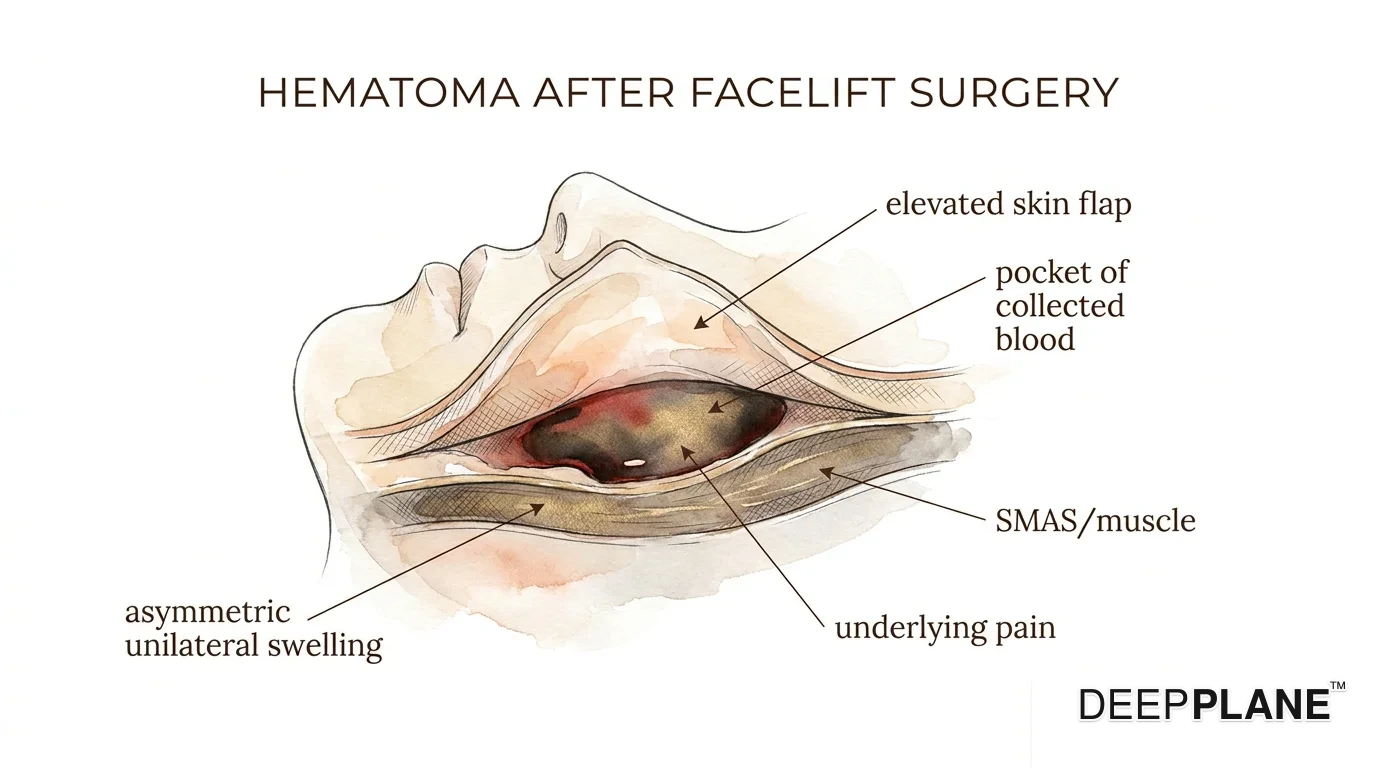
الورم الدموي: تجمع الدم بين طبقات الأنسجة — علامات تحذيرية يجب الانتباه إليها
إجابة سريعة
ما هو الورم الدموي بعد عملية شد الوجه وما مدى شيوعه؟
الورم الدموي هو تجمع للدم تحت الجلد يحدث لدى 1-3% من مرضى شد الوجه، وغالبًا ما يكون ذلك خلال الـ 24 ساعة الأولى. يتطلب تصريفًا فوريًا لمنع المضاعفات. تشمل عوامل الخطر ارتفاع ضغط الدم، وأدوية سيولة الدم، والجنس الذكري. يؤدي الكشف المبكر والعلاج إلى الشفاء التام دون تأثير على النتائج النهائية.
المصدر: DEEPPLANE™ ·
ما هو الورم الدموي بعد عملية شد الوجه وما هي علاماته التحذيرية؟
الورم الدموي هو تجمع للدم تحت سديلة الجلد بعد جراحة شد الوجه. يحدث في 1-3% من المرضى وهو المضاعفة الأكثر شيوعًا لشد الوجه التي تتطلب التدخل. العلامات التحذيرية: ألم مفاجئ من جانب واحد (≥6/10) في الـ 72 ساعة الأولى، تورم متزايد غير متماثل (تضخم مرئي خلال دقائق)، كتلة صلبة على أحد الخدين، تغير لون الجلد إلى الأرجواني الداكن أو الأسود على جانب واحد، أو نزيف من الشق بعد اليوم الثالث. يتم تصريف الأورام الدموية الصغيرة المستقرة في العيادة بإبرة. تتطلب الأورام الدموية المتزايدة إخلاء جراحيًا في غضون 6-12 ساعة لمنع نخر الجلد. الغالبية العظمى من الأورام الدموية التي يتم اكتشافها وعلاجها على الفور لا تؤثر على النتيجة النهائية.
الورم الدموي
متوسط — غالبًا ما تكون هناك حاجة إلى إدارة سريرية
- •ألم مفاجئ من جانب واحد (≥6/10) خلال الـ 72 ساعة الأولى
- •تورم متزايد غير متماثل — تضخم مرئي خلال دقائق
- •كتلة صلبة تحت الجلد على جانب واحد
- •تغير لون الجلد (أرجواني داكن/أسود) على جانب واحد
- •نزيف من الشق بعد اليوم الثالث
الأورام الدموية الصغيرة المستقرة (<10 مل، غير متزايدة): شفط بالإبرة في العيادة + ضغط + مراقبة. الأورام الدموية المتزايدة في الـ 24-48 ساعة الأولى أو تلك التي تزيد عن 30 مل: إخلاء جراحي تحت التخدير في غضون 6-12 ساعة لمنع نخر الجلد. يلتزم الجراحون المعاصرون ذوو السمعة الطيبة بالتوفر على مدار الساعة طوال أيام الأسبوع في الـ 72 ساعة الأولى تحديدًا لأن توقيت الورم الدموي يتنبأ بمدى تعقيد الإدارة.
- •الجنس الذكري (أوعية دموية وجهية أكثر قوة)
- •ارتفاع ضغط الدم غير المتحكم فيه (الانقباضي >160)
- •عدم إيقاف مضادات التخثر/مضادات الالتهاب غير الستيرويدية قبل الجراحة
- •النشاط بعد الجراحة الذي يسبب مناورة فالسالفا (السعال، الرفع، الإجهاد)
- •استئناف النيكوتين قبل إزالة الغرز
الوقاية: التحكم الصارم في ضغط الدم في الأيام 0-3 (الضغط الانقباضي <140)، إيقاف كامل لمضادات التخثر قبل الجراحة بـ 7-10 أيام + 14 يومًا لفيتامين E/زيت السمك/الجنكة، تقنية بدون تصريف مع مادة الفبرين المانعة للتسرب، تثقيف الجراح حول تحضير المريض لتجنب مناورة فالسالفا. يؤدي ذلك إلى خفض معدل الورم الدموي التاريخي من 4-6% إلى 1-3% في الممارسة الحديثة.

متى تتصل بجراحك مقابل الذهاب إلى غرفة الطوارئ
- •ألم حاد مفاجئ من جانب واحد (≥6/10) في الـ 72 ساعة الأولى
- •تورم متزايد غير متماثل أو كتلة صلبة
- •إفرازات صفراء/خضراء أو حمى ≥38 درجة مئوية
- •نسيج أسود عند أي حافة شق جراحي
يلتزم الجراحون العصريون ذوو السمعة الطيبة بتوفير إمكانية الوصول إليهم على مدار الساعة طوال أيام الأسبوع لأول 72 ساعة تحديدًا لأن توقيت الورم الدموي يتنبأ بمدى تعقيد الإدارة. لا تنتظر حتى الصباح.
- •تغير مفاجئ في الرؤية في أي من العينين
- •صعوبة في التنفس أو البلع
- •ألم في الصدر، ألم في ربلة الساق أو ضيق مفاجئ في التنفس (انسداد رئوي/تخثر وريدي عميق)
- •ارتباك، صداع شديد، أو ضعف في الوجه مع تلعثم في الكلام
بالنسبة للأعراض التي تتطلب رعاية طارئة، اتصل بالرقم 911 (الولايات المتحدة)، 112 (الاتحاد الأوروبي)، 999 (المملكة المتحدة)، أو رقم الطوارئ المحلي لديك أولاً — ثم أبلغ جراحك. الأحداث الحرجة زمنيًا مثل الانسداد الرئوي/التخثر الوريدي العميق أو السكتة الدماغية ليست من اختصاص الجراح.
الورم الدموي هو المضاعفة الأكثر شيوعًا بعد عملية deep plane facelift، ويحدث في أقل من 2% من المرضى، وعادةً ما يكون ذلك في غضون 48 ساعة. وهو عبارة عن تجمع دموي يتراكم تحت الجلد، مما يسبب تورمًا وألمًا مفاجئًا. على الرغم من خطورته، إلا أن التعرف عليه وعلاجه الفوري يضمن عدم تأثيره على نتائجك النهائية. فهم علامات التحذير المحددة هو الخطوة الأولى نحو تعافٍ آمن.
- يحدث في أقل من 2% من مرضى شد الوجه
- الأكثر شيوعًا في أول 48 ساعة بعد الجراحة
- يتطلب الاتصال الفوري بالجراح في حالة الاشتباه

علامات التحذير الرئيسية للورم الدموي: تورم غير متماثل في جانب واحد، ألم متزايد، كتلة صلبة تحت الجلد، تغير لون الجلد، وشعور بالضيق — كلها تتطلب اتصالاً فوريًا بالجراح.
الورم الدموي هو المضاعفة الخطيرة الأكثر شيوعًا بعد deep plane facelift، ويحدث في 1-3% من المرضى[2,4]. يظهر على شكل تورم مؤلم ومتزايد في جانب واحد من الوجه خلال 24-48 ساعة الأولى بعد الجراحة[3]. التصريف الجراحي الفوري ضروري — معظم الأورام الدموية التي تُعالج في غضون 24 ساعة تختفي دون التأثير على النتيجة النهائية. تشمل عوامل الخطر ارتفاع ضغط الدم غير المتحكم فيه، ومميعات الدم، والجنس الذكوري. يساعد فهم تشريح SMAS واتباع بروتوكول التعافي الخاص بجراحك، بما في ذلك إدارة الألم بشكل صحيح، في تقليل هذا الخطر بشكل كبير[5].
مجاني · بدون التزام · رد خلال 48 ساعة
الورم الدموي هو تجمع للدم في الأنسجة خارج الأوعية الدموية وهو المضاعفة الأكثر شيوعًا التي تتطلب التدخل بعد هذه التقنية. على الرغم من أنه مثير للقلق، إلا أن التعرف عليه وإدارته الفوريين يؤديان إلى نتائج ممتازة. فهم المخاطر والعلامات هو جزء حاسم من التعافي الآمن.
ما هي علامات التحذير من الورم الدموي بعد شد الوجه؟
تورم سريع
تورم مفاجئ ومتزايد في جانب واحد من الوجه خلال 24-48 ساعة بعد العملية.
انتفاخ صلب
كتلة صلبة ومشدودة تحت الجلد تختلف عن التورم الطبيعي بعد العملية.
ألم متزايد
ألم يزداد سوءًا بدلاً من أن يتحسن، خاصة في جانب واحد فقط. لا يمكن السيطرة عليه بالأدوية.
قابل للعلاج
عند اكتشافه خلال 24 ساعة، يؤدي التصريف إلى حل المشكلة دون أي تأثير على النتائج النهائية.
الورم الدموي بعد deep plane facelift: الورم الدموي (تجمع الدم تحت الجلد) هو المضاعفة الأكثر شيوعًا بعد شد الوجه، ويحدث في 1-3% من الحالات. الاكتشاف والعلاج المبكر يمنعان المشاكل طويلة الأمد. تشمل عوامل الخطر ارتفاع ضغط الدم وأدوية سيولة الدم.
— لجنة خبراء DEEPPLANE™
الورم الدموي بعد شد الوجه: حقائق سريعة
- معدل الحدوث
- أقل من 2% من الحالات
- التوقيت
- عادةً خلال 48 ساعة
- عوامل الخطر
- ارتفاع ضغط الدم، الأسبرين
- العلاج
- تصريف جراحي إذا كان كبيرًا
- الوقاية
- التحكم في ضغط الدم
- تأثير التعافي
- قد يطيل فترة الشفاء
المصدر: الدراسات السريرية والجمعية الأمريكية لجراحة التجميل
ما الذي يزيد من خطر إصابتك بالورم الدموي بعد شد الوجه؟
العوامل الرئيسية التي تزيد من خطر الورم الدموي بعد deep plane facelift
ارتفاع ضغط الدم غير المتحكم فيه
استخدام الأسبرين / مميعات الدم
الذكور
الغثيان / القيء بعد الجراحة
النشاط الشاق مبكرًا جدًا
مضادات الالتهاب غير الستيرويدية (مثل الإيبوبروفين)
مكملات زيت السمك / فيتامين E
الانحناء / الرفع الثقيل
ناقش جميع عوامل الخطر مع جراحك قبل الإجراء
ماذا تتوقع عند حدوث ورم دموي؟
يُعد حدوث ورم دموي كبير يتطلب تصريفًا جراحيًا بعد عملية شد الوجه منخفضًا نسبيًا، حيث تشير الدراسات إلى معدلات تتراوح عمومًا من 0.9% إلى 2.7%. تحدث غالبية هذه الحالات، حوالي 90%، خلال الـ 24 ساعة الأولى بعد الجراحة. هذه هي فترة أعلى مخاطر، وخلالها ستتم مراقبتك عن كثب.
يظهر الورم الدموي عادةً على شكل تورم مفاجئ، صلب، وغالبًا ما يكون غير متماثل في جانب واحد من الوجه أو الرقبة. قد يصاحبه ألم متزايد وشعور بالضيق. يختلف هذا عن التورم العام والأكثر ليونة والكدمات التي تُعد جزءًا طبيعيًا من عملية الشفاء.
كم تدوم النتائج؟
تعتمد إدارة الورم الدموي ومدته على حجمه. قد تتم مراقبة الأورام الدموية الصغيرة جدًا والسماح لها بالشفاء من تلقاء نفسها على مدى عدة أسابيع. قد تُعالج أورام أخرى بالشفط بالإبرة في العيادة. ومع ذلك، يُعد الورم الدموي الكبير أو المتوسع حالة طارئة جراحية تتطلب العودة إلى غرفة العمليات لإخلائه. يتضمن هذا الإجراء إعادة فتح جزء من الشق لتصريف الدم المتجمع والتحكم في مصدر النزيف. بمجرد العلاج، سيتلاشى التورم والكدمات المصاحبة تدريجيًا على مدى 2 إلى 4 أسابيع التالية.
متى تتصل بطبيبك؟
التواصل الفوري مع جراحك أمر حيوي إذا كنت تشك في وجود ورم دموي. لا تتردد في الاتصال إذا واجهت أيًا من العلامات التالية، خاصة في أول 48 ساعة بعد الجراحة:
- تورم مفاجئ، كبير، وصلب في جانب واحد من الوجه أو الرقبة.
- ألم شديد، متصاعد، أو أسوأ بكثير في جانب واحد.
- تغير لون الجلد إلى اللون الأرجواني الداكن أو الأسود بشكل واضح وسريع الانتشار.
- شعور بضيق أو ضغط مفرط تحت الجلد.
- أي صعوبة في التنفس أو البلع، مما قد يشير إلى ورم دموي في الرقبة يضغط على مجرى الهواء.
ما هو الجدول الزمني للتعافي بعد الورم الدموي؟
أول 24-48 ساعة
هذه هي فترة الخطر الأكبر. أي علامات لورم دموي تستدعي الاتصال الفوري بجراحك. إذا كان التصريف مطلوبًا، فمن المرجح أن يحدث خلال هذه الفترة.
الأسبوع 1-2
بعد العلاج، ستعاني من كدمات وتورم أكثر وضوحًا في المنطقة المصابة مقارنة بالجانب الآخر. هذا أمر طبيعي وسيبدأ في التحسن.
الأسابيع 3-6
يجب أن تزول غالبية تغير اللون والتورم الناتج عن الورم الدموي. ستستمر الأنسجة الكامنة في الشفاء، وستلين أي صلابة بمرور الوقت.
إجابات لأسئلتك
المراجع الطبية
- 01Hamra ST. The deep-plane rhytidectomy. Plast Reconstr Surg. 1990;86(1):53-61(يفتح في علامة تبويب جديدة)(مقالة صحفية)تاريخ الوصول: 2026-03-21معرف الكائن الرقمي (DOI): 10.1097/00006534-199007000-00008
- 02Baker DC. Complications of cervicofacial rhytidectomy. Clin Plast Surg. 1983;10(3):543-562(يفتح في علامة تبويب جديدة)(مقالة صحفية)تاريخ الوصول: 2026-08-05معرف الكائن الرقمي (DOI): 10.1016/S0094-1298(20)31873-3
- 03Cason RW, Avashia YJ, Shammas RL, Savetsky IL, Rohrich RJ. Perioperative Approach to Reducing Hematoma during Rhytidectomy: What Does the Evidence Show? Plast Reconstr Surg. 2021;147(6):1297-1309(يفتح في علامة تبويب جديدة)(دراسة بحثية)تاريخ الوصول: 2026-08-05معرف الكائن الرقمي (DOI): 10.1097/PRS.0000000000007943
- 04Fang AH, de la Torre J. A Systematic Review of Rhytidectomy Complications and Prevention Methods: Evaluating the Trends. Ann Plast Surg. 2025;94(6S Suppl 4):S502-S516(يفتح في علامة تبويب جديدة)(مقالة صحفية)تاريخ الوصول: 2026-08-05معرف الكائن الرقمي (DOI): 10.1097/SAP.0000000000004272
- 05NIH National Library of Medicine - Rhytidectomy StatPearls(يفتح في علامة تبويب جديدة)(مصدر حكومي)تاريخ الوصول: 2026-04-01
اقتبس هذه الصفحةCC-BY 4.0
فريق تحرير DEEPPLANE™ (2026). الورم الدموي. DEEPPLANE™. تم الاسترجاع من https://deepplane.com/ar/recovery/complications/hematoma
المحتوى مرخص CC-BY 4.0. حر للمشاركة مع الإشارة إلى DEEPPLANE™.
حقائق رئيسية
مفاهيم خاطئة شائعة
خرافة: الورم الدموي يدمر نتائج شد الوجه
حقيقة: عند علاجه على الفور، لا يؤثر الورم الدموي على النتائج النهائية. معظم الحالات تُحل دون عواقب طويلة الأمد.
خرافة: الورم الدموي هو خطأ الجراح
حقيقة: يمكن أن يحدث الورم الدموي حتى مع التقنية المثالية. تلعب عوامل المريض مثل ضغط الدم دورًا مهمًا.
خرافة: الورم الدموي يتطلب دائمًا جراحة
حقيقة: قد تُحل الأورام الدموية الصغيرة من تلقاء نفسها. قد تحتاج الأورام الأكبر حجمًا إلى تصريف، وهو إجراء بسيط.
اعتبارات أساسية
استشر جراح تجميل وجه معتمد للحصول على نصيحة شخصية
تؤثر تشريحك وسمك جلدك وقدرتك على الشفاء على النتائج
يختلف التعافي من فرد لآخر — اتبع الجدول الزمني لجراحك
الرعاية اللاحقة المناسبة تزيد من النتائج وتقلل من المضاعفات
اسأل جراحي deep plane المعتمدين عن تعافيك
اسأل جراحًا — مجانًامجاني 100% · سري · بدون التزام · يستجيب الجراحون عادةً في غضون 48 ساعة
موارد ذات صلة
تمت المراجعة الطبية وتقديمها لأغراض التعليم العام فقط — هذا ليس نصيحة طبية ولا يحل محل استشارة طبيب مؤهل بشأن حالتك الفردية. تختلف نتائج ومخاطر وتكاليف deep plane facelift حسب المريض؛ اطلب دائمًا إرشادات جراح مرخص قبل اتخاذ أي قرار علاجي.