Изтръпване след deep plane facelift
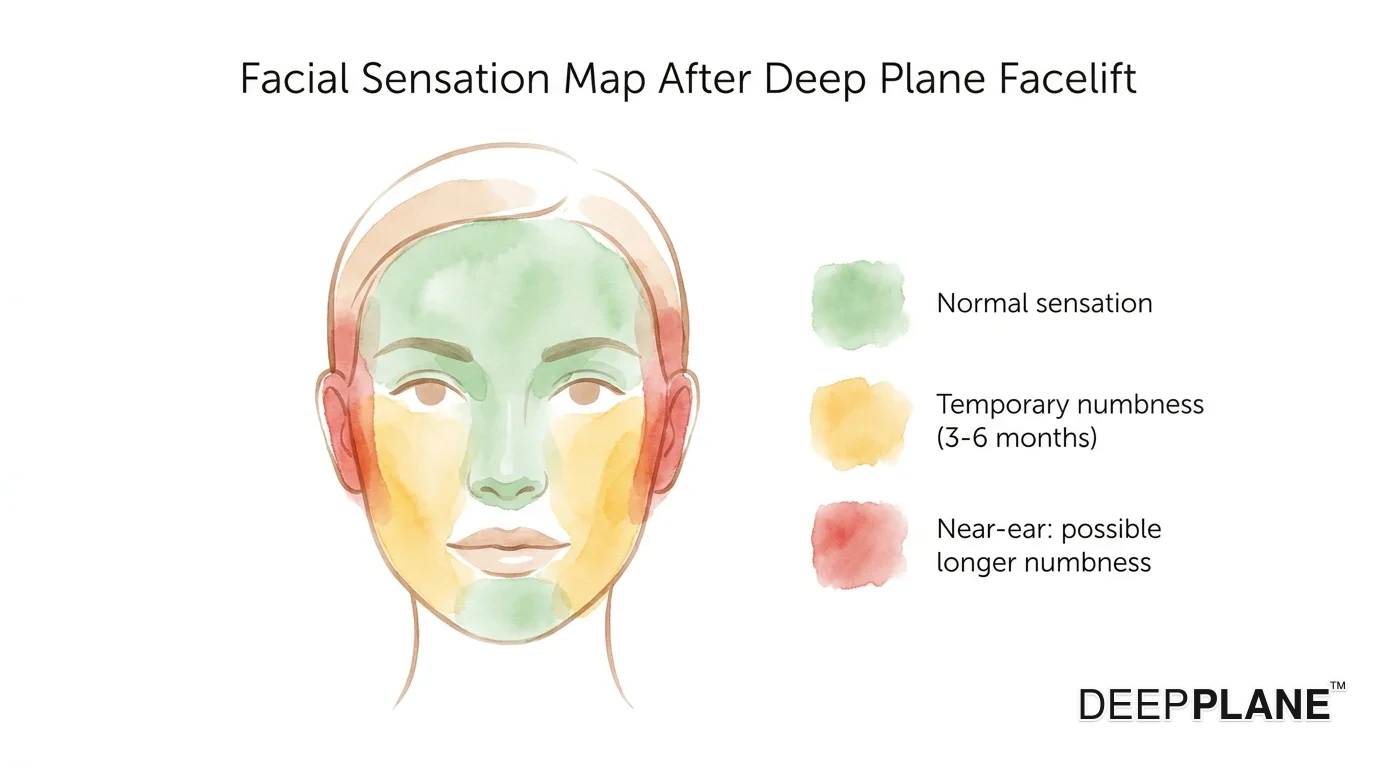
Карта на усещанията: зелено (нормално), жълто (временно 3-6 месеца), червено (възможно по-дълго)
Изтръпване след deep plane facelift: Изтръпването след deep plane facelift е нормално и очаквано, като обикновено отшумява за 3-6 месеца. То е резултат от временно разтягане на нервите по време на операцията, а не от трайно увреждане. Усещането постепенно се възвръща с възстановяването на нервите.
— Клиничен преглед на DEEPPLANE™
Изтръпване след deep plane facelift: Бързи факти
- Очаквана продължителност
- Обикновено 3-6 месеца
- Засегнати зони
- Бузи, уши, врат
- Риск от трайно изтръпване
- <1% от пациентите
- Възстановяване на усещането
- Постепенно в продължение на месеци
- Нормална поява
- Много често в началото
- Пълно възстановяване
- 6-12 месеца
Източник: Публикувани проучвания и медицински изследвания
Бърз отговор
Колко дълго продължава изтръпването след deep plane facelift?
Изтръпването след deep plane facelift е нормално и временно — то е резултат от разтягане на нервите по време на операцията, а не от увреждане на нервите. Повечето пациенти забелязват постепенно възстановяване на усещането за 3–6 месеца, като пълното възстановяване е до 12 месеца в по-голямата част от случаите. Техниката deep plane запазва целостта на нервите по-добре от традиционните методи, което може да ускори възстановяването.
Източник: DEEPPLANE™ ·
Колко дълго продължава изтръпването на лицето след операция на deep plane facelift?
Изтръпването на лицето след deep plane facelift е нормално и почти винаги временно. Срокове: изтръпването на бузите и челюстта започва да се подобрява до 4–6 седмици; повечето пациенти възстановяват значително усещане до 3–6 месеца; пълното възстановяване отнема 9–12 месеца в повечето случаи. Ушната мида е най-бавната зона, често изтръпнала за 12+ месеца. Трайното изтръпване засяга по-малко от 1–3% от пациентите и обикновено е ограничено до малко петно близо до ушната мида. Изтръпването е резултат от разтягане на нервите (невропраксия), а не от прерязване на нервите — нервът остава анатомично непокътнат и се регенерира с приблизително 1 мм на ден.
Постоянно изтръпване
Малка — обикновено отшумява от само себе си
- •Изтръпване, ПРОСТИРАЩО се извън преаурикуларната зона (предполага увреждане на нервите)
- •Ново изтръпване, появяващо се седмици/месеци по-късно (срещу постепенно отшумяване)
- •Изтръпване с двигателна слабост (асиметрична усмивка, вежди, затваряне на очите)
- •Пареща или пронизваща болка в изтръпналата област (срещу типично изтръпване)
Консервативно наблюдение със серийно документиране. Повечето изтръпвания отшумяват чрез изтръпване/сърбеж → леко докосване → температура → пълна последователност на дискриминация. Устойчиво изтръпване след 12 месеца: терапия с импулсно електромагнитно поле в някои клиники, проба с локален капсаицин или насочване към специалист. Стандартното 2-3 см преаурикуларно трайно петно е типично за 1-3%, които не се възстановяват напълно.
- •Техника на хирурга без запазване на нервите
- •Ревизионна хирургия (тъканни равнини с белези)
- •Агресивно странично прибиране по време на дисекция
- •Диабетна невропатия на пациента (влошава регенерацията на нервите)
Превенция: Опит на хирурга >50 deep plane случая годишно, идентифициране на анатомични ориентири преди всяко освобождаване на лигамент, нежна техника на ретракция, избягване на монополярна каутеризация в близост до нервни разклонения.

Изтръпването след deep plane facelift е нормален и временен страничен ефект, който обикновено продължава 3-6 месеца, докато лицевите нерви заздравеят. Това се случва, защото нервните окончания са разтегнати по време на операцията, а не увредени. Разбирането на типичната времева линия и усещания може да Ви помогне да преминете през възстановяването си с увереност.
- Изтръпването е временно в над 99% от случаите.
- Усещането обикновено се възстановява напълно в рамките на 6-12 месеца.
- Изтръпване или „мравучкане“ са признаци на регенерация на нервите.

Зони на възстановяване от изтръпване след deep plane facelift: областта на ухото се възстановява за 2–4 седмици, изтръпването на бузите за 1–3 месеца, а усещането във врата се връща за 3–6 месеца.
Лицевото изтръпване след deep plane facelift е нормална, очаквана част от възстановяването, преживяна от почти всички пациенти. Изтръпването е най-изразено в областта на бузите, ушите и врата и постепенно отшумява за 3-6 месеца, докато сетивните нерви се регенерират. Постоянното изтръпване е изключително рядко (по-малко от 1%) и обикновено е ограничено до малка област близо до ухото. Техниката deep plane всъщност запазва повече сетивни нервни разклонения от традиционните методи, а нейните естествено изглеждащи резултати и силен профил на безопасност се подкрепят от работата ѝ в дълбоката SMAS равнина.
Безплатно · Без натиск · Отговор до 48 часа
Разберете временното и постоянното изтръпване след операция с deep plane подход.
Кога се възстановява усещането след deep plane facelift?
Най-голямо изтръпване
Пиково изтръпване в бузите, ушите и врата. Напълно нормално — нервите заздравяват.
Започва мравучкане
Усещане за „мравучкане“ — положителен знак за протичаща регенерация на нервите.
Почти възстановено
Нормалното усещане се връща в повечето области. Малки участъци близо до ушите може да отнемат повече време.
Напълно нормално
Над 99% от пациентите възстановяват пълно усещане. Постоянното изтръпване е изключително рядко (<1%).
Колко време отнема пълното възстановяване на усещането?
Какво да очаквате?
Разбирането какво да очакват по време на възстановяването помага на пациентите да се подготвят психически и физически за лечебния процес. Възстановяването след deep plane facelift обикновено се понася добре, като повечето пациенти изпитват поносим дискомфорт, който значително намалява през първите две седмици.
Вашият хирург ще предостави подробни следоперативни инструкции, съобразени с вашата конкретна ситуация. Спазването на тези указания е от съществено значение за оптималното заздравяване и резултати.
Каква е времевата линия за възстановяване от изтръпване?
Кога трябва да се свържете с Вашия хирург относно изтръпването?
Потърсете незабавна медицинска помощ, ако:
- • Силно или внезапно увеличаване на болката
- • Прекомерно кървене или дренаж
- • Признаци на инфекция (треска, засилващо се зачервяване, гной)
- • Затруднено дишане или преглъщане
- • Внезапна асиметрия или слабост на лицето
Разбиране на възстановяването на нервите след deep plane facelift
Изтръпването след deep plane facelift се причинява от временно нарушаване на сетивните нерви по време на операцията, а не от трайно увреждане. Разбирането на основната биология помага за поставяне на реалистични очаквания за възстановяване.
Видове нервни увреждания
По-голямата част от изтръпването след фейслифт включва неврапраксия – преходно блокиране на нервната проводимост, при което самият нерв остава структурно непокътнат. В някои случаи възниква аксонотмезис, при който вътрешните нервни влакна са временно нарушени, но външната обвивка остава непокътната, което позволява насочен растеж. Трайното увреждане (невротмезис) е изключително рядко при техниката deep plane, като обикновено се среща при по-малко от 1 на 200 случая.
Разлики между сетивни и двигателни нерви
Сетивните нерви (отговорни за допир и температура) и двигателните нерви (контролиращи мускулното движение) се възстановяват с различна скорост. Проучванията показват, че сетивните нерви обикновено се регенерират с приблизително 1 мм на ден, което означава, че областите, най-отдалечени от разреза – като централната част на бузата – може да отнемат повече време за възстановяване на усещанията, отколкото областите близо до ухото. Двигателните нерви, които контролират израженията на лицето, обикновено са с по-нисък риск при deep plane операция, тъй като дисекционната равнина остава повърхностна спрямо лицевия нерв.
Очаквания месец по месец
В повечето случаи месеци 1–2 носят най-дълбокото изтръпване, често придружено от лека стегнатост. Месеци 2–4 обикновено виждат появата на изтръпване или „мравучкане“ – положителен знак за активна нервна регенерация. До месеци 4–6 повечето пациенти съобщават за значително възстановяване на усещанията по бузите и шията. Областта зад и под ушната мида обикновено е последната, която се възстановява, като понякога отнема 9–12 месеца в иначе неусложнени случаи.
Кога да се свържете с Вашия хирург
Свържете се с Вашия хирург, ако забележите нова асиметрия на движенията на лицето (която не е била налице при изписването), изтръпване, което внезапно се влошава след първоначален период на подобрение, или ако не сте имали никакво възстановяване на усещанията до 6 месеца. Въпреки че повечето изтръпвания отшумяват от само себе си, ранната оценка може да изключи редките случаи, които се възползват от поддържащи интервенции.
Често задавани въпроси
Медицински справки
- 01Hamra ST. The deep-plane rhytidectomy. Plast Reconstr Surg. 1990;86(1):53-61(отваря се в нов раздел)(Статия в списание)Достъп: 2026-03-21DOI: 10.1097/00006534-199007000-00008
- 02
- 03
- 04Mayo Clinic - Facelift: Overview, Risks and Results(отваря се в нов раздел)(Организация)Достъп: 2026-04-01
- 05NIH National Library of Medicine - Rhytidectomy StatPearls(отваря се в нов раздел)(Държавен източник)Достъп: 2026-04-01
Цитирайте тази страницаCC-BY 4.0
Редакционен екип на DEEPPLANE™ (2026). Изтръпване след deep plane facelift. DEEPPLANE™. Извлечено от https://deepplane.com/bg/recovery/complications/numbness
Съдържание, лицензирано CC-BY 4.0. Свободно за споделяне с приписване на DEEPPLANE™.
Ключови факти
Свързани теми за възстановяване
Често срещани погрешни схващания
Мит: Изтръпването означава, че нещо се е объркало
Факт: Изтръпването е нормална част от заздравяването. То се среща при почти всички пациенти с фейслифт.
Мит: Изтръпването е постоянно
Факт: Изтръпването е временно в по-голямата част от случаите. Пълното усещане обикновено се възстановява в рамките на 6-12 месеца.
Мит: Изтръпването влияе на крайните резултати
Факт: Изтръпването не влияе на естетичните резултати. Това е сетивен проблем, който се разрешава самостоятелно.
Преди да решите
Винаги търсете оценка от опитен deep plane специалист
Резултатите варират — вашият хирург ще определи реалистични очаквания
Осигурете си достатъчно време за възстановяване за най-добри дългосрочни резултати
Правилната следоперативна грижа увеличава максимално резултатите и минимизира усложненията
Попитайте проверени deep plane хирурзи за вашето възстановяване
Попитайте хирург — безплатно100% безплатно · поверително · без задължения · хирурзите обикновено отговарят в рамките на 48 часа
Може също да харесате
Медицински прегледано и предоставено само за общо образование — това не е медицински съвет и не замества консултацията с квалифициран лекар относно вашия индивидуален случай. Резултатите, рисковете и разходите от deep plane facelift варират при различните пациенти; винаги търсете насоки от лицензиран хирург, преди да вземете каквото и да е решение за лечение.